Blossoms Around Town
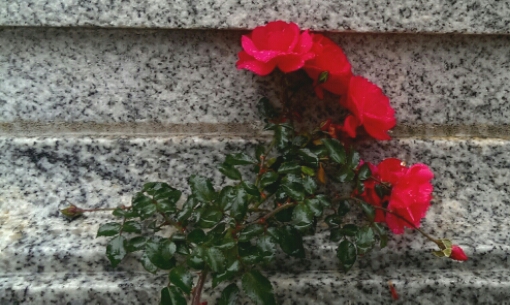


How wonderful to be given a day to stay warm indoors with the lights of the solstice tree dancing.

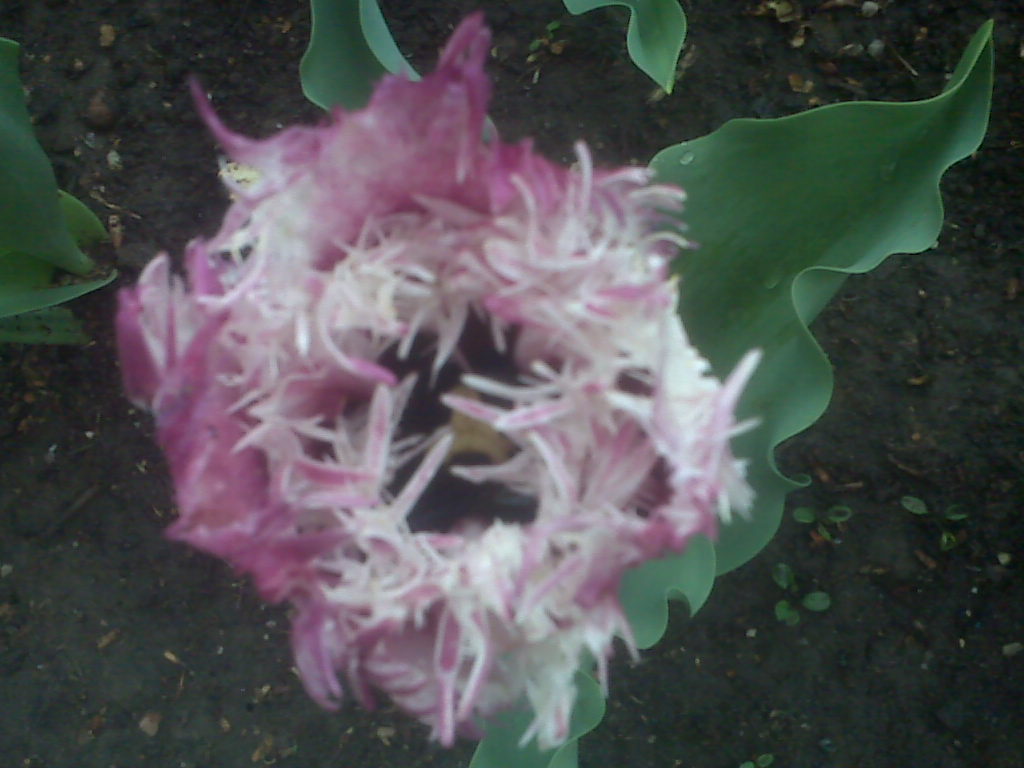
A particularly prickly-looking tulip just north of the Capitol.
Peace and light, E — Posted with WordPress for BlackBerry.
I was merely late for work, but I stopped to bear witness. Sadhana is for our whole lives.
United States Supreme Court, December 2, 2019


One of the most profound and essential teachings of the great yogis is to “watch the gap.” We are given the practice of watching the gap, the space, the pause, the turning point between the in breath and the out breath, the out breath and the in breath. In the gap, we are able to witness perfect fullness (purna) and perfect emptiness (sunyata). In minding the gap, we can experience perfect stillness and serenity. It is an extraordinary practice in its simplicity and in its gift of peace and repose.
Whether you have never heard of this practice, learned it at some point but have mostly forgotten about it, or just did it with your own practice, I invite you to take a few minutes on reading this: make your seat steady and as comfortable as possible, close your eyes, invite an intention of finding a still spaciousness in your heart. Draw your attention to the breath and start to notice the space (maybe almost instantaneous and unobservable, maybe a real pause) between the in and out breaths.
If you are moved, comment on your experience to share with each other. There is no one right reaction nor a wrong one. If it was challenging to sit still and focus, just be gentle and soften to how enjoyable it can be to do nothing other than watch the breath, like the sweet and easy restfulness of watching the movement of waves at the beach.

Peace and light, E — Posted with WordPress for BlackBerry.
Last year, some romaine lettuce must have bolted. I have baby romaine lettuce coming up everywhere. Having reverted to the wild, it is quite bitter. It is also taking up a fair amount of space, so to be able to plant more appealing things (new herbs and greens) I will be pulling it up. It has become, in essence, a weed. Later in the year, I’ll also have a surfeit of volunteer epazote and purslane, which many would pull as weeds. Those, I actively encourage, eating young the ones that come up over and over again through the bricks and confining in containers a few others to grow larger and to reseed.
Even though it is too bitter to be palatable raw, the now “weed” romaine tastes fine cooked as a tender green. So it does not get discarded. I just won’t make myself eat it in its bitter form as the salad green that it is “supposed” to be. Instead, since it is nourishing and tasty as a cooked green, it is a welcome early addition to the garden.
Just I have challenges and tribulations from whatever is my overall plan for the garden, I have my share of aches, pains, challenges, and disappointments, in life and in my yoga practice. The question is how to discriminate (viveka) among those that are poisonous, those that are bitter, and those that can be made nourishing and sweet, through the cooking of understanding, practice, and effort.