Statuary Around Town
One of the delights of my trip to Tucson, was visiting the Native Seed Search’s shop. Native Seed Search works to gather, safeguard, and distribute native and adapted seeds to farming and gardening communities, and to educate farmers and gardeners about the uses of those seeds. When I go to Tucson, I make sure to visit the shop (so much more fun than shopping on-line) to buy unique varieties of peppers and beans for cooking.
The first time I went — three years ago — I did not buy any seeds. I was not certain that I should be bringing seeds from the southwest to DC for planting. This year, after the last two years of heat and drought, I bought a few varieties of southwestern greens and some pink green beans to try in containers. I had a good chat with the workers in the shop about shifting what we plant as the climate changes even as we might otherwise try to avoid bringing new species into the area.
I went small with this experiment. As long as I do not let the amaranth (to eat as greens not grain) go to seed and pick the beans to eat or replant, nothing will spread. It will be interesting to observe if these plants require less water or tolerate more heat here than the greens and beans we are more accustomed to planting.
It was also wonderful, on this icy cold day, to take the seed packets out of my bag in anticipation of spring. Planting season for cool weather greens, etc (etc meaning beets, turnips, and radishes) is only a couple of weeks away.
I spent a couple of hours in the garden before having the honor and pleasure of going to a party to celebrate the wedding of one of the yoga practice group. It was a delightful day. I am grateful.
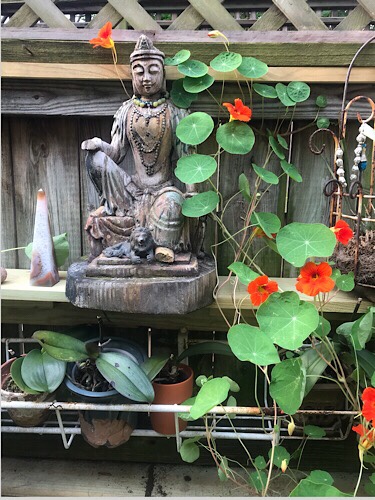
Yesterday I asked about setting an intention to be blissful in every thing we do for a day. Having the intention is a good start (I might not even have thought of such an intention without my yoga practice). What I really want is to be able to manifest that intention. For me, I know that it is important for me to live more consciously and with more subtle discrimination (viveka) if I am to come close to living such intention.
A rare few live in bliss without effort. For the rest of us, that is why we have the practices. So we can practice moving into and resting in bliss.
Does that include bills and advertising circulars?

Peace and light, E — Posted with WordPress for BlackBerry.
I learned a number of years ago of the environmental devastation from gardening with peat moss and stopped doing so. Here’s a great blog discussing the down and dirty of peat moss.
Most of us are gardening for beauty, to have better food, and to help the environment. The more we know about how we garden, the more beauty we can create–in our own gardens and wherever our gardens are sourced.

On my way to work this morning, having left the house 20-25 minutes later than I would have preferred, I came upon a demonstration led by organized labor seeking a Secretary of Labor who honored good jobs. My timing, thanks no doubt to the mysteries of the goddess of sequencing, was perfect; just as I arrived Senator Sanders was speaking. The puzbot was posing for lots of photos.