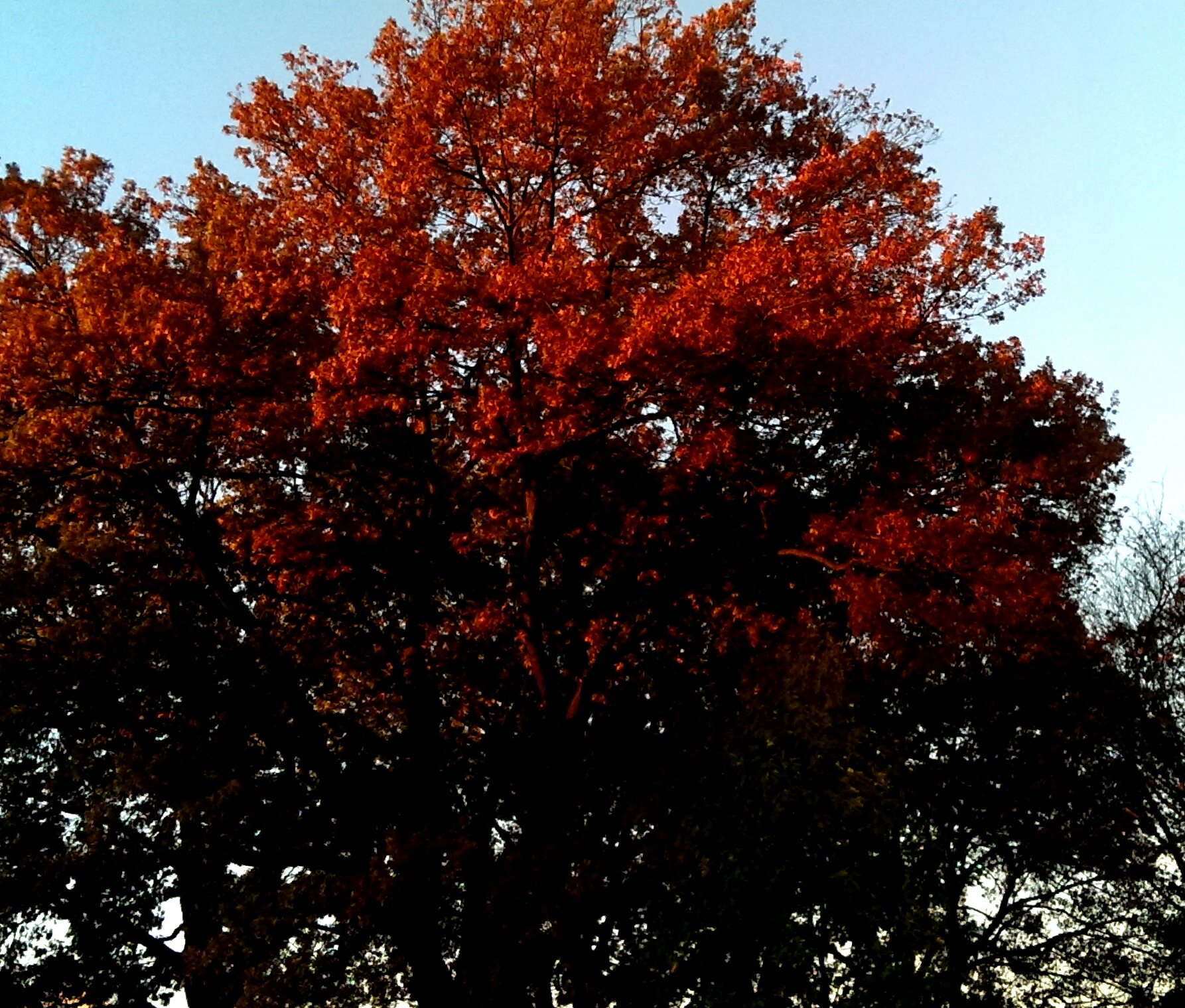
I Am So Lucky to Live In a City With Great Trees
I cannot tell you whether the food is tasty or healthy or authentic, but something felt good about this truck that was at Eastern Market today.
Please comment if you’ve tried it.

Peace and light, E — Posted with WordPress for BlackBerry.
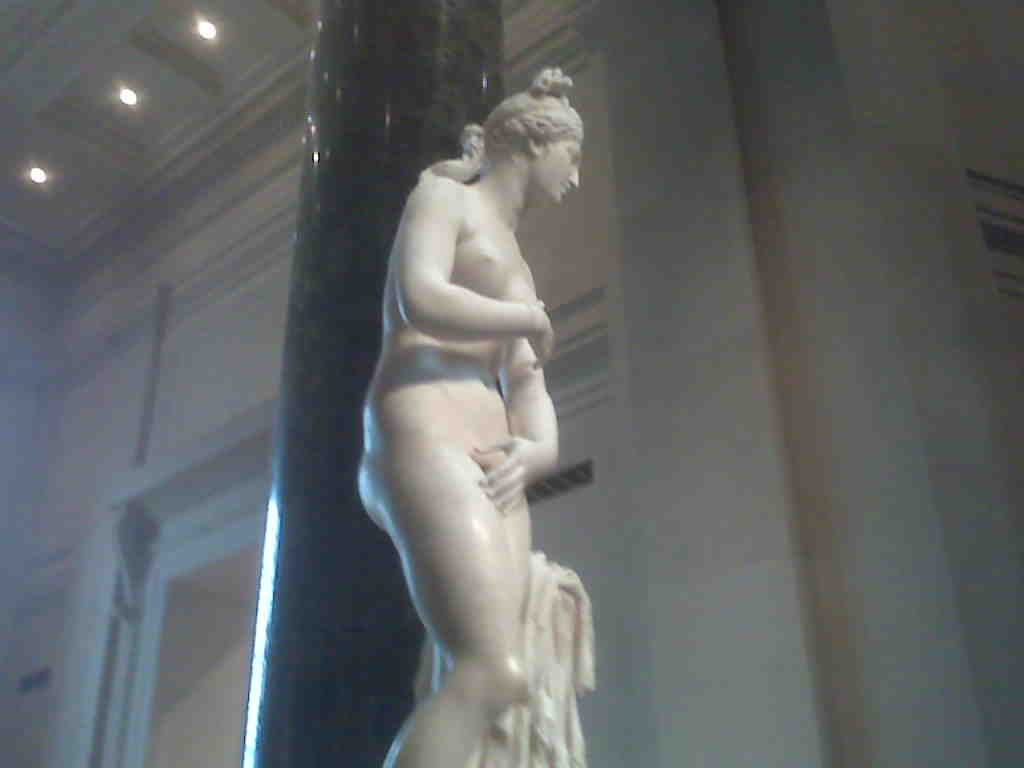
The Capitoline Venus arrived in DC last week from Rome–the first time this circa 200 CE sculpture has been out of Rome in nearly 200 years. What makes it especially beautiful is the apparent softness of flesh of the cool, carved marble, the seeming etherealness of the ancient solid stone.
Looking at the Venus made me think about how carving in stone can help us understand the concept of sruti. The hindu scriptures generally are classified as either sruti (revealed) or smriti (remembered) and until recent centuries were passed on through oral tradition. Those scriptures that are sruti are said to have been revealed by a divine source to the original listener. They were already there as part of the wholeness of the universe and then manifested to a particular enlightened being in a way that could be witnessed and passed on. The essence of the text was always already present, but not tangible, until it was revealed in the mind of a listener, who then passed it on.
Carving in marble takes both the emergence of idea and form in the mind/imagination of the artist and the revealing of that idea from the original stone by the craft of the artist. The sculptor has studied and practiced art and is always open to the emerging into consciousness of a particular image or idea, just as the great yogis continuously meditated and studied, open to what might be revealed.
As the sculptor may find the block of marble first or have the idea and then go looking for the right stone to express the idea, the yogi pulses between experiencing spirit and enhancing the experience through practice. It is not just an act of imagination that builds and creates something out of nothing. To some extent, the form of the final sculpture is already there in the stone. The work of the artist is to remove that part of the stone that is obscuring the witnessing and expression of the exquisite shape revealed from within by the educated and painstaking act of making art.
Peace and light, E — Posted with WordPress for BlackBerry.
John Friend tells us in teacher trainings that when we are observing students, start at the foundation. In order to help a student have the highest, most joyous and expansive experience in a pose, the foundation must be secure, aligned, and basically in the correct form. If the student does not already have a steady and aligned foundation, adjustments to other aspects of the pose will not well serve growth and understanding. When we are practicing on our own, starting with the foundation is also critical. If we do not make sure that we have the physical, energetic, and mental understanding of a pose, at best, we will have little appreciation for our practice and, at worst, risk injury.
Off the mat, the principle of starting with the foundation is even more important. If we do not teach all of our children basic reading, math, history, and civics, how can we have a functional democracy? If a house does not have a sturdy, well-built foundation, what is the point in spending lots of money decorating it? If we do not plant a seedling at a depth where it can be properly rooted and supported, how can it best flower and give fruit? If we do not provide all with adequate shelter, feed ourselves in a way that fosters both the environment and natural health, build an infrastructure that makes drinking water and breathable air for all, and have proper respect for the process of dying, how much true health care can come from privatized insurance, however regulated?