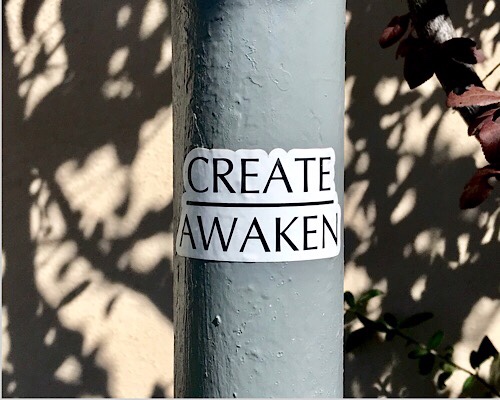
On the Way to William Penn House for Tuesday Night Yoga Practice

Dear Yogis–
Rain and unseasonable weather in the weekend forecast have you wondering where is Spring? Instead of longing for the missing Spring, dig deep into the seeds of relaxation with a bolster, seven blankets (give or take a few), and other body and heart warmers, this Saturday at the final “Relaxing into Optimal Alignment”:
Saturday, March 26th, 2:30-4:30p, Willow Street Yoga Center, Takoma Park, $30
After a little gentle stretching and self-massage to bring awareness to the breath and body, we will enjoy the exquisite application of Anusara’s® Universal Principles of Alignment to restful and supported restorative postures to release old patterns and invite in the new to find greater ease of body and mind.
Hope to see you Saturday for our own breath of Spring and do please invite your friends; experienced yogis and complete novices are all welcome.
ps I know I offered to sign a few people up for the blog. Alas, I cannot do that for you from my computer. If you want to get emails with the latest blog entries, please go to http://www.rosegardenyoga.com/follow-my-blog, and follow the simple instructions there. I’ve gotten great feedback on the email version as an easy way to be in touch, so please join us.
Peace and light,
Elizabeth
There are three important things going on under my desk:
(1) my feet are planted firmly on the floor with the inner edges of my feet parallel. This is the foundation of a good, comfortably upright posture where my low back, shoulders, and neck are in alignment and not overworking; my inner organs are in the right place for optimal functioning; and my lungs and diaphragm are situated for full, easy breathing, which helps me be healthier and more alert.
(2) the only shoes for the day have flexible, supportive soles and leave my toes free to work–whether I am walking or sitting. I do not change into narrow-toed and/or high-heeled shoes to look “professional” or fashionable. I think if we try hard enough, we could make shoes that are good for us be in style. Think about how much we would reduce health care spending and lost work time (for foot, knee, and back surgeries and treatments), if we all wore shoes that fit and did not alter our posture in an unhealthy way. Eventually, foot binding when out of fashion in China, but we still require women (mostly) to harm themselves with their footwear to fit in.
(3) I have two different-sized rubber balls to do foot exercises. Feels great, helps me stay grounded, and is a nice way to take a break.
Come to one of my yoga classes to get tips on great exercises for the feet you can do at your desk or just about any where.

Peace and light, E — Posted with WordPress for BlackBerry.
I prefer the exhortations: be careful, be mindful, pay attention. It is good to heed what is around us, being open to the optimal next step on the unfolding path.
But if we get too wary or fearful, if we spend too much time watching out for and guarding against danger, then we may well miss opportunities to enhance our lives and those around us.
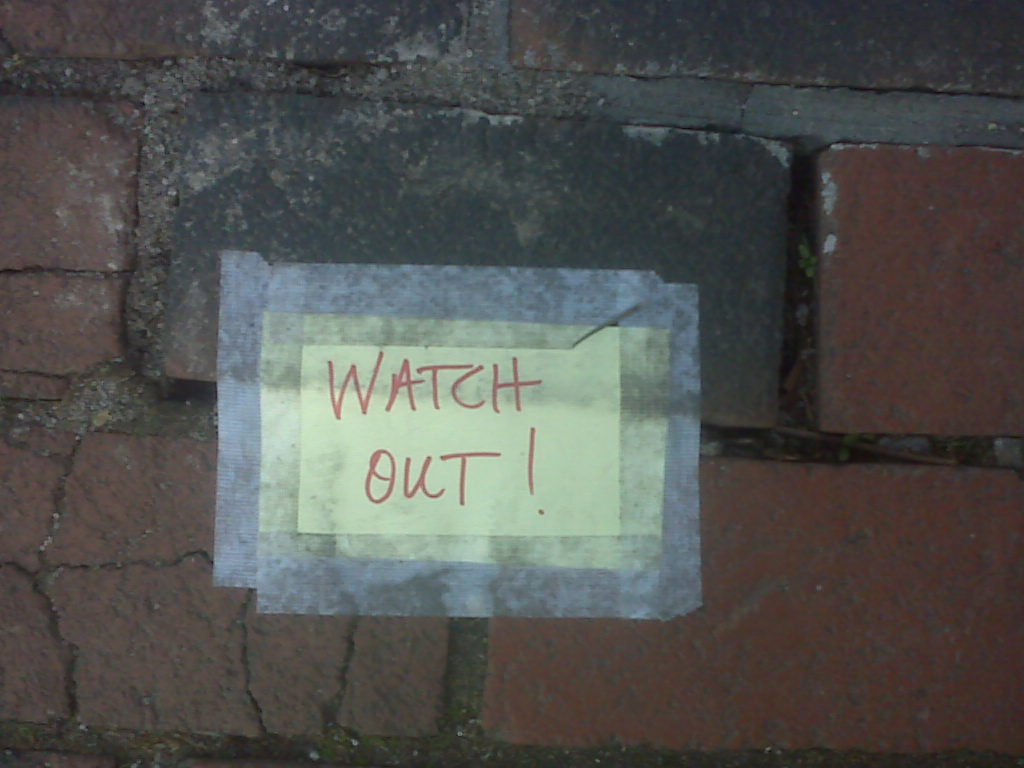
Peace and light, E — Posted with WordPress for BlackBerry.
One reason to look up is to avoid the troubled response to a view of highway and homeless shelter. The other is because I am captivated by the never ending exquisite beauty of sky and how much I can learn about my environment from the sky if I pay steady and open attention to it.
Sometimes I practice because I want to move my attention away from something unpleasant. More often it is because to practice is an abiding joy.