Signs Around Town
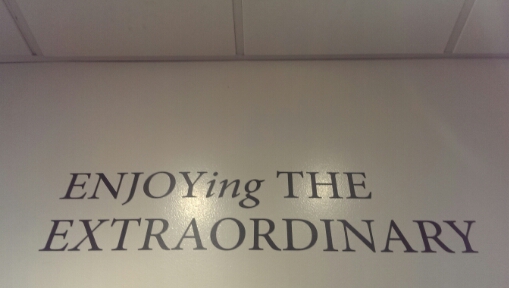
The fifth sutra in Abhinavagupta’s Siva Sutras, is “udyamo bhairava” — the great upsurge of consciousness. When we are open and aware, we can witness this upsurge, the very pulsing of life energy in all that is in and around us, from the springing up of thought in our minds to the burgeoning of spring. The more we practice and live attentively, the more we will see the joy in this upwelling.
When I go out into the garden on the early spring days to see what needs to be cut back, what is volunteering, and what is coming up from fall plantings, I approach with great openness. When we plant in the fall, we do not know with any certainty what kind of winter we will have. Although the long-range forecast was for colder than normal with precipitation near normal (which translates into more than average snow), who could have expected three mammoth snow storms?
I plant with hope and some expectation, but am ready for the loss of some perennials, the failure of some seeds to germinate, and the unexpected pleasure of experiments working or welcome volunteers. This steady planting without specific expectation, with openness to discovery, with joy and attention to the miraculousness of what rises up in the spring, is a very tangible example of what I read in the yoga philosophy. It is how I, I believe, we most optimally would approach asana and meditation, as well as all aspects of our daily being.
Below: new spinach coming up in a container from seeds I planted around Thanksgiving from an expiring packet.

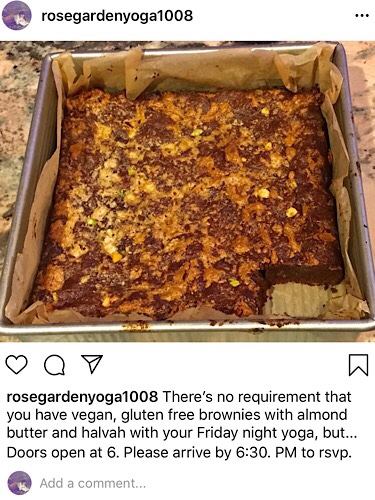
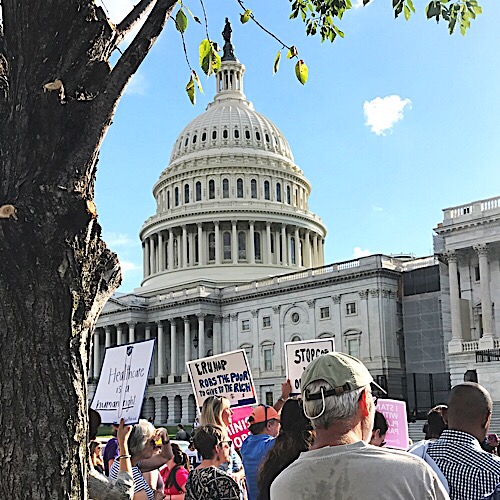
The filibuster and related activities, including an interfaith vigil on Wednesday the 28th, continues until Thursday. Details on various Facebook Pages–ACLU, NARAL, Planned Parenthood, Move On, and others.
Mostly I will be working during the scheduled times, but I will head over outside of my work day again. Senator Chris Murphy was on his way to dinner with friends from Connecticut who had spent the day doing citizen lobbying–telling their story about why keeping and improving on the ACA was important to them. Senator Murphy said that he’d heard people were outside and felt he needled to at least stop by and connect. He said this is just the beginning, don’t let them tinker and declare a victory if they only deprive 5 or 10 million people from getting insurance; he said keep it up; he’d like to see millions of people coming to D.C. and making their voices heard. I was starting to get caught up in listening and then realized it was time to be at William Penn House.
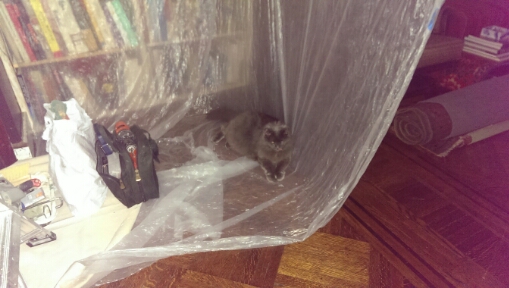
This afternoon I was having a conversation about cats with a co-worker. “Why do they prefer the plastic construction tarp (I was having a damaged ceiling repaired) to all the more comfortable locations around the house?” I wondered.
I showed her the silly cat photo:
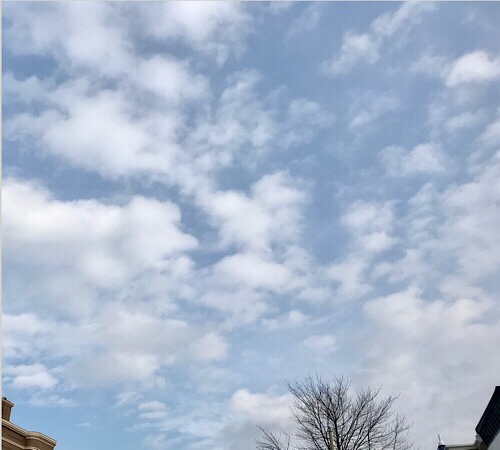
My friend started scrolling through the photos on my phone. She stopped at a heart-shaped cloud and said she liked it. I told her that I regularly post photos of heart shapes I notice as I go about my day. I said that it is a reminder to myself to be open-hearted (but with boundaries) as I live each day.
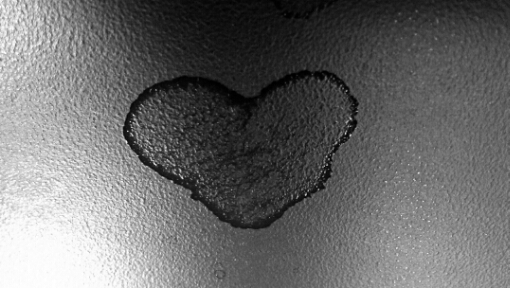
She said that she noticed heart shapes, too. She said that there had been a some kind of food or drink spill in the file room–she was sure that no one would have cleaned it up–that was a perfect heart shape.
We went to the file room. Yes, there it was, a sticky heart.