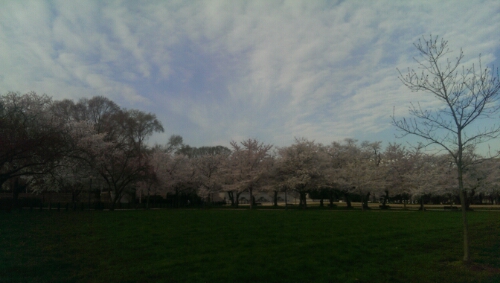
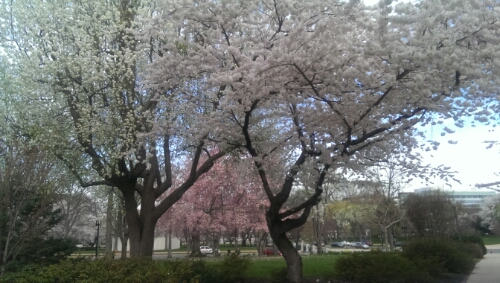
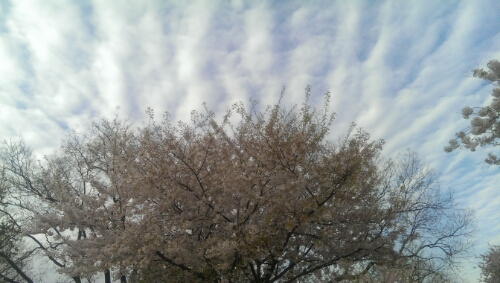
More Photos of Blossoms

Peace and light, E — Posted with WordPress for BlackBerry.
This morning I went for my bi-annual physical. The first thing that the doctor’s assistant did after having me stand on the scale (a blood-pressure elevating activity out of habit), was take my blood pressure. It was on the low end of normal, as usual for me.
In the middle of the exam, after having intimate discussions about tratment to alleviate suffering vs. treatment for longevity, and similar topics, my doctor took my blood pressure again. No surprise: it was higher than it had been when I irst walked into the exam room.
When we were just about done, my doctor said, “let’s see if we can lower that blood pressure. Close your eyes and relax.” “Relax” can be a hard command to obey. Instead, I went right to where I go in meditation, softening to my mantra. In less than a minute, my blood pressure was lower than it had been at the start of the exam. “A beauty of meditation,” I said. “Yes,” my doctor replied (who is a very traditional western medical practitioner, “I wish I could get all my patients with high blood pressure to meditate.”
A friend once suggested that I took photographs to give myself separation. I do gain perspective, as I do from meditation. The chaos will not go away, and our relationship with it can change.

My friend Dan just posted on his blog a great Gary Snyder quote on the need to do maintenance (of the self) in order to be most creative. The idea that we need to maintain our tools and toolbox, as it were, in order to be most creative, is exactly what we are taught about the tantric yoga sadhana — practice. With our yoga practice, diet, lifestyle, work, consumption, participation in community, we seek to live progressively more in alignment with the undulating fabric of space, time, and apparent world so that we have maximum well-being best to serve ourselves and others with delight. In our sadhana, we include both study and experience (experience includes meditation, asana, and pranayama). As both John Friend and Paul Muller-Ortega teach, we engage in the practices and studies to learn with ever expanding insight how to see and experience the highest first and live from that place. Living and practicing with such an intention is, I think, the maintenance done so we can live out all of our lives as a reverential and creative act.
Dan–I look forward to reading the sermon.
A couple of weeks ago, a good friend gave me a box of perfect vidalia onions. She had been given two boxes. She said, “These onions were so good; I wanted to give them to someone who would truly appreciate them. I first thought of you.” I was delighted, “yes, I’d love some vidalias.” They are exquisite. I’ve been making delicate sautes, grilling them, dicing them into salads, and marveling at their sweetness. I passed a few on to others that both would fully appreciate the onions as a culinary matter and also know my friend, who is a former co-worker.
Last night I went to take class at Willow Street and was talking a little with the work study students at the desk after class before heading home. “Would you like some onions?” asked one of the work study students, who does great work with the Fresh Farm Markets around town. “Oh, how lovely, no, no thank you,” I replied, “A friend just gave me a box of vidalia onions and I have shallots, baby leeks, spring onions, and garlic chives in my garden.” “I think you have enough in the allium family already,” she agreed, “would you like a cucumber?” “A cucumber? Yes, that would be great. I’ve only gotten one ripe one so far; they aren’t liking the cool wet.” She gave me a cucumber and a zucchini from a farm visit she had done that morning, which made my evening (I am so easily pleased).
This morning I wondered about these offers of onions. It is not as though it is a regular thing for me twice in a space of a couple of weeks to be given bounteous offers of exquisite onions. Did it mean something?
Onion comes from the same latin root as “union.” Unlike garlic, in whose family onions belong, onions grow a single, undivided bulb, which is the likely reason for the development of the word onion. From sketchy researching on the internet, I find onions are also the symbol of “good” and fullness — hence the onion domes in architecture. The ancient Egyptions thought the onion a symbol of eternity (layer upon layer of being) and truth. Yes, I like thinking these onions (those I took home and those that were gifted instead, no doubt, to some other appreciative soul) were meant to bring me to think of good, of union, of the eternal truth in gifts and shared pleasure in sharing delicious, healing, fresh food with friends.