Similar Posts
- Art and Culture | Asana, Pranayama, and Yoga Practice | Community and Family | Food for the Mind (Yoga Philosophy, etc) | Meditation | Quaker
What Are You Going to Do?
Now is not the time for avoidance or passivity. What can you do or do more? Who are you going to support? These are the questions for an engaged yogi. Meditation, asana, and pranayama are life balance and support not ends in themselves for a householder yogi.

Kvelling and Kvetching
It started before yesterday’s Tuesday night class. There was a piece of fuzz next to one of the students mats–a schmutz. We then decided that the yoga outfit, especially the old raggedy one, was a schmata. Tonight, I was in an uncharacteristically silly mood. With birds falling out of the sky, fish washing up on the shore, and the Republicans taking back “control” of the house, I could weep or I could find the laughter in small things. Tonight, with a practice theme of the Anusara’s “first principle” — opening to grace — I spontaneously and giddily came to the latter.
I mentioned the idea of yiddish for yogis, and the class took off. We were all women tonight, so it was “yoga for yentas.” The word one utters when going into the first forward bend of the practice, is of course, oy, which can be lengthened to oy vey is mir. When we are truly opening to grace, we are kvelling; when we are noticing our aches and pains and forgetting to move towards the good, we are then kvetching.
Just FYI, I learned after doing a cautious internet search before posting this blog entry, that it turns out that the phrase “Yiddish Yoga” has been trademarked. I am pretty certain we can still have fun talking about using yiddish vocabulary words in yoga class without violating any laws, though it has been over 20 years since I took class in copyright and trademark law. So feel free to think of your favorite yiddish word and how it should be used in yoga class. You never know how it will enhance your practice, for whom it will bring a smile or a laugh, and what other thoughts might arise. I’m pretty sure that there isn’t a yiddish equivalent for satcitananda, any more than there is an English equivalent for weltanschauung or schadenfreude, or a French word for sandwich, but at least one student wants to give it a try.
Travelers
I didn’t leave the house for the third day in a row. I wonder whether I will ever again go to India or Spain or Italy or England.
I found these puppets earlier this year at the little flea market that has sometimes been at Dupont Circle on Sundays. I recognized them as Indian and was told that they came to the United States from Tamil Nadu in the 1960s with one of the original owners of Kramer Books, who had lived in India as a child.

State of the Garden
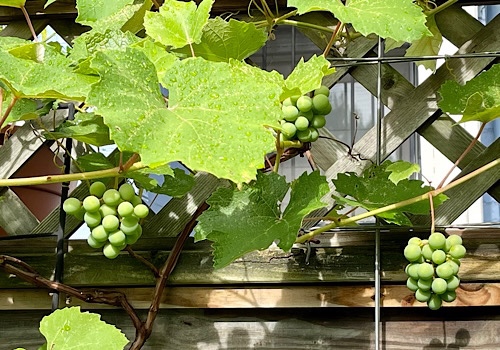
Even though not documented much recently, the garden has moved into summer effulgence. It is a place of curiosity, wonder, and delight. What brings you joy and nourishment in these troubled times that are calling for ever more engagement?