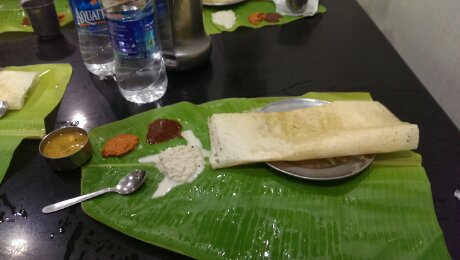
Masala Dosai for Breakfast
I am looking forward to starting several types of sprouts when I get home. Soon.
I am looking forward to starting several types of sprouts when I get home. Soon.
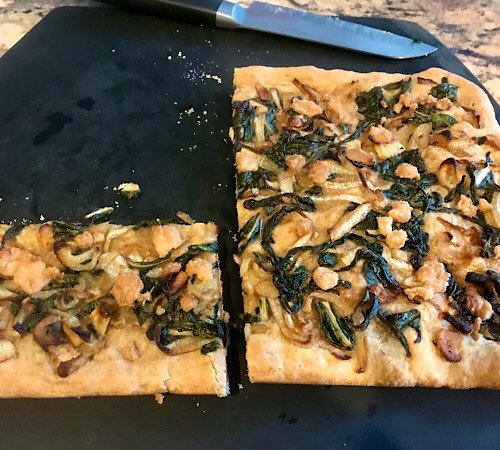
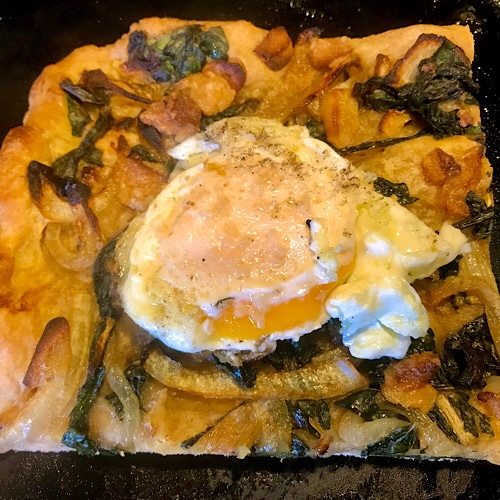
Homely and definitely could have been better executed, but satisfying when hot from the oven. The crust I’d frozen a few weeks ago, and it used no commercial yeast. Chard from the garden. The extra portions went into the freezer. During the work week, I’ll be happy to be able to warm it up in the toaster oven for breakfast or lunch–perhaps adding cheese or sprouts and herbs. Or another egg.
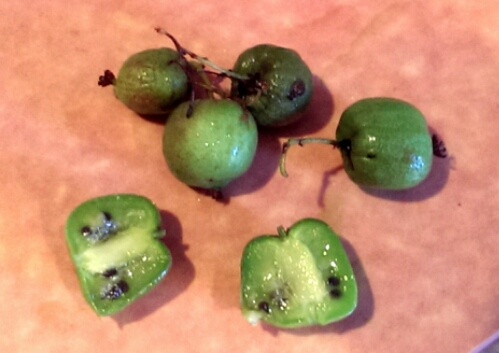
At last, after seven years of being just an apparently invasive vine, the grape kiwi is fruiting. The squirrels and birds will get most, but I am getting some.
I am reminded, by my hopefully tending the vine for years without fruit, of the power of perseverance and patience. Something like yoga practice.
Dear Friends,
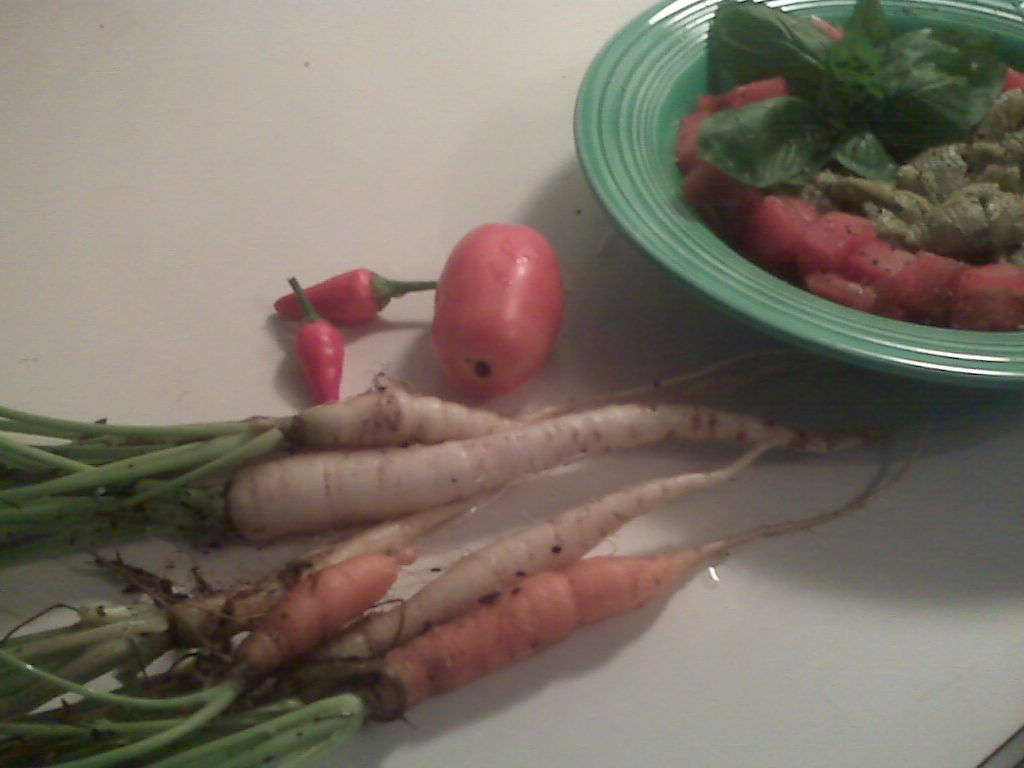
What splendid fall mornings we are having. The neighborhood dogs are frisking in the park and the fall colors are starting to show. It is time to make tomato sauce and pickled peppers with the last of the summer harvest and continue planting greens (containers are great if you don’t have much space) for some fresh eating through December. Now is also the time to start shifting to a more introspective practice, seeking inner illumation as the days get shorter and the nights get longer.
This Fall, classes will concentrate on refining the principles of alignment to more sweetly and deeply appreciate your own inner light.
Join us any Tuesday night on a drop-in basis at William Penn House — bring a friend for a delightful all levels experience.
It’s not too late to join the Willow Street Fall session — Saturdays at 8:30 level II or, if you need a gentler practice, including a therapeutic focus, try the noon Gentle/Therapeutics class. Drop-ins always welcome.
October Serenity Saturday (October 17th, 3-5pm) is just around the corner. Sign up early to get the Capitol Hill Yoga early bird discount!
Starting to plan the holidays? If you’ll be in town, make sure to plan to join me for the 7th Annual Thanksgiving Day Fundraiser for Oxfam, which will again be at Willow Street in Takoma Park Thanksgiving morning. It is a great way to start the day and bring a focus of gratitude to this day of abundance. As always, in or out of town guests, friends, and family welcome whatever their experience level.
For the Wednesday night practice, October’s charity will be the Whitman-Walker Clinic to honor its work in providing health care in some of DC’s neediest communities and to help send energy for universal health care. I’ve decided that I have so much fun with these practices that in addition to donating all the proceeds, I will donate to attend too!
As always, feel free to email me with questions, comments, suggestions, or just to be in touch.
Info on all classes and workshops at www.rosegardenyoga.com.
Peace and light,
Elizabeth
Yesterday I celebrated the bounty of Thanksgiving with my friend Pat and her children, which was just delightful. The food was bounteous and delicious, but not to the point of groaning excess. While I was at the yoga fundraiser in Takoma Park, Pat and the children were cooking.
Jonathan, who is eight, made the cranberry sauce. Being the superb cook that she is, Pat said it’s just the recipe on the back of the bag (one bag cranberries, one cup sugar, one cup water, cook until the cranberries are split and liquid starts to gel), except that she replaced the water with apple juice, replaced the sugar with brown sugar and halved the amount, added currents (nice touch), and then put in orange rind, cinnamon, all spice, cloves, and powdered ginger. Only a true cook would think that is just the recipe on the back of the bag, but I know what she means. As long as the proportions are right you can vary anything to taste. The addition of the dried fruits and spices were just right for the latin-influenced cooking of the rest of the meal.
Rebecca made the mashed potatoes, which we had because she wanted them. They are amazing, they are miraculous, she claimed, mashed potatoes. All you do is mash them and then they are amazing. Ordinary potatoes completely transformed, just by mashing them. Rebecca also offered grace, giving thanks for “food, family, friends, and just for being alive.” Simply said from the heart; no more needed to be said.
I was sent home with the leftover vegetarian rice and peas, which Pat had specially prepared for me to honor my preference to eat vegetarian. As is traditional in her family, I brought home the leftovers with the understanding that when I returned the container, it would have within it a food offering in return.
Pat did cook a turkey as part of the meal. When we were cleaning up (I was carving the rest of the turkey to store for future meals), I asked Pat whether she would be making stock with the turkey bones, so I would know the best way of carving. She said she did not have time, so though I am mostly vegetarian, I took the bones to make stock. I had, then, the leftovers one would never have if you’ve long since stopped roasting birds, and Pat felt more content knowing that we would be using all of the bird that fed us.
Today, when I am home cleaning and cooking and enjoying a precious vacation day, I will make turkey stock. With the blessing of these particular leftovers, I can make what would be traditional to a Thanksgiving meal that I would have cooked: roast winter squash and stuffing (using the turkey stock, the remains of a loaf of bread I baked last week, dried mushroom, and celery). My delicious meal of stuffed roasted squash, will be enhanced by the lingering (not leftover) energy of the friends with whom I shared a delightful meal and the knowledge (that by minimizing what goes uneaten) that we are eating in a more sustainable manner) [yes, it’s all about balance; my vegan friends would no doubt be compelled to remind me that eating vegan would have been more sustainable].
Many thanks to Pat and her family for welcoming me and for sharing.
Peace and light, E — Posted with WordPress for BlackBerry.