| | | | | |

The Goddess(es) and the Green Tomatoes

When someone tells me I need to see the Divine I can get anxious that they mean I’m supposed to see whatever that person thinks is “the Divine.”  I don’t think anyone ever should be required to do so by anybody else.  I am, however, all for being reminded to see the divine if such exhortation is to look on whatever I encounter with the most gratitude and compassion and wonder I can muster.

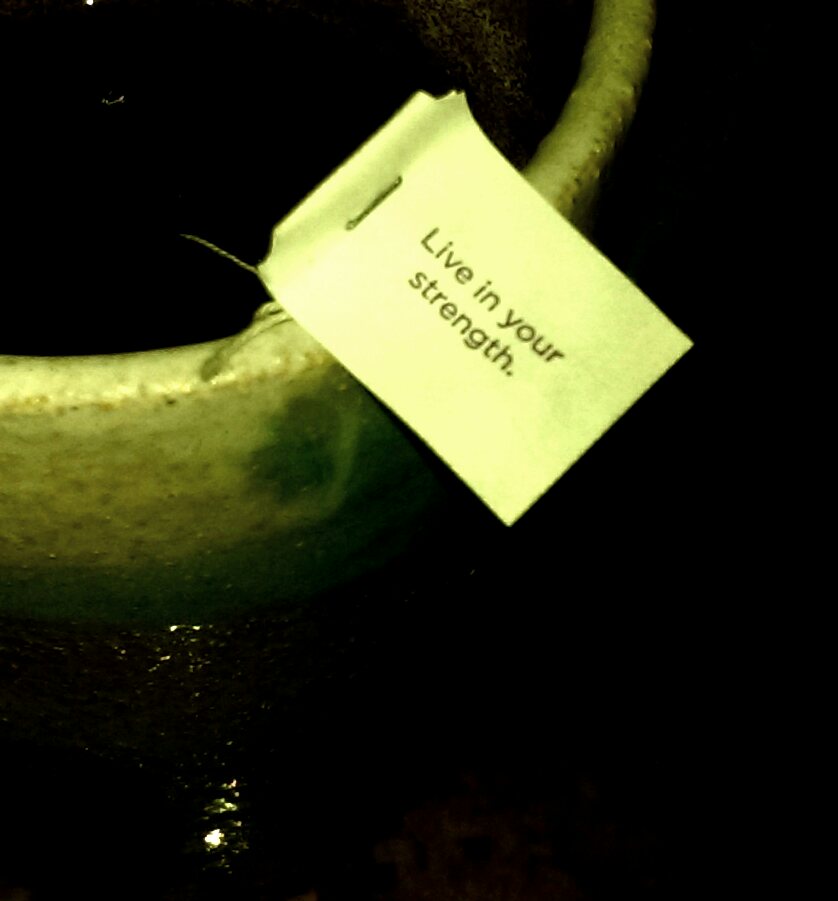
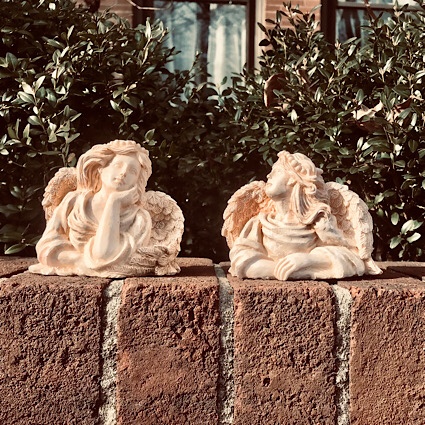
Here:  two kinds of tomatoes with two versions of the goddess (Tara and Uma (a/k/a Parvati)).   I had only a large tomato or two per week throughout the summer; with the equinox passing, the vines are for some inexplicable reason now abundant.  I will either be making a good sauce in October or pickling green tomatoes, depending on how soon we get a frost.  Or perhaps both.

the goddess and the tomatoes too the goddess and the tomatoes

Similar Posts

  • | |

    “Opening to Grace” (and beginner’s mind)

    Capitol 9-09I took this picture the other day when I was walking to work.  I have seen TV cameras set up at this spot dozens of times to film news interviews.  I have seen tourists galore photographing each other.  I’ve seen a couple of photo shoots of brides and grooms dressed in their wedding clothes.   I’ve seen the fountain full of ducks or gulls.  I’ve seen it empty of water, with rain pelting on it to eliminate any reflection, in a blizzard, iced over, full of algae, as a play spot for dogs who like to swim, in fog, in beating down sun, with cherry blossoms floating on the water, and with waves from a strong wind.  Although (or more likely because) I’ve walked past this view hundreds of times in the 25 years I have lived on Capitol Hill and the 18 I have worked for the Department of Labor, I have never taken out my camera and photographed this incredibly photogenic spot.

    When I took the photograph on this day when the reflection just happened to be perfect, it led me to see the spot the way tourists see it:  full of freshness and wonder, beauty, and excitement to be in this place that represents a certain mind-blowing type of power.  Reflecting on the act of taking the photo from my perspective as a resident, led me to think about the Anusara alignment principle of “opening to grace.”

    One of the many aspects  of “opening to grace” is having a “beginner’s mind.”  What does it mean to have a beginner’s mind on or off the mat?  I think it means being open to new insight, to a sense of joyous discovery, to a feeling of fresh intoxication and wonder, no matter how many times we have done or seen something before.  How many times have you done lunge or downward facing dog?  Eaten a green bean or a potato chip?  Petted a dog?  Turned on a light switch?  Filled a glass with potable water out of the tap?  If it is the “same old, same old,” then you will lose the desire to practice and the possibility of growing.  But most of what we do, especially as we get older, is a repeat of something we have done before.  Grasping at new experience as a cure for boredom or jadedness will only make us unhappy.  If we can see each day with newly opened eyes, then we can find fulfillment in each moment and be better able to grow.  We will be open to ever deepening refinement and exploration within the space of our existence.

  • | | |

    New Spinach (and Udyamo Bhairava)

    The fifth sutra in Abhinavagupta’s Siva Sutras, is “udyamo bhairava” — the great upsurge of consciousness.  When we are open and aware, we can witness this upsurge, the very pulsing of life energy in all that is in and around us, from the springing up of thought in our minds to the burgeoning of spring.  The more we practice and live attentively, the more we will see the joy in this upwelling.

    When I go out into the garden on the early spring days to see what needs to be cut back, what is volunteering, and what is coming up from fall plantings, I approach with great openness.  When we plant in the fall, we do not know with any certainty what kind of winter we will have.  Although the long-range forecast was for colder than normal with precipitation near normal (which translates into more than average snow), who could have expected three mammoth snow storms?

    I plant with hope and some expectation, but am ready for the loss of some perennials, the failure of some seeds to germinate, and the unexpected pleasure of experiments working or welcome volunteers.  This steady planting without specific expectation, with openness to discovery, with joy and attention to the miraculousness of what rises up in the spring, is a very tangible example of what I read in the yoga philosophy.  It is how I, I believe, we most optimally would approach asana and meditation, as well as all aspects of our daily being.

    Below:  new spinach coming up in a container from seeds I planted around Thanksgiving from an expiring packet.

  • Perception and Illusion (maya)

    I have been thinking about perception and how as soon as we have more than one person looking at the same thing, each person has a different story, a different truth, a different explanation.  Add to that the mysterious systems humans have created:  information technology, cyberspace, monetary system.  All of these are energy fields.  We can only perceive small pieces of them, and we have varying degrees of skepticism about the reality of what we get from them.  It is not a hard leap from that to understand what the yogis are saying when they say what we receive through the senses is illusory (maya).

    We read news articles about the fact that Yo-Yo Ma was not playing at the Inauguration, but just moving his hands over the instrument to a recorded tape.  Why would I believe the news stories more than I would believe what was on the “jumbo-trons” — or if I had been one of the few close in, what I’d thought I’d seen and heard?  Why would I be more likely to believe the Inauguration of President Obama if I saw it on TV than I would the story line of a movie?  How is it that we distinguish between news and fiction, our side of the story v. the other person’s side?

    When we emphasize the “reality” of our own perception, we bring ourselves to schisms, disputes, and hurt feelings.  When we let ourselves be skeptical about our own perceptions and know that they are only one aspect of a unity (like the blind men and the elephant), then we can be softer, more open, and less divisive.  I am working on this; it is a challenging aspect of my yoga practice.  What do you think?

Leave a Reply

Your email address will not be published. Required fields are marked *

This site uses Akismet to reduce spam. Learn how your comment data is processed.