“I Have a Dream”
The full speech. How far we have come; how far we have to go.
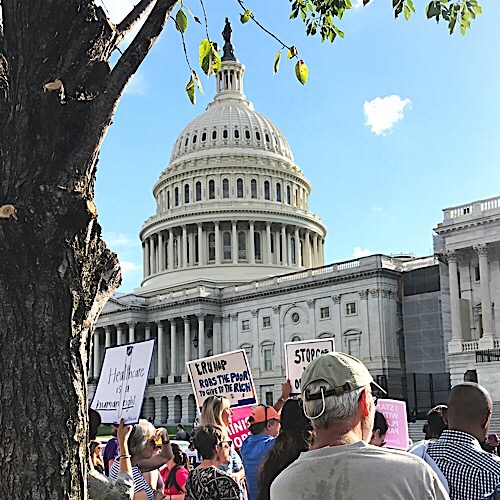
The filibuster and related activities, including an interfaith vigil on Wednesday the 28th, continues until Thursday. Details on various Facebook Pages–ACLU, NARAL, Planned Parenthood, Move On, and others.
Mostly I will be working during the scheduled times, but I will head over outside of my work day again. Senator Chris Murphy was on his way to dinner with friends from Connecticut who had spent the day doing citizen lobbying–telling their story about why keeping and improving on the ACA was important to them. Senator Murphy said that he’d heard people were outside and felt he needled to at least stop by and connect. He said this is just the beginning, don’t let them tinker and declare a victory if they only deprive 5 or 10 million people from getting insurance; he said keep it up; he’d like to see millions of people coming to D.C. and making their voices heard. I was starting to get caught up in listening and then realized it was time to be at William Penn House.

Peace and light, E — Posted with WordPress for BlackBerry.
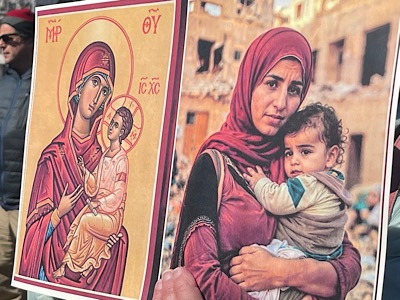
Yesterday I walked over to the White House and joined at the final step of a pilgrimage for peace in Gaza. Among the walkers and those giving voice at the White House were Jews, Muslims, Catholics, Baptists, AME, Hindus, Quakers, Lutherans, and other Christian denominations.
The speaker representing Hindus for Human Rights said this was a shanti yatra—literally a pilgrimage for peace. Every step, every action, every word for peace a prayer embodied.
On the Friends Meeting of Washington list serve this week, there has been a fair amount of email exchanged about an upcoming “meeting for discernment for peace.” Very roughly described, a meeting for discernment begins with a period of silent worship in which those present settle into the silence and surrender thought to allow the light of spirit to illuminate a specific subject of contemplation. The subject of the meeting serves to enlighten both the individuals participating and to further both the business and spiritual state of the meeting as a whole.
As I read the emails and invited myself to contemplate the questions offered for the meeting (I will not be able to attend because I had previously committed to volunteer work), it led me to think not only about the topic under discernment, but about how similar it seems to me to the yoga practice of bhavana and how bhavana supports the Anusara teaching method of “heart-oriented posturing language.”
When we practice bhavana ,we invite the fullness of consciousness to illuminate ever deeper levels of understanding of particular teachings from the yoga texts or similar ideas. It is similar to meditation in that we don’t try to think our way through the concept, but rest with it. Bhavana differs from meditation exactly because it is focused on the deepening of a particular concept rather than simply going into the space of meditation as an end in itself.
Although a meeting for discernment is practiced as a form of collective worship rather than an individual practice, it is much like bhavana, and I brought the Quaker method of resting in the light to reveal deeper insight regarding a concept when I first starting teaching Anusara yoga with its emphasis on having a class theme and using heart-oriented language to invite myself and students to experience a heart quality through asana practice.
The queries for contemplation at the meeting for discernment for peace, include the following: