Art and Culture | Asana, Pranayama, and Yoga Practice | Community and Family | Food for the Mind (Yoga Philosophy, etc) | Meditation
Love “the Cow Lakshmi” Part
Fascinating video about Bhagawan Ramana Maharshi.
Fascinating video about Bhagawan Ramana Maharshi.
I just received this letter and wanted to pass it on to those who have senators and members of Congress (those of us in DC still do not):
Dear Elizabeth Goodman,One of our lobbyists just reported to me that some members of the supercommittee are telling us they are open to cutting Pentagon spending. “We need to hear what the folks back home in our state have to say about this,” we heard.The most important voice in this budget debate is your voices as constituents. As they make their decision, your members of Congress need to hear your side of this story. They need to hear about the consequences in your communities when money isn’t invested in schools, roads, jobs, and other local priorities.Today, will you write a letter to the editor of your local newspaper? Refer to your members of Congress by name and point out the needs in your local community.Communities around the country are being squeezed. More people are relying on food banks; local governments are copying with both the neighborhood and family stress of foreclosure; schools are increasing class sizes and shortening the school year; and critical maintenance on bridges and roadways. Police and firefighters are losing their jobs. Yet, the Pentagon budget continues to grow.Congress will take action to reduce the deficit, which means budget cuts. But if Congress doesn’t act to cut at Pentagon spending by a significant amount — FCNL and others believe that number is $1 trillion over the next ten years — then the cuts to other programs will be much deeper. Cutting the Pentagon budget and potentially making more funds available to meet the needs of state and local communities. There is an opportunity to make this change.Thank you for your action.Sincerely,Diane RandallExecutive Secretary P.S. If you want to know more about how much Pentagon spending is slated to rise, or more on FCNL’s views on the debt, deficit and supercommittee, visit our website.
Peace and light, E — Posted with WordPress for BlackBerry.
There were lots of images of Hanuman around where we were in the hills. I come home after this long break–far enough away and for a long enough time to be able to gain perspective–and think, given that I have dedicated most of my career to public service, about how the myth of Hanuman may inform my ongoing contemplation at this time in my life and in this socio-political climate of how I can best contribute and participate.
Hanuman is the faithful servant; I think that one aspect of his story is that in being true to Rama, he is being true to dharma, to law and culture. In loving and protecting Sita, he is recognizing nature. Only when he is acting in service to them and others can he access his true powers (siddhis).
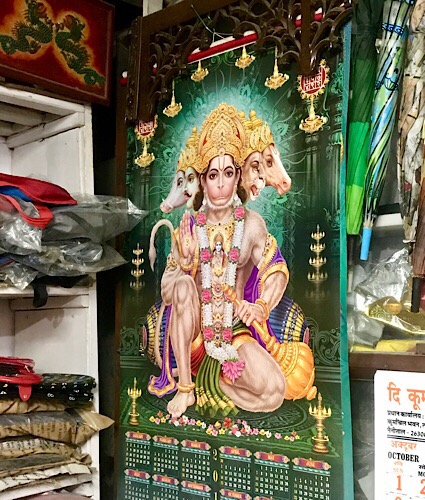
Inside the Durga store, Nainital, India, October 2017