Wow
Tears to my eyes, too: what a moving speech!
Tears to my eyes, too: what a moving speech!
It looks like what was leading to error messages for seeing photos and inaccurate claims my mailbox was full was that I was out of memory for the website.
Overfull, it didn’t tell me what was wrong, but just blocked displaying photos and receiving messages. How often are people like that? When overwhelmed or stretched too thin, it’s possible to see stress and challenge, but not quite what is really the issue.
One of the ways a steady yoga and meditation practice can shift us is to heighten awareness. The error messages we perceive and send are better correlated to the issues at hand.

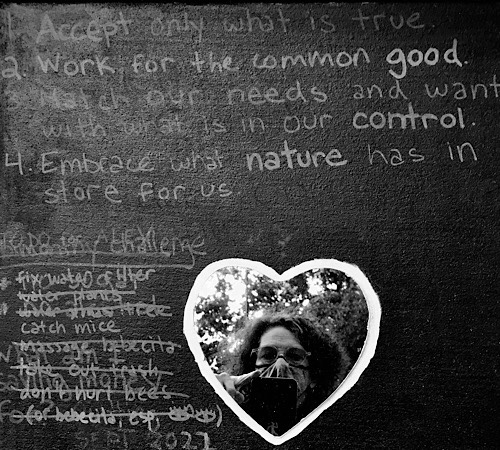
Sign reads: 1. Accept only what is true. 2. Work for the common good. 3. Match our needs and wants with what is in our control. 4. Embrace what nature has in store for us. ***Catch mice.
The tantric yoga philosophy ascribes the characteristic of svatantriya or ultimate freedom to the energy that infuses all of us. We all want to be free, but when we get stuck in our embodiment, forgetting that we ourselves are manifestations of spirit, then we lose sight of our true freedom. To find our own freedom of spirit, we need to be disciplined, to practice, to study, to live in a way that brings us into better alignment with ourselves and world with which we are inextricably interconnected.
In this country, one of our principle ideals and buzz words in dialogue about how we should live is freedom. What can so often be forgotten in this dialogue, though, is that freedom is a contract. To be in a society where all have the opportunity to experience freedom, we need to agree, with discrimination (viveka) to certain limitations (for example, we agree to stop for red lights so that we can be free to drive and walk without a constant risk of being hit in crowded city).
Granted, I am grossly oversimplifying here, but part of the great losses of freedom we are currently experiencing is the abdication by individuals of the responsibility to shape the agreement to maximize our collective freedoms. Like the agreement with ourselves to practice steadily to experience inner freedom, we need to stay engaged, even when it seems impossible or deeply frustrating, in order not to lose sight of the ideal entirely. Here’s some information from FCNL on why it is important to lobby despite how fruitless an act it may appear to be.
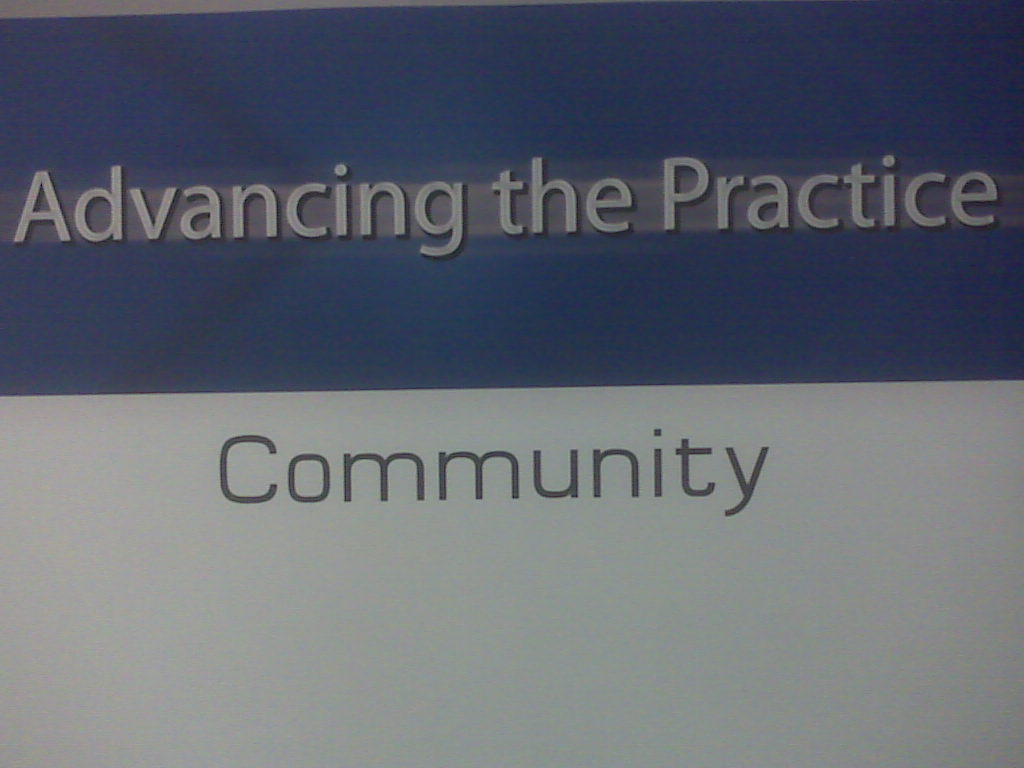
Advancing
The practice.
Community.
I spied this sign yesterday in the exhibitor hall on the lower level of the Marriott in Woodley Park. I was attending a portion of the 38th Annual Conference of Enrolled Actuaries. (Go ahead: I dare you to put that into your favorite search engine).
Although this sign was to invite enrollment in one of the actuarial professional organizations, it seems most similar to the stated aspirations of various yoga groups and schools.
I’m not surprised by this symmetry. I think that anyone who seeks to live so that employment and dharma (aligned life) are in harmony and who supports, participates, and works in community, is living like a yogin, though perhaps never knowing about or having any interest in yoga per se.
There are many life paths and humanistic and spiritual practices that guide life towards a contented path of service, the true reason, to my thinking, for a steady, long-term yoga practice (including asana, pranayama, and meditation).
I personally find the yoga practices to be among the most helpful ways to engage my body and mind for my health and well-being. Among other things, the practices have helped me listen with open enough awareness to be able to comprehend with my law-trained mind some small portion of the language of actuaries.
Peace and light, E — Posted with WordPress for BlackBerry.
On the Friends Meeting of Washington list serve this week, there has been a fair amount of email exchanged about an upcoming “meeting for discernment for peace.” Very roughly described, a meeting for discernment begins with a period of silent worship in which those present settle into the silence and surrender thought to allow the light of spirit to illuminate a specific subject of contemplation. The subject of the meeting serves to enlighten both the individuals participating and to further both the business and spiritual state of the meeting as a whole.
As I read the emails and invited myself to contemplate the questions offered for the meeting (I will not be able to attend because I had previously committed to volunteer work), it led me to think not only about the topic under discernment, but about how similar it seems to me to the yoga practice of bhavana and how bhavana supports the Anusara teaching method of “heart-oriented posturing language.”
When we practice bhavana ,we invite the fullness of consciousness to illuminate ever deeper levels of understanding of particular teachings from the yoga texts or similar ideas. It is similar to meditation in that we don’t try to think our way through the concept, but rest with it. Bhavana differs from meditation exactly because it is focused on the deepening of a particular concept rather than simply going into the space of meditation as an end in itself.
Although a meeting for discernment is practiced as a form of collective worship rather than an individual practice, it is much like bhavana, and I brought the Quaker method of resting in the light to reveal deeper insight regarding a concept when I first starting teaching Anusara yoga with its emphasis on having a class theme and using heart-oriented language to invite myself and students to experience a heart quality through asana practice.
The queries for contemplation at the meeting for discernment for peace, include the following: