Art and Culture | Asana, Pranayama, and Yoga Practice | Food for the Body | Food for the Mind (Yoga Philosophy, etc) | Gardening | Meditation | Photos
Signs Around Town

Peace and light, E — Posted with WordPress for BlackBerry.
Peace and light, E — Posted with WordPress for BlackBerry.
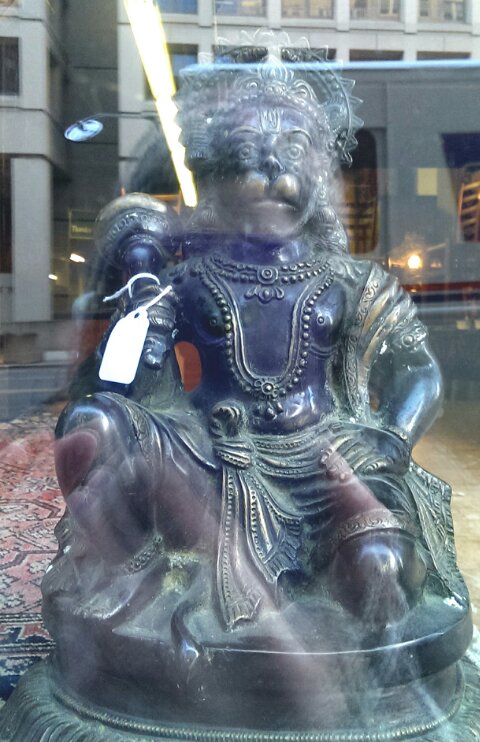
On the walk from the dentist back to the office. I wonder how many civil servants think about Hanuman on their way to work.
If only wishing could make it so, this yearning of a few for so many countless generations. I will be examining, for the new year, what I can do to diminish conflict in my own life–because that I can do.

For the next few nights, lows will be in the 70s F and highs pushing or hitting 100F.
Please don’t fight the season or waste emotional energy hating it. Instead, wear loose, light clothing; eat small, room-temperature meals with emphasis on seasonal fruits and vegetables; exercise in the early morning or evening and do cooling, easeful yoga practices.
By all means, take advantage of technology and stay inside air-conditioned environments in the hottest part of the day. But please don’t crank up the cooling so that you can fire up your exercising or wear heavy clothes (for example, suit jackets and heavy shoes) or eat heavy, meaty and starchy meals. Fall will come soon enough.
Being seasonal doesn’t just make life more pleasant and enhance flexibility and adaptability, it also minimizes our use of precious, nonrenewable resources.
I’m looking forward to homemade popsicles, seated forward bend and twists, deep meditations, and early morning walks over the next couple of days. What about you?
Peace and light, E — Posted with WordPress for BlackBerry.
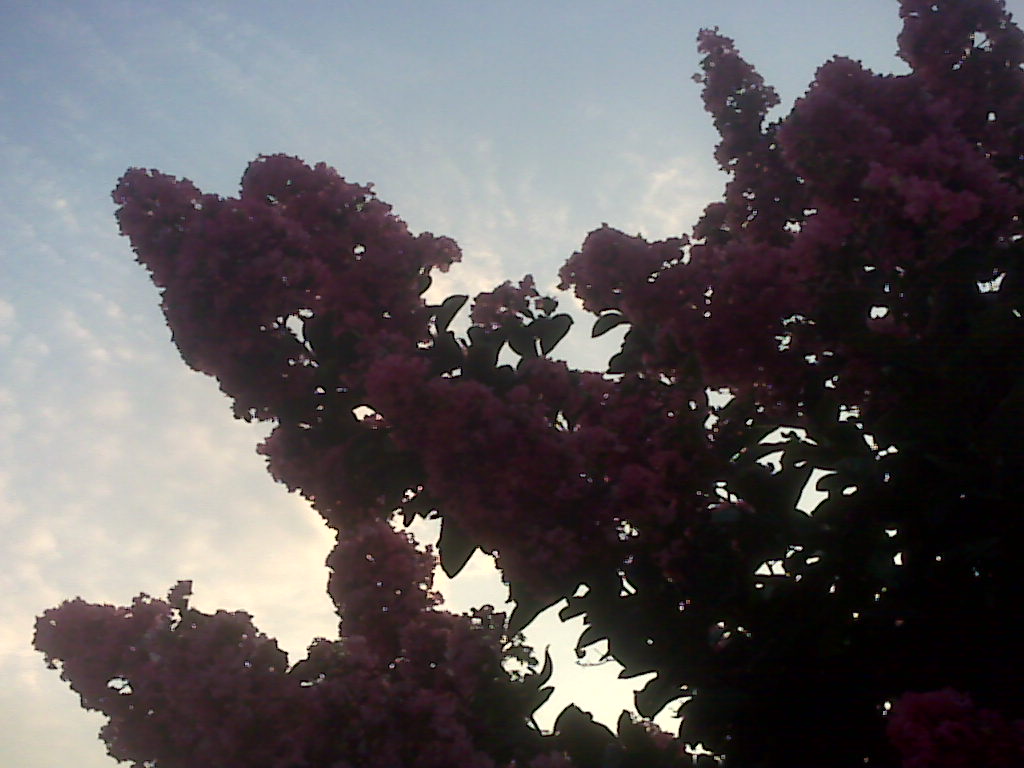
The clouds of drought-ridden skies have an uncannily alluring beauty, like that of fairies who, though exquisite, are heartless and dangerous by human standards.

Peace and light, E — Posted with WordPress for BlackBerry.
Honoring being a child of the earth this morning on my way to an afternoon volunteering at the Lantern Bookshop.
I woke up woozy and sore this morning and went back to sleep for about 45 minutes after I was done with my morning practice. Although it is atypical for me to need more sleep after I have practiced, I knew that I was not sick. I was just experiencing side effects from the flu shot.
I have only gotten the flu shot once before. The side effects felt like I had the flu (albeit a mild case), and I got the flu any way that year. As I haven’t gotten the flu in the past several years, I have not gotten the shot in subsequent years. (Note: The vaccine has been very effective 17 of the past 25 years, and not particularly effective for three of the other years. It was suggested to me that I should not continue basing my decision on having, by coincidence, only gotten the shot during one of the ineffective years–2003-2005).
I was strongly advised to get the flu shot this year as a precaution for the trip to India. The plane travel, regardless of how much healthy living I do otherwise, will both tax my immune system and put me in contact with a host of viruses, etc. Also, and perhaps more important, I know I will be visiting loved ones in the hospital this flu season. Going through a little discomfort now is worth it to minimize the risk to those I will be visiting.
Have you gotten your flu shot?
Below: Workers line up to get the flu shot at the Health Unit.

Peace and light, E — Posted with WordPress for BlackBerry.