| |

Train Ride Home

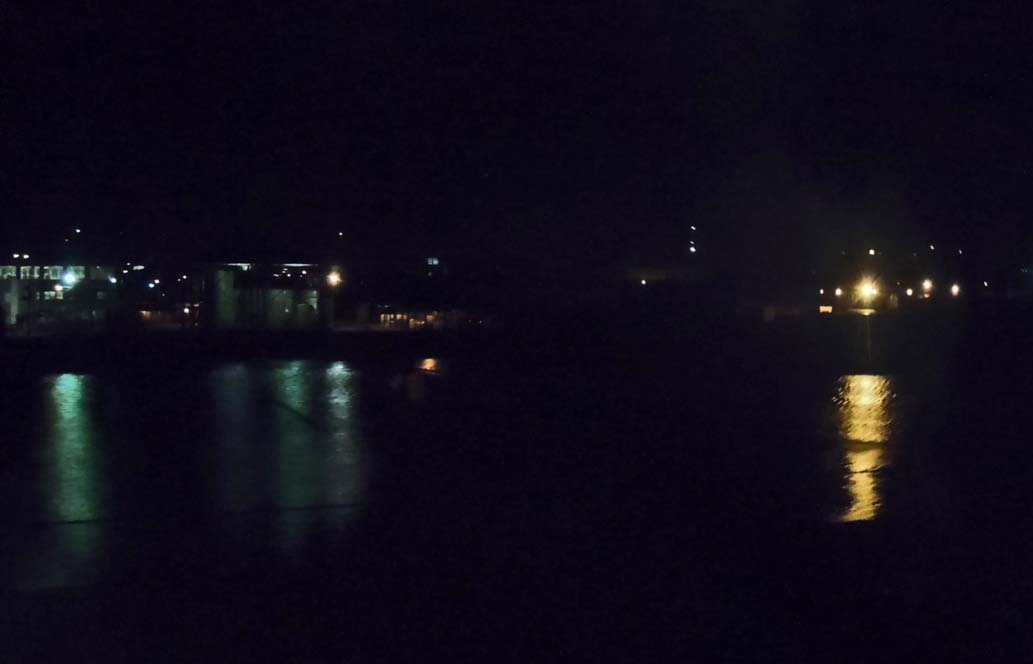
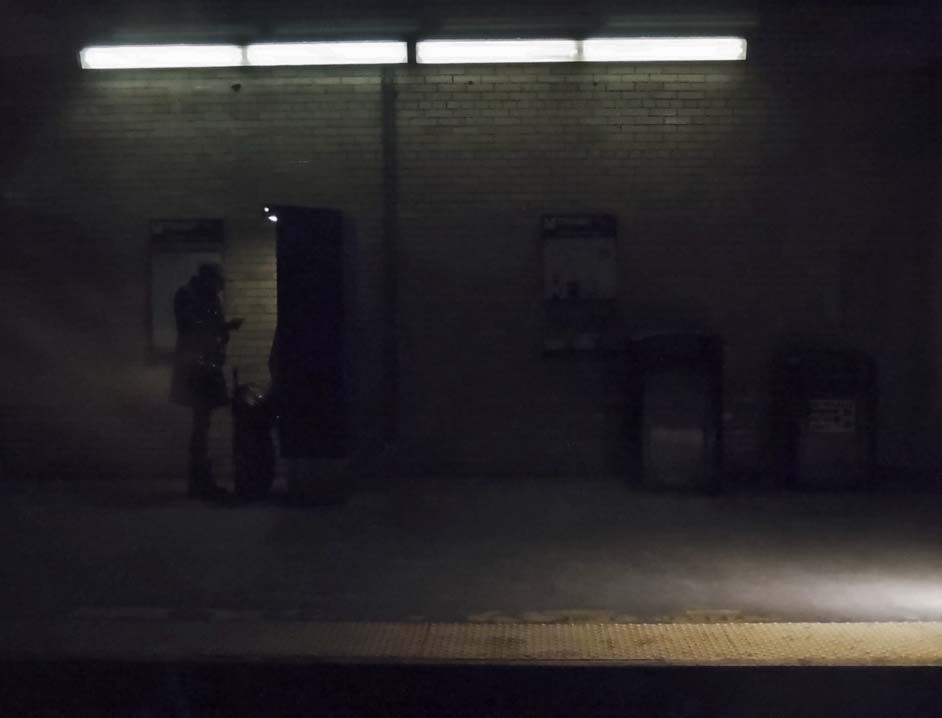
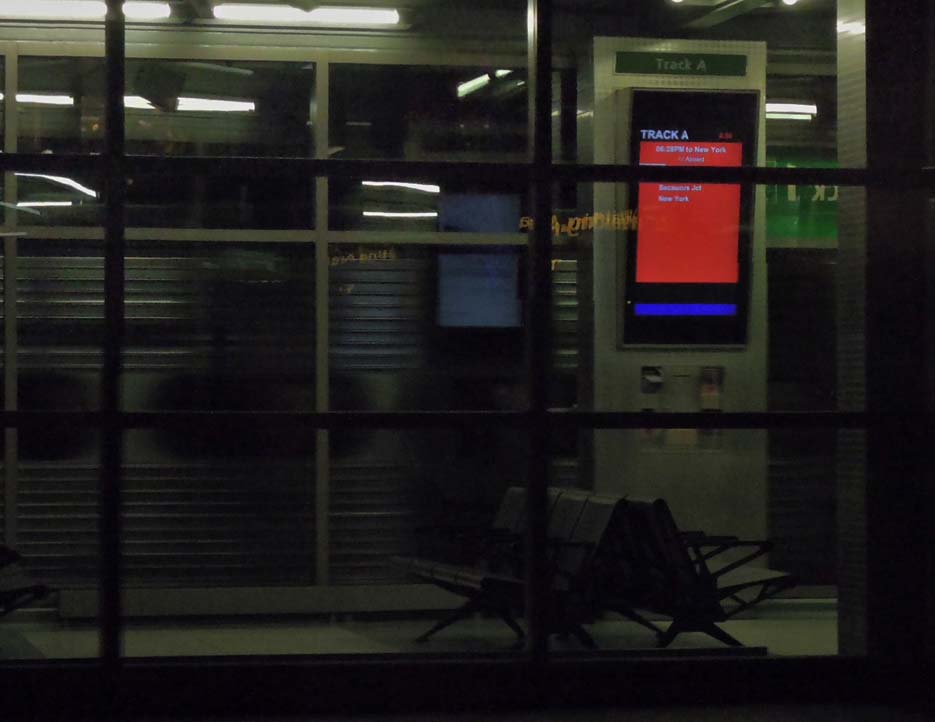
It is hard to believe that having arrived home only two weeks ago from my trip to India that I have already gone on and returned home from another trip.  As I looked out the train window at the landscape that still holds my interest though I have seen it hundreds of time, but yet is restful in its very familiarity, I thought about how strange and wondrous it would seem to one newly visiting from a place like Tamil Nadu, especially the rural areas.


Similar Posts

  • | |

    The Weighty One in Company

    Jupiter and Saturn glowing together so brightly that even the light pollution cannot obscure them. Jupiter is sometimes referred to as the guru planet, the weighty one. Take a look at the sky and use that to listen to your own inner guru, the space where you are fully grounded, engaged, and free in spirit all at the same time. For me, it’s still a work in progress.

  • |

    Bulk Trash

    I am working from home today or I would have missed the arrival of not one, but two very large bulk trash hauling trucks pulling up on the block.  For the past two hours, a team of workers have been loading furniture so decrepit that it would be impossible to give away on Freecycle or to have the Salvation Army or Goodwill Industries take away and resell.  There have been dozens of huge plastic trash bags and who knows what else (I am only watching intermittently as work presses on) going into the trucks.

    When I first moved in to my house 20 years ago December, Mrs. J was already elderly — probably in her mid to late 70s) and her son, who lived with her was not a young man.  I tried being polite when I first moved in, but there was no receptivity even to ordinary saying hello and good day.  The son (I had originally thought husband by his looks; he was gray, heavy, and unhealthy), used to sit on the porch at night and smoke cheap cigars that stank so much I needed to keep my front windows closed.  After he died, only a few years after I had moved in, Mrs. J, started having even more difficulty connecting and making sense and was progressively more hostile in her interchanges with me.  She did still go to church and people from the church would visit, unfortunately often to take advantage of her.  A grand daughter also would stop by on very rare occasions in recent years (more it seemed to check out the property then to take care of her grandmother).  As the years went by, the house has fallen into serious disrepair to the point that it, being attached to mine, has started impacting my house as well.

    Every once and a while, Mrs. J would ask me for help.  She was afraid of the young men who lived next door (who appeared based on both things I have witnessed, circumstantial evidence, and interrelationship with law enforcement authorities to be consistently involved with drugs, guns, and a variety of criminal activities).  But that family had lived next door to her for years, and she did not know how to lock her door to them.  She asked me what to do, but I did not really have an answer that would serve.  Over the years she occasionally would come out and yell at me about the rats in her yard, even though she had open garbage cans stored on the side of her house.  I did not disabuse her; what would have been the point, but I did regularly treat for rats in a way that would take care of both of our yards.  A couple of years ago, when she had gotten truly frail, she came outside one day when I was working in the garden and complained to me that a homeless person she had met at church brought bed bugs into her house.  I found someone from the church and asked the church to find someone to treat for the bedbugs.  It appeared that the matter was resolved, because she did not bring it up again.  Over a year ago, Mrs. J was hit by a bus and sustained a minor fracture to an arm.  It was discovered, though, that she was incapable of taking care of herself, and she never came back.

    Now the bulk trash trucks are here.  What would it be like to have lived for decades with things that others see only as trash?  To have had (along with whatever good) so much fear, bitterness, and frustration for that time?  What will happen to the house now that the trash and the memories are being cleared out?  To some extent we choose how we will live.  The house itself is in structure almost identical to mine and in the same wonderful location just blocks from the US Capitol.  Although the contents do not seem able to be salvaged, will someone treat the house as a treasure?  Witnessing the trash hauling makes me want to be ever more mindful of what I consume (materially and energetically), what I hold on to, and what I release and send out.

  • | | |

    The Svadharma of the Pinky Toe (and Radical Affirmation)

    Svadharma, from sva (self) and dharma (duty) means our personal path, duty, calling, or place.  The principle of svadharma is a significant teaching in various yoga texts, such as the Bhagavad Gita, especially emphasizing the importance in acting in accordance with one’s caste (for example, Arjuna needing to act in accordance with his dharma as a warrior) or one’s sex (consider Sita’s role in the Ramayana).

    Extrapolating this teaching and taking it onto the mat, during one of the practice sessions the previous week at the Certified Teachers’ Gathering, John Friend said that “every part of the the body has its own svadharma to increase the pranic flow.”  He then said that if you just took a photo of the feet of an Anusara yoga practitioner in any pose, you should be able to see that the whole body was fully engaged and active.  John Friend’s teaching here was not just using the yoga philosophy as a catalyst to better understand the body.  By using the principle to illuminate the practice, the practice reflectively illuminated the principle itself, without denying or denigrating its original context or getting bogged down in its historical baggage of perpetuating the caste system and demarcated, subservient roles for women.

    Thinking about the svadharma of the pinky toe has no such baggage.  The pinky toes are homely looking things, they do not fit well into most women’s shoes, they rather painfully bump into things, and they are hard to move independently.  They are not essential for living and do not have the emotional charge of the heart and brain, the exquisite connection to the world of the sense organs, or the connection to life itself of the lungs.  Despite this, the call to lift and spread the toes, to draw the pinky toe toward the heel, or the hip happens just about every time I go to the mat in my practice or teach a class.  Activating the pinky toe by opening it and spreading it apart from the other toes is a conscious act of opening that helps hug the shins to the midline.  In hugging the shins in by means of activating the pinky toe, the yogi on the mat can then safely move the thighs back and apart, creating an expansion of the pelvic floor that provides room for more strongly tucking under the tailbone to access core power.  The pinky toe thus is an important part of our practice, even if we could manage to get by without it.

    But the svadharma of the pinky toe on the mat is not just to be able to help us access the movement of “shins in” so that we can better do “thighs out,” although that is an important physical part of its essence.  The toe does not move on its own.  We have to start by bringing our awareness and consciousness to the toe.  Part of the pinky toe’s svadharma, then, is to invite the infusion of consciousness to show how full participation of even an apparently insignificant part of the body can lead us to a better understanding and personal experience of the pulsation between reaching out and hugging in and affirming ourselves.   By intentionally bringing our awareness to the power we can unleash in the pose by the movement of the pinky toe, we bring the opportunity for greater strength, expansion, and flow of energies.  This is why, I think, John Friend suggested that by just seeing the toes we should be able to know the engagement of the whole body and mind in a particular pose.

    As a practical and therapeutic matter, recognizing and bringing into play the svadharma of each and every part of the body serves to help us increase the flow of energy and expand our range of movement.  In addition, activating the parts of the body that are inclined to slack (for example, the pinky toe or the adductor and abdominal muscles) will bring ease to the muscles that tend to overwork to compensate, such as the neck and low back muscles.  We are not just stronger and more flexible when every part of the body does fulfills its svadharma, but we eliminate much pain and suffering.  (More to come on this particular concept in other posts.)

    Off the mat, when all parts of the whole are fully conscious of and know their svadharma, the whole will itself have more consciousness, more light, and better experience the bliss of being.  It is easy to see, without judgment or question, that the pinky toe cannot do the work of the heart, although when the pinky toe is working it can help contribute to an integration of mind and body that will further the opening of the heart and thus the whole person.  Finding our svadharma as a whole person within society does not have to be about conforming to preconceived social norms that no longer serve.  The better we are able to understand where we are in time, space, and the interconnected web of being, though, the more fully we can participate in leading society itself to a more conscious and light-filled place, just as bringing our conscious awareness to the actions of the pinky toe can do the same for us as individual yogis on the mat.  When we recognize and live out our true svadharma as such, we radically affirm ourselves, the community, and the very essence of all being.

Leave a Reply

Your email address will not be published. Required fields are marked *

This site uses Akismet to reduce spam. Learn how your comment data is processed.