Alignment Instruction?
Whether reaching on or off the mat, we want to keep the upper arm bone integrated into the shoulder socket.

Peace and light, E — Posted with WordPress for BlackBerry.
Whether reaching on or off the mat, we want to keep the upper arm bone integrated into the shoulder socket.
Peace and light, E — Posted with WordPress for BlackBerry.
From late September through the first week when there either are two or more nights forecast to below 38F or one night below 35F, I assiduously watch the 15-day weather forecast to determine when to bring in my tropical plants (orchids, bromiliads, a night-blooming jasmine plant (now 8 years old), a bay tree in a 24 inch pot (now 12 years old)). I also bring in the lemon grass and lemon balm I have in containers so that they can be the perennials they would be in a warm climate; here, left outside, they are annuals.
When I first had a few orchids — over 10 years ago now — as soon as there was a hint of cold weather (below 45F) I rushed the plants inside, believing that if they were tropical, they needed to be inside. In one of the early years, the first night below 40F was in late September. The plants really suffered from a full seven months inside. I have since learned (by studying and personal observation) two things about my tropical plants. The first is that they are a lot happier outside than inside (when inside is not a properly humid, sunny greenhouse). The second is that they like cold weather as long as it is not near or below freezing. They especially like cold rains like we had the other weekend. The stress of a few weeks of nights in the 40sF, in fact, seem to help the orchids bloom. Now, by waiting until the last possible minute, and bringing them out as soon as it seems like the danger of last frost (for my backyard, which is very early) has passed, the orchids are outside at least seven months of the year.
Thinking about how the orchids flourish with the stress of some chill, but not too much, reminds me of what my teacher John Friend talks about in yoga practice of the difference between stress and distress. Some stress actually strengthens us. This is why one of the best ways to avoid or at least slow the process of osteoporous (according to the general medical literature to I’ve read) advocates weight-bearing exercise. Putting weight, i.e., stress, on our bones and muscles strengthens them. Too much, too fast, however, will injure our muscles and bones.
So, especially for those of us with injuries (prior or current) or physical challenges such as arthritis, it is optimal to exercise, to seek our edge, to put ourselves under stress, mindfully and intentionally. We need to be aware, though, of the subtlety of the edge between stress and distress so that we are strengthened not injured, just as exposing the orchids to some fall weather invites them to bloom, but actual freezing or near-freezing temperatures will harm or kill them.
Every once and a while, I find myself restless at bedtime or wakeful in the night. The following series serves to make it easier for me to go to sleep and for me to feel fully rested as if I had not been short sleep:
1. Vipariti karani (legs up the wall). Start with legs up the wall for five minutes or longer, then move legs into baddha konasana (butterfly) for several breaths, then put them back up the wall. While your legs are up the wall, first just watch the breath. Then concentrate on the breath, inviting the exhales to be twice the length of the inhales.
2. Twisted forward bend. Using a bolster and a folded blanket (or two or three folded blankets) lengthwise on your mat, place the left thigh next to the edge of the blanket pile, allow yourself to sit heavily. Staying sweetly grounded, hug your hips together to embrace your core and then draw the left waist back as you bow forward onto the support of the blanket. You can allow your forearms and hands to rest on the floor or you can bend your elbows a little more and tuck your hands between the blankets under your forehead. Keeping the attention on the breath, inhaling lovingly draw in, exhaling more fully accept the support of the blanket. Hold for a few minutes and then repeat on the other side.
3. Supported balasana (child’s pose). With your knees wide apart and the big toes together, draw the blanket pile between your knees up to mid-thigh. Place another blanket (or a pillow) across your calves. Bow forward onto the support of the blankets. Half way through, turn your head to the other side. If your thoughts are still active, just let them be and turn your attention back to the breath.
4. When you are ready to come out of balasana, tuck your toes under and lift your hips into adho mukha svanasana (downward facing dog). If you’d like, you can stay here for several breaths with your head supported by the blankets. When you are ready, walk your hands back to uttanasana (standing forward bend). Quietly and mindfully get back into bed and lie in savasana.
Sweet dreams!
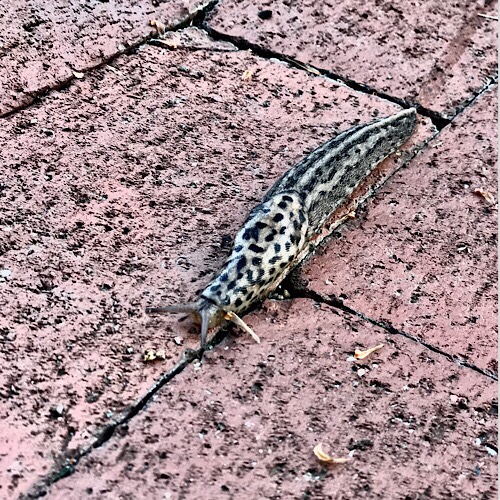
Check out what comes up with an internet search for “slug spirit animal.” #persist
The practice of yoga nidra is a wonderful way to deepen the connection between the full range of consciousness and your physical body. It is enjoyable and helpful to practice it on an occasional basis — we did it for the last class of the session in the Willow Street gentle/therapeutics class and you all are welcome to come to the New Year’s Yoga Nidra workshop on Sunday, January 4th — but it can be even more productive as a regular weekly practice.
Here are some good resources if you have found yoga nidra helpful and want to find out more about it and establish a home practice:
To read more about yoga nidra, I recommend the following books, both of which I believe are available at Willow Street Yoga Center.
These CD’s lead you through yoga nidra practices of various lengths and emphasis: