Found Exhortation

Peace and light, E — Posted with WordPress for BlackBerry.
Peace and light, E — Posted with WordPress for BlackBerry.

Peace and light, E — Posted with WordPress for BlackBerry.
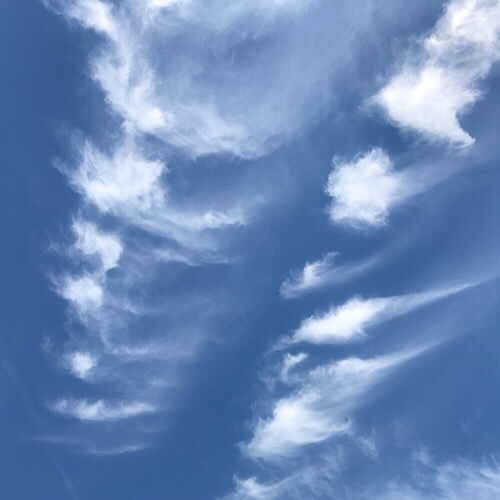
Ether (akasha) is the fifth of the mahabhutas. In science and perception, it is the space between the other elements, it is that in which the other elements reside. It is to some degree, the critical element of how we are able to perceive the other elements. I find focusing on the Anusara alignment principle of “open to grace” is the best way to experience the element of ether in myself. By softening, opening, and inviting spaciousness, I can better experience the subtle elements and appreciate how it is that I experience them.
The subtle elements or the panca tanmattras are smell (gandha), taste (rasa), form (rupa), touch (sparsa), and sound (sabda). The subtle elements are not what we sense (which is composed of the mahabhutas) nor are the tanmattras our sense organs. Rather the tanmattras are, as it were, the space in which perceptions arise, the ability to be perceived.
The next sets of elements are the panca karmendriyas, the organs of locomotion, which correspond to how we physically move, digest, and change in the physical world, and the panca jnanendriyas, the organs of perception or cognition, which correspond to our sense organs themselves. Our movement in and perception of the world bridges the physical elements, the perceptability of the physical world, and ourselves as physical beings, beings who move in the physical world, and beings who perceive the physical world. All of this, I think of as needing space or residing in space. As I consciously think of space giving a place for the world, my movement in it, and my perception of it, I become more conscious of consciousness. The physical practice of “opening to grace” and experiencing the element akasha makes possible for me in my practice knowing or experiencing a greater consciousness.
To start discovering your own understanding of akasha, try this meditation: listen to the sounds beyond the room without trying to analyze or change them. Appreciate how far in space your senses and consciousness can be. Then bring your attention into the room and hear the sounds in the room. Then open your ears to the sounds within you — your heart beat, your breath. Then open to all the sounds (don’t try to change or analyze them), both those physically far away and those within your own body, and be aware of them as all residing within your own consciousness. Appreciate that your consciousness is as spacious as the world around you and within you. Rest in the space of consciousness.
See whether spending a few minutes using this meditation technique helps you when your day has gotten too busy with work, errands, family or other demands. I find it very helpful.

In the window at Clothes Encounters–a woman-owned small business on Capitol Hill. I wasn’t feeling the need to bring anything new into my closet, but I went in to say how much I liked the sign. I enjoyed trying on a tourmaline necklace that looked like it came from India.
As I was headed out at lunch, a co-worker in another office whom I know only from the hallway, asked, “do you have an umbrella?”
“Yes, I do, how are you?” I replied, knowing that she was trying to be helpful. So many of us work in spaces without windows, it was not unreasonable for her to think I might not know it was raining.
Another woman who I did not know said, “I heard it might rain all weekend,” revealing herself as one who gets all knowledge of the weather from tv.
I thought, but did not say, “yes, there is that pesky hurricane coming.”

Peace and light, E — Posted with WordPress for BlackBerry.
It was not the kind of night to go across town to run an errand, but it was one that could not wait until after I cam back from vacation (picking up my passport from the company that processes visas for India). I did not really feel the need to go shopping in Georgetown and would have rather gone straight home, but the rain was getting heavier and heavier and traffic was abominable. A taxi would have been a pointless exercise in watching the meter while we barely moved.
So I checked out “Fashion’s Night Out” in the stores near the bus stop. I had a great time visiting with the DC Roller Girls, who were at the Lush store in Georgetown. When the sales people start describing the products to me–they are always very enthusiastic–I often find myself telling them that I know what I need to know about Lush; I first shopped at Lush when it was a single store in Covent Garden.
When it was evident that the rain was not going to let up, and I’d had enough of window shopping from inside, I caught the Circulator bus and enjoyed myself taking photographs. When there is little choice about going out in the rain, it is best, as my teachers remind me and the practices inspire me, to find the beauty and the delight.