| |

On Seeing

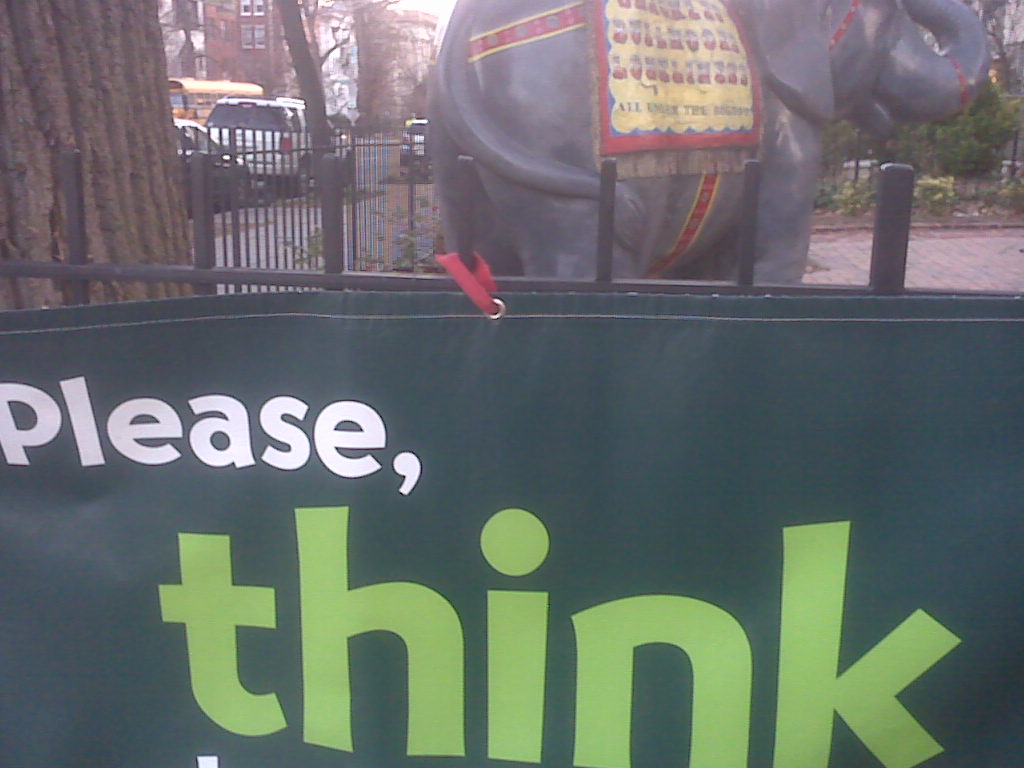
When I paused to photograph this marker on a DC sidewalk yesterday, I wondered how many hundreds of people have walked past it–once or hundreds of times–without noticing it at all. I connected this sense of acute awareness with a conversation I had with Douglas Brooks in India, in which he said to me that he guaranteed that at that moment he was seeing more than I was seeing. He had experienced the place before, studied it extensively and intensively, and was still open to seeing. I did not take offense and none was meant. I am one who notices, but it is a given that study and experience, if one retains an openness to new understanding, maximizes the opportunity to witness.

Paul Muller-Ortega describes the expanding ability to see and understand in terms of the essential interrelationship between jnana and vijnana–book knowledge and experiential knowledge. One without the other does not permit for complete understanding. The two together, with ever-expanding and present openness is what leads to wisdom.

Thus, though I am one who tends to notice much of what is in my field of vision, I could not, on my first visit, possibly have seen as much in the immediate landscape as one who has devoted much of his life both to studying and experiencing it.

Peace and light, E — Posted with WordPress for BlackBerry.

Similar Posts

  • | |

    “Inspiration Cards”

    I adore having a library and will rarely say no to a philosophy text or a book about anatomy, therapeutics, or yoga methodology.  I am less interested in “self help” types of books or gadgets.  Every once and a while though, I come across something that truly supports my practice and my teaching.  When I first went to Inner Harmony to study with John Friend in mid-2003, there was an altar in the corner of the practice room, just at the entrance.  On the altar was a set of cards (a little smaller than 2″x2″).  Each card had a word in English, the devanagari, and the sanskrit of the word transliterated into our alphabet.  Following the lead of others who had been to Inner Harmony for previous retreats, at the beginning of the day, I would select a card and think about how the word on the card might inform my practice and intention.

    At that time, I was first starting to use Anusara’s “heart-oriented posturing language,” using a theme for class that was designed to lead the students into a deeper place in their hearts through their asana practice, and I found that the cards were an excellent source of inspiration.

    Even though I first bought the cards in 2003 to serve as a basic class preparation aid, I have continued to use them regularly for my own practice and contemplation.  Often, the word that appears resonates with something that is of immediate concern.  The day after Becky (my beloved cat who lived to be 21) left her body last year, I went to the set of cards, which I’d not used in a couple of months.  The card that I selected at random (like picking a card from a deck when someone is showing you card tricks) was moksha — liberation, and in classic yoga, literally liberation from the body.  I was moved to tears.

    This summer, with myself and my students, we have been working on manifesting intention.  As I’ve blogged about previously, I invited us to think about an intention.  Whether an intention is something basic with the body or mind or something more universal, whenever we seek to manifest an intention, ultimately it is because we want to be more blissful, more open, and more at peace with ourselves and others.  The question becomes how do we use our practice both to discover an intention and to seek to make it manifest.  To help me with the contemplation of this question, I have gone again to the cards as a source of inspiration.  This week, the card that turned itself up was racanatmakata — creativity.  “Perfect,” I thought, when I saw the word.  Creativity is a human reflection of the wild, pulsing, diverse and ever-extraordinary dance of all being.  When we open to our creative impulse to allow things to unfold, we can witness the fullest range of possibilities and the variety of paths to manifestation.

  • | | |

    State of the Garden

    I think during World War II, backyard gardens supplied something on the order of 40 percent (don’t quote me on this) of the nation’s produce. Were we to do that, how much it might contribute to alleviating any shortages–with so much of our food from beyond closing borders.

    How might it help shift our growing climate imbalance and social inequality and the hideous chaos it unleashes? Wouldn’t growing some of your own food be a healthy strategy?

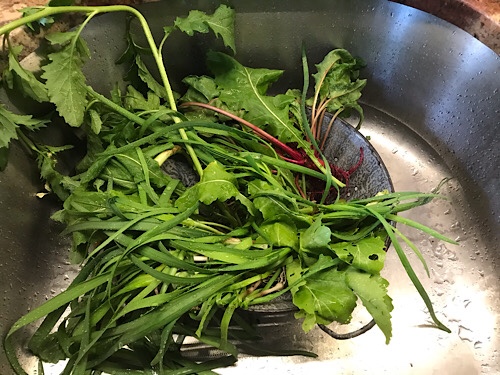
    The generous harvest from today’s garden all came up from prior year plantings. I may joke about how many variations of greens and grains and pulses I can come up with, but the greens are from my back garden, bursting with nutrients, and everything else is a long storage pantry item (including in recent years, dried beans, for having grown enough of them). Most anything else is a luxury. I can go a long time between trips to the grocery store and still have well-flavored, healthy, and inexpensive meals.

  • | | | |

    In the Garden

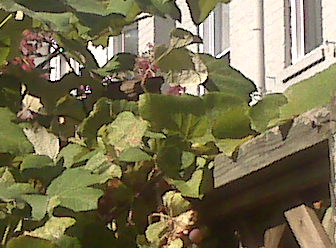
    I spent a delightful couple of hours in the garden with the birds this morning before heading up to teach at Willow Street. I weeded and dead-headed and watered. The birds and I both ate grapes right off the vine. Every year since this vine started to fruit, birds that are not here the rest of the year have appeared for the few weeks the grapes are ripening. I imagine that there is a bird listserve where some bird posts that Goodman’s grapes are ready. Come and get them. Neither my presence nor the cats on the screened porch deters them. The grapes are too delicious for them to allow their natural caution to interfere with immediate access.

    Me, I know that I am a spoiled, middle-class urban gardener. If my survival depended on getting the whole harvest (as opposed to a large handful of grapes daily for three or four weeks), I would be fending off the birds instead of enjoying their presence. The squirrels and the tomatoes–that’s another matter altogether.

    Peace and light, E — Posted with WordPress for BlackBerry.

Leave a Reply

Your email address will not be published. Required fields are marked *

This site uses Akismet to reduce spam. Learn how your comment data is processed.