|

Construction and Reconstruction

I have lived in my house for almost 20 years.  The house came with a bottom of the line, circa 1977 Hechinger’s bathroom.  The bathtub has been rusting for a over a decade, part of the faucet would come off when turning it off, etc.

Finding myself without any pets and between tenants, it seemed like a good time to renovate.  Last week, in just a day, what was a bathroom, is now a gutted space.  Amazing how quickly something can be rooted out and undone.  It will be taking a lot longer to reconstruct.

What I am finding most challenging is not the physical chaos.  I am used to it as an old house often needs work, and this house needed work (though it was not the kind of fixer-upper that was completely missing floors, electricity, and plumbing).

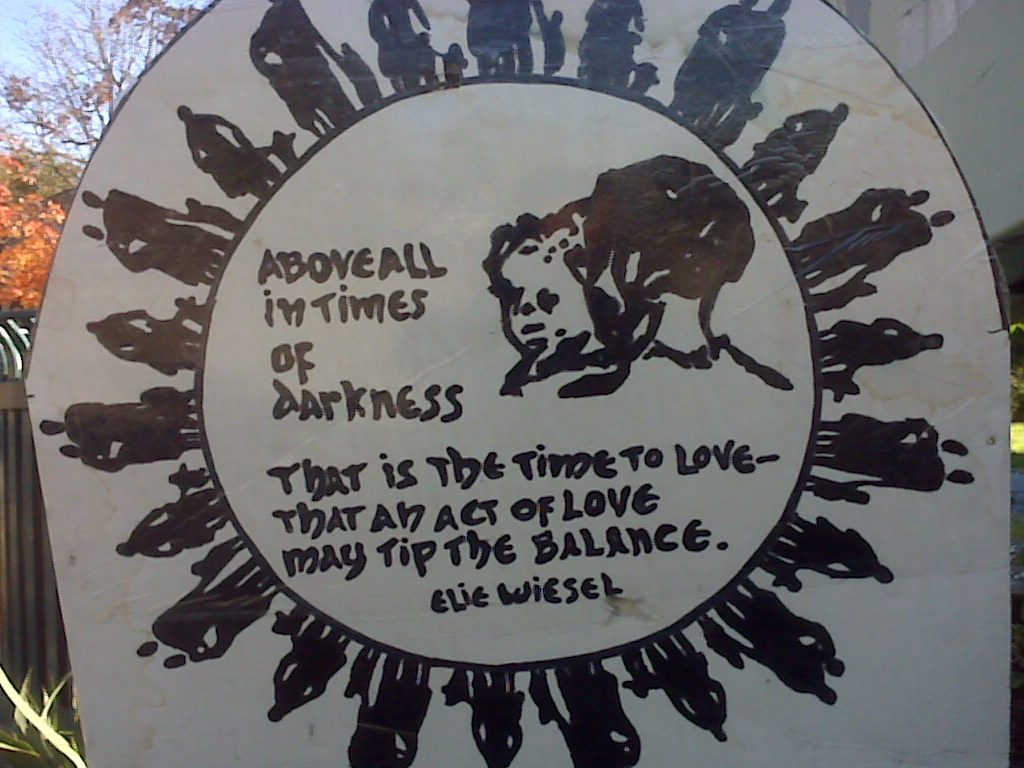
Rather, what I am wrestling with is my emotional reaction to the idea of having a brand new, beautiful bathroom.  There is a big feeling guilty component to be spending money on something that feels not entirely necessary when so many are in need.  So while the contractor is working on the construction, I am working with a wonderful opportunity to help reconstruct (post deconstructing) my emotional relationship with things.  How do I find balance between honoring those in need, my impact on the planet, maintaining my house, and my enjoyment of beautiful things?  How do I feel at peace with my decisions once they already have been made?  How do I apply discrimination in my aesthetics to assist in this balance?

Similar Posts

  • | | | | |

    “I See It Every Morning” (and Jnanam Bandaha) (DWTD)

    When I walked out of the back of the hotel through the pool area just after day break, one of the pool side assistants was out getting things ready for the guests. “Windy,” he said, as I was wrapping and knotting my meditation shawl around my neck into the face of a strong breeze coming from offshore. “But look,” I replied, pointing to the sun rising over the ocean, “it’s so beautiful!”

    “I see it every morning,” he answered, partly with a shrug of weariness and partly with a grin of delight. I guessed he was in his mid 50s–hard for me to tell, his skin was so leathery from the sun. Probably an old stoner surfer was my thought, and the shrug of resignation was for the fact that taking care of the lounge chairs and umbrellas for endless legions of tourists was what he needed to do to eat and still be with his dearest love–the sea and the sun. The smile was for the sun and the sea itself and to be able to share their beauty once again with someone who is seeing them with fresh delight.

    During the course this week of study, we spent time discussing the Shiva Sutras. The second sutra–jnanam bandahah–literally means “knowledge is bondage.”

    “Why do we automatically assume bondage is a negative?” John asked us at one point. Any time we make a choice, we are to some extent binding ourselves because we are, by making a choice and being limited by space and time as we are in this human form, forgoing other possibilities.

    The Sutras also say that knowledge is freedom. Though the sanskrit words are different for the knowledge that binds (limited knowledge) and knowledge that leads us to freedom (highest knowledge or knowledge of the divine), using logic equations, one could say that if knowledge is bondage and knowledge is freedom, then at some level, bondage, too, is freedom.

    If the pool side attendant regards himself as being utterly beaten down by his job, feels stuck with drudgery because he had nothing else he could do to survive, and then forgets about the beauty surrounding him, that would be an example of knowledge constricting or limiting us, putting us into bondage that takes us away from spirit.

    If, on the other hand, he looks at the ocean each morning with joy in his heart and recognizes that he chose his job to be able to be with the ocean and sun every day, that would be knowing that bondage can actually free us (in our limited form) to dwell in and from the heart.

    What the tantric yoga and meditation practices that come out of such teachings as the Shiva Sutras are designed to do, is to help us find the freedom in our limitations, to make choices in our associations and actions — our bindings — that lead us to love and wonder rather than disappointment and fear.

    What do you choose?

  • | | | | |

    A Practice

    With each new horror — another I have been blessed to avoid proximity and immediate impact—I ask myself (and make some follow through) on how I can contribute more both to speaking out against injustice, inequality, and warmongering, and also to making collective life more joyous.

    On a day I grieve and speak my outrage , I share work, and food, and moments of beauty.

Leave a Reply

Your email address will not be published. Required fields are marked *

This site uses Akismet to reduce spam. Learn how your comment data is processed.