Photos

  • | | | |

    What Do You See? (and What Does It Mean to Respond in the Highest?) (DWTD)

    What do you see when you look at this picture? What would you have thought if you had come upon a mass of seaweed and jelly fish, having dressed in a bathing suit for a morning plunge into the ocean while on vacation?

    Both my yoga teacher John Friend and my meditation and philosophy teacher Paul Muller-Ortega teach that we want to respond in the highest, to seek always to see the good and to respond from that seeing.

    I found myself thinking about this morning when I saw dozens of jelly fish on the shore and contemplating a conversation I had yesterday about the topic with a fellow student.

    For some, the t-shirt adage “it’s all good” may really ring true. Most every day is naturally bubbly and bright and difficulties or a need to shift or change to find better alignment is not of much importance. I am not naturally effervescent with bliss, though I find a deep and abiding and growing joy in life that comes from a combination of discrimination (viveka) and appreciation for the wonder and complexity of life.

    Some may just not notice the jelly fish and just see the sun glinting on the waves, plunging in to swim with delight, not caring much that it resulted in itching or stinging from the jelly fish. The itching and stinging are just minor irritations that wouldn’t change the joy of the day. That’s a great way to live, but not all of us are by nature that care free.

    For those of us who see the jelly fish and know that swimming with them can cause potentially significant discomfort, we have two choices: we can get all bummed out that a care free swim in the ocean is not going to happen. That is not responding in the highest. We can also look at what beautiful and amazing creatures are jelly fish, look down at our feet as well as up at the ocean and the sky so that we don’t step on any (walk with discrimination), and then choose to swim in the pool.

    Responding in the highest and looking for the good is not the same as being blind to pain and difficulties. It is how we choose to react and our align ourselves within a world that presents both opportunities for delight and for challenge and pain. Responding in the highest is not being oblivious to pain, but rather, choosing not to suffer or cling to disappointment in the face of inevitable pain or difficulty.


  • | | | | |

    “I See It Every Morning” (and Jnanam Bandaha) (DWTD)

    When I walked out of the back of the hotel through the pool area just after day break, one of the pool side assistants was out getting things ready for the guests. “Windy,” he said, as I was wrapping and knotting my meditation shawl around my neck into the face of a strong breeze coming from offshore. “But look,” I replied, pointing to the sun rising over the ocean, “it’s so beautiful!”

    “I see it every morning,” he answered, partly with a shrug of weariness and partly with a grin of delight. I guessed he was in his mid 50s–hard for me to tell, his skin was so leathery from the sun. Probably an old stoner surfer was my thought, and the shrug of resignation was for the fact that taking care of the lounge chairs and umbrellas for endless legions of tourists was what he needed to do to eat and still be with his dearest love–the sea and the sun. The smile was for the sun and the sea itself and to be able to share their beauty once again with someone who is seeing them with fresh delight.

    During the course this week of study, we spent time discussing the Shiva Sutras. The second sutra–jnanam bandahah–literally means “knowledge is bondage.”

    “Why do we automatically assume bondage is a negative?” John asked us at one point. Any time we make a choice, we are to some extent binding ourselves because we are, by making a choice and being limited by space and time as we are in this human form, forgoing other possibilities.

    The Sutras also say that knowledge is freedom. Though the sanskrit words are different for the knowledge that binds (limited knowledge) and knowledge that leads us to freedom (highest knowledge or knowledge of the divine), using logic equations, one could say that if knowledge is bondage and knowledge is freedom, then at some level, bondage, too, is freedom.

    If the pool side attendant regards himself as being utterly beaten down by his job, feels stuck with drudgery because he had nothing else he could do to survive, and then forgets about the beauty surrounding him, that would be an example of knowledge constricting or limiting us, putting us into bondage that takes us away from spirit.

    If, on the other hand, he looks at the ocean each morning with joy in his heart and recognizes that he chose his job to be able to be with the ocean and sun every day, that would be knowing that bondage can actually free us (in our limited form) to dwell in and from the heart.

    What the tantric yoga and meditation practices that come out of such teachings as the Shiva Sutras are designed to do, is to help us find the freedom in our limitations, to make choices in our associations and actions — our bindings — that lead us to love and wonder rather than disappointment and fear.

    What do you choose?

  • | | | |

    Advanced Intensive Morning Clouds

    When the sun first appeared over the horizon, it was obscured by a low lying bank of clouds. As the sun came up, it gave beauty even to the clouds–illuminating and beautifying that part of our vision of the light that was clouded. When the sun rose high enough, the clouds at the horizon were scarcely noticeable in the bright light of day.

  • | |

    A Different Perspective

    This view is always there, we just do not always get to see it from our habitual place on the ground.

    Sometimes people ask me how I can sometimes still feel unworthy or get depressed or be edgy with all the committed practice that I do. A friend said recently that an answer to that question might be to suggest what I might have been like if I was not doing the practices.

  • | |

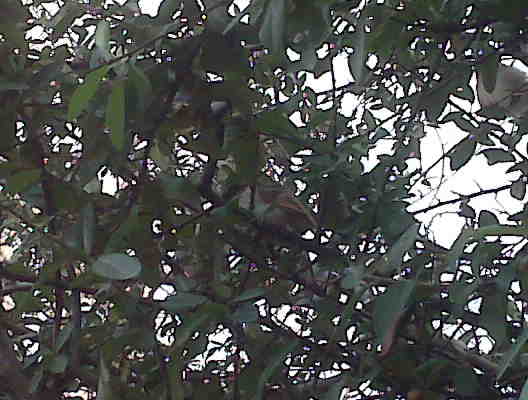
    The Birds Were Chattering Madly Excited

    This bush was full of tufted titmice and sparrows. They were all simultaneously chirping with excitement.

    I imagined some of them agitated and anxiously saying of the unseasonable warmth hat it was not normal and something needed to be done.

    The rest of them were loud drunks on the spring warmth. “Life is short. Enjoy what has come.”

    Perhaps there was one truly wise bird who was saying that both of those are true and that recognizing both truths was a door to harmony.