Author: Elizabeth

  • | | | | | |

    Prasad (and Opening to Grace)

    During one of the sessions at the workshop last weekend in New Jersey, John Friend made a passing reference to the difference between receiving and taking.  He did not go into any detail because it was not central to the theme of the class, but it led me to contemplate on my own about the difference between taking and giving in the context of yoga practice.  In so doing, I thought about the concept of prasad — which is food that has been blessed and is offered to those who have participated in worship (puja).

    When offered prasad, one does not take it.  Instead, the cupped palm is turned up to receive the prasad.  The recipient does not get to pick through the basket and choose which sweet looks the biggest or the tastiest, but simply receives with gratitude the sweet or fruit that is infused with the intention of spirit.  The active part is the showing up with openness and receptivity to the offering, the blessing, the nourishment being offered.

    Coming to yoga class or doing our own practice (asana or meditation) should be, I think, like preparing to receive prasad.  What is primary in the practice of Anusara yoga is being open to grace, but we can no more force openings or enlightenment (grace and insight always elude grasping),  than forcing any particular physical posture or goal really yoga practice.  The point of effort in yoga to improve and expand alignment and knowledge is to enable the practitioner to receive more fully all the potential gifts and grace of practice, and then in turn make fuller and more complete offerings to others.

    Below:  offerings at the Chelsea Farmers’ Market

  • | |

    Walking to Work

    Whatever the season, I notice the beauty on my walk to work. I see what remains the same and what changes. I invite the sweetness I feel arising spontaneously from my daily walks though the neighborhood, which, familiar as they are, still feel like vision quests, to come into how I experience the rest of my encounters with the world.

    Peace and light, E — Posted with WordPress for BlackBerry.

  • | | | | |

    About Money and Leisure and the Spiritual Quest (and the 99 percent)

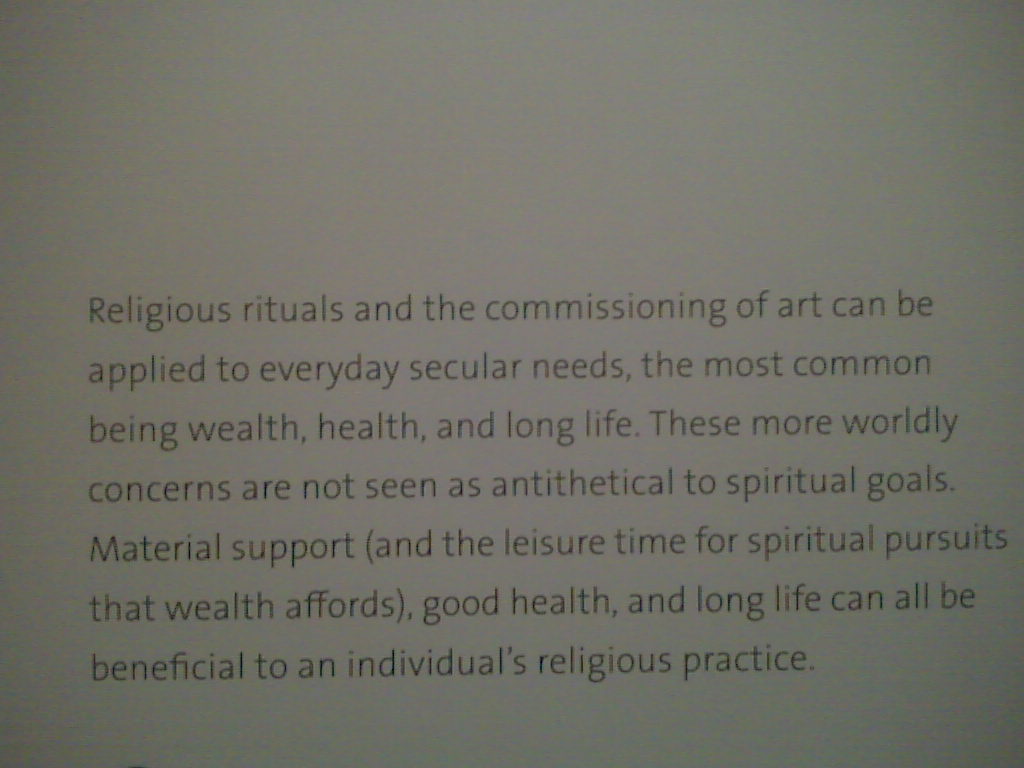
    Spiritual pursuit is, in a great sense, a luxury. Without enough time and money for leisure, when and how would we explore spirit? But where else would we find solace if not in spirit when we are suffering from deprivation?

    This question becomes even more pointed when we consider it in terms of the curatorial note (Rubin Museum) below. Those who can afford to commission art to further their own spiritual ideals (including prayers for wealth and family) may not be the one percent, but most surely are the ten percent, or any money would all be for food and shelter at the survival level. I would certainly rather see money spent on making art than war, but what about food, education, and shelter for more in society in a way that nourishes the environment? Such a complicated web of questions about individual and collective desire and responsibility in our relationship to each other and the earth past and present when we think of having wealth sufficiently focused to allow individuals to use it to seek religious boons for themselves in the material world.

    I say this as one who loves and makes art and engages in spiritual exploration with vacation time and budget, who regularly wonders if that is really for the good of others and not just another way of enjoying what life has to offer the fortunate.

    What do you think?

    Photo is of exhibit notes at the Rubin Museum in NYC.

    Peace and light, E — Posted with WordPress for BlackBerry.

  • | |

    Letter from FCNL on How You Can Help Shape the Budget

    I just received this letter and wanted to pass it on to those who have senators and members of Congress (those of us in DC still do not):

    Dear Elizabeth Goodman,One of our lobbyists just reported to me that some members of the supercommittee are telling us they are open to cutting Pentagon spending. “We need to hear what the folks back home in our state have to say about this,” we heard.The most important voice in this budget debate is your voices as constituents. As they make their decision, your members of Congress need to hear your side of this story. They need to hear about the consequences in your communities when money isn’t invested in schools, roads, jobs, and other local priorities.Today, will you write a letter to the editor of your local newspaper? Refer to your members of Congress by name and point out the needs in your local community.Communities around the country are being squeezed. More people are relying on food banks; local governments are copying with both the neighborhood and family stress of foreclosure; schools are increasing class sizes and shortening the school year; and critical maintenance on bridges and roadways. Police and firefighters are losing their jobs.  Yet, the Pentagon budget continues to grow.Congress will take action to reduce the deficit, which means budget cuts. But if Congress doesn’t act to cut at Pentagon spending by a significant amount — FCNL and others believe that number is $1 trillion over the next ten years — then the cuts to other programs will be much deeper. Cutting the Pentagon budget and potentially making more funds available to meet the needs of state and local communities.  There is an opportunity to make this change.Thank you for your action.Sincerely,Diane RandallExecutive Secretary  P.S. If you want to know more about how much Pentagon spending is slated to rise, or more on FCNL’s views on the debt, deficit and supercommittee, visit our website. 

    Peace and light, E — Posted with WordPress for BlackBerry.

  • | | | |

    On My Way to New Jersey

    I was not able to attend the mid-week intensive in New Jersey with John Friend. It was hard enough to make room in my schedule for the weekend workshop.

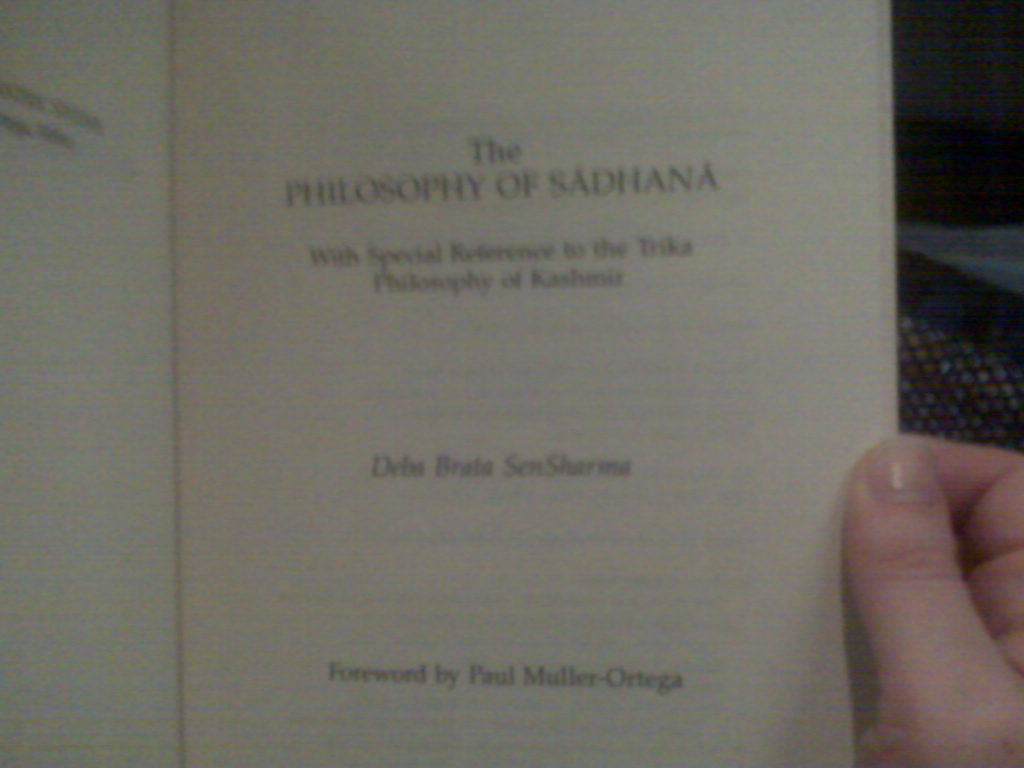
    I can, though, be with my teacher and friends not just in spirit, but in intention. Knowing that the focus of the intensive was sadhana (practice), I selected The Philosophy of Sadhana to read on my way to the weekend, so that when I arrive I can be more in alignment mentally with those who already have been immersed this week in deep study of what sadhana means for ourselves and in community. Choosing to study in a way that connects us with our friends on the path, even when we cannot physically be present with them is, of course, one of the ways we support relationship in sadhana.

    Peace and light, E — Posted with WordPress for BlackBerry.

  • | |

    Lessons in Non-Attachment (Compliments of RIM)

    After 27 hours, plus or minus a few minutes–but who is counting–service was restored to my Blackberry this morning. The reason I had a Blackberry instead of an IPhone in the first instance was because I preferred CREDO (which donates a percentage of profits to causes I support) instead of giving money to political candidates I oppose as do Verizon and AT&T. CREDO now has Android-based phones, which offer all sorts of exciting features that are really quite mind-boggling, if I stop to think about it. I have never been one, though, to give up something that still works fine, just because I could get something newer and more exciting.

    It is interesting to see the articles and comments on the internet about the worldwide Blackberry outage. Much is being said about how this outage will tip users over the edge and send them out to buy another phone because of outrage because of the loss of service. Others note their attachment to the Blackberry and say they will get over the outage because of their attachment. Still others note that doing without email on one’s phone for a day or two is just not a big deal, and they, on their high horses, post mocking comments at the crackberry addicts.

    I most certainly noticed how accustomed I am to sending and receiving communications with my handheld when I didn’t have it for a day not by my choice. My other computers (plural is not a typo) were readily available, so it was no big deal. If I were to lose service when on the road and expecting to meet other people with whom I had not made prior specific arrangement, as is the case for tomorrow and the coming weekend, I would have had to make some shifts. It would have been annoying, though, and would not have felt like the end of the world or a cause for outrage (there are just too many other things more worthy of outrage).

    The episode did leave me thinking about our dependence on technology and how that dependence has shifted both for the good and bad how we relate to our family and friends and the tens of millions with whom we are connected in the ether; how we are attached to our habits and our expected ways things should work, and whether we get stirred up when things don’t go according to plan, desire, or expectations; and how a steady practice of non-attachment can help us open to make the best of things.

    Yes, I looked at the latest phones offer out of curiosity, but no, I won’t be getting one just yet. My three-year old BB is working just fine for now.

    Peace and light, E — Posted with WordPress for BlackBerry.

  • | | | |

    Health Care Crisis in Progress

    At “Taste of DC” here come (not in any particular order):

    1.  Respiratory diseases from air pollution resulting from cooking methods, factory farmed meat, manufacture of packaging, and food transportation.

    2.  Antibiotic resistance from factory farmed meat.

    3.  Diabetes from refined sugar and carbohydrates.

    4.  Cancer from food additives, food cooking methods, manufacture of plastic food packaging, and air pollution.

    5.  Heart disease from fatty and high cholesterol foods.

    5.  Foot, ankle, knee, and back problems from ill-fitting high heels with a narrow toe box.

    6.  Tooth decay from refined sugars and carbohydrates and later gum disease and heart conditions from poor dental hygiene.

    6.  Waterborne diseases from air and water pollution secondary to food manufacturing and packaging and attendant waste and unnecessary medication, surgeries, and other medical treatments for illnesses resulting from food and clothing choices.

    And don’t forget lost productivity for sick time.  I do not think anyone needs to be rigidly any kind of diet all the time (not raw, not Ayurvedic, not vegetarian, not vegan, not local, not slow), but wouldn’t it be nicer to eat well most of the time (and if you have even the most modest of kitchens, healthy meals are in fact cheaper than packaged junk food–assuming one knows how to cook, which I know is a big assumption), wear comfortable clothing, and have more time, strength and money  for creative and loving pursuits?