Similar Posts

  • |

    State of the Garden

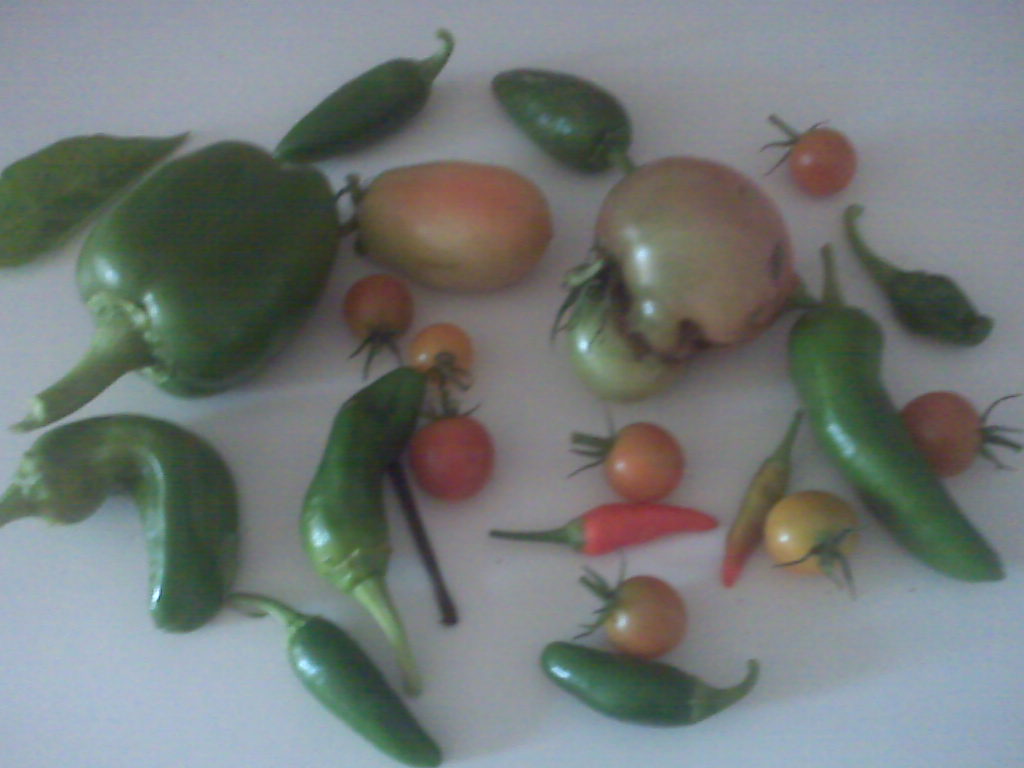
    After almost none all summer, now they’re ripening in abundance. I’ll roast and then freeze most of them to eat in the winter.

    I attended yoga class by zoom this afternoon. We worked on the poses that benefit from attention to engaging the major muscle groups of the trunk. And we thought about acting from our center, and finding center so we can better act.

  • | |

    State of the Garden (And Anecdotal Evidence of Extreme Weather Occurrences Due to Global Climate Change)

    Scheduled to arrive some time tomorrow is one of those impossible to forecast until it is happening because how fast the storm travels and a variance in its track of even 50-100 miles north or south, or east or west can make the difference between just a bit of rain, a lot of rain with a little snow, and a little rain with a lot of snow, or perhaps the dreaded wintry mix.  What I would do for the garden would be different for the various scenarios.  The best for continuing to thrive would be a 2-4 inches of snow that didn’t entirely melt when it hits 50F on Saturday and acts as a blanket when it is forecast to get below 20F.  I harvested the tenderest of the greens and the last handfuls of unripe tomatoes (they need to be cooked and spiced–it’s way past the date they should have been able to grow).  I left the hardier greens and the root vegetables.  I will be watching for the true hard freeze right before which I will need to harvest everything.  The extreme weather occurrence is not, however, the coming storm, but the fact that I still have this much growing without a cold frame in the middle of January.

    garden 1a garden 1b garden 1c garden 1d garden 1e garden 1f garden 1g

    turnips, arugula, grape tomatoes, chard, snowpea shoots, kale, roses, assorted lettuce, cilantro, carrots [not shown, but also growing:  spinach, green garlic, mint, parsley]

  • | | |

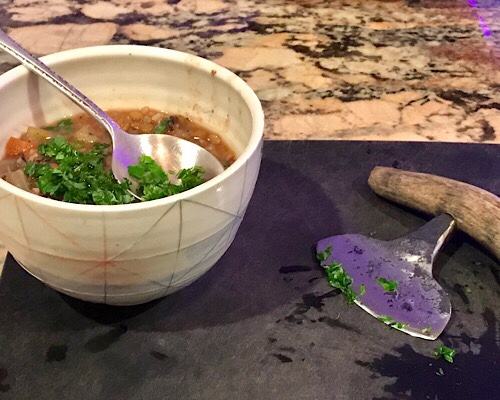
    Happy New Year (and vegan Hoppin’ John variant)

    Having grown up in the New York metropolitan area without much in the way of traditions of any kind, I was not familiar with Hoppin’ John.  I am fairly certain that the first time I heard of it was from a college friend whose family has been in South Carolina since before the Revolution.  As it is not part of my tradition, I do not feel bound to any particular recipe (I am sure it is sacrilege in some circles to leave out the ham/bacon) or to eating it at any particular time of day (e.g., immediately after the clock strikes 12 midnight).  It would not be Hoppin’ John, though, if I did not know its tradition and know where I was deviating from tradition.  (Though this would entail a much longer blog than is within my time frame today, this balance of freedom from tradition and needing to know and honor tradition is very much an issue for the Western yoga practitioner.)

    1.  Soak a cup of dried black-eyed peas for at least several hours or overnight.

    2.  Dice one small onion or 1/2 large onion (about a cup), a few celery stalks, including the leaves, and mince a couple of cloves of garlic.

    3.  Heat a few tablespoons of a flavorless oil (peanut, corn, or safflower) in a pressure cooker (my preferred method for saving energy and time) or a stock/stew pot.

    4.  Saute seasoning vegetables along with a few hot peppers until onion is translucent.  I used the last habanero from my harvest and so left it whole.  You can use fresh or dried chilis in an amount to your taste/tolerance for spiciness.

    5.  Stir in a cup of brown rice until rice is coated with oil.

    6.  Pour in 1/4-1/2 cup of white wine and stir until absorbed (as if making risotto).  [You could use stock instead.  If you are using white rice, skip this step, which serves to partially cook the brown rice, so that it will take the same amount of time as the black-eyed peas.]

    7.  Crumble in some dried thyme (preferably from your own garden) and a bay leaf or two.

    8.  Drain and rinse the soaked black-eyed peas and stir into the cooking pot until all ingredients are combined.

    9.  Add one 28 ounce can of diced tomatoes and 2 1/2 – 3 cups of vegetable stock or water.  How much liquid depends on (a) whether you want a soupy consistency or one more like pilaf or risotto; (b) how liquid are the tomatoes; (c) whether you are using a pressure cooker (less liquid needed) or cooking in a pot.

    10.  If using a pressure cooker, cover and bring to full pressure, then lower heat and cook at full pressure for 28 minutes.  Allow natural pressure release (about 15-20 minutes additional).  If cooking in a regular pot, bring to a boil, stir, then lower heat and cook for an hour or more until rice and peas are tender, stirring occasionally.

    11.  While rice and peas are cooking, mince a few cloves of garlic.

    12.  Rinse and chop several handfuls of greens (collard or curly kale are best; don’t use spinach or chard, they are too tender).  Heat oil and garlic together.  When garlic start sizzle, add damp greens and saute until greens are wilted and dry.

    13.  When rice and peas have finished cooking, stir in sauteed greens and bring back up to full heat.  Adjust seasonings, adding more salt and your favorite hot sauce to taste (or allow guests to add their own hot sauce at the table).

    I don’t know whether having eaten this will bring me luck and prosperity, but I’ve started the year with lots of vitamins, minerals, fiber, flavor, and cooking, which for me means health, love, technique, tradition, flexibility, and joy!  Try this, make your own, read all about Hoppin’ John, or call a friend from the South who must eat Hoppin’ John on the New Year and learn about the tradition and what it means.

  • | |

    An Armload of Radishes

    This morning I went to my community garden plot around the corner before I got ready to head into Georgetown to volunteer at The Lantern Bookshop.

    I ws delghted to find enough snowpeas for a good-sized stir-fry and several zucchini almost ready to be picked (I only get zucchini at the very beginning of the season before the squash borers invade, but if I start early enough, I can get a few pounts of squash and a couple of meals worth of blossoms before I surrender and plant something else).

    The tomatoes were flourishing (no sign of blight. If you have your own plants, keep an eye close for blight; it’s aleady been seen in Maryland. Cherry tomatoes are more resistant, so I’ve concentrated on those).

    I should have the first cucumbers big enough to pick next week, and I have plenty of lettuce.

    The radishes, though, had exploded. “Should I have a radish-themed dinner party?” I thought. “What am I going to do with all of them?” I am not especially fond of radishes. I plant them because they mature very early, they thrive on benign neglect, I have friends who like them, and they give the same crunch I’d prefer from a cucumber weeks earlier.

    I’ve also discovered I like them cooked. Just as you can prepare turnips and their greens together, it also works well with radishes.

    As I was walking home with a bunch of radishes that I could hardly get my hands around, I bumped into a neighbor. I don’t know her well, just recognize her face. “Do you want some radishes?” I asked, hoping I did not sound like I was begging. She hesitated, but then seemed to realize that she would be doing me a great service by accepting them. “You can cook the greens,” I said as I handed her a nice-sized bunch, “and also the radishes themselves if they are too strong.”
    “I’ve never done that,” she said.

    Here’s the recipe I gave her on the street (with a little more detail here):

    Wash radishes and their greens well. Cut radishes into thick coins (this works best with oblong radishes sich as French Breakfast). Cut off the white part of stem nearest radish. Then cut the bunch horizontally so that you have half inch wide shreds. Mince some garlic, onion, and ginger. Stir-fry aromatics in peanut, safflower, or canola oil until translucent. Add the radish coins and stir until well-coated with oil. Add greens, stirring continuously until all the greens are wilted. Add some rice wine vinegegar and cook until absorbed and the grrens are just tender. Take off heat and sprinkle with soy sauce or Bragg’s Amino Liquid and toasted sesame oil to taste.

    “What a nice morning,” my neighbor said, “fresh radishes from the garden and a recipe.

Leave a Reply

Your email address will not be published. Required fields are marked *

This site uses Akismet to reduce spam. Learn how your comment data is processed.