| | | |

Late Afternoon Walk

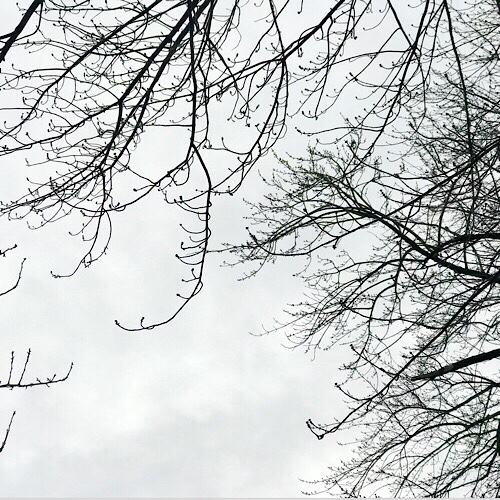
The excessive dryness and unseasonable warmth make me anxious.  Sixties fahrenheit and dry may feel good in San Francisco, but here it just is out of place for the existing flora and fauna.   Still, I made sure to get out and enjoy the exquisite afternoon that it was.   I find the skies of drought achingly beautiful and mysterious.

It was also nice, but peculiar to go out into the backyard and pick nearly a pint of ripe grape tomatoes.

Similar Posts

  • |

    Ardha, Kama, Dharma, Moksha

    Friday, when I was traveling through New York City on my way home from a business trip, I detoured to the Metropolitan to see the Walker Evans’ postcards and the Bonnard, Late Interiors.  The curator chose this quote to inform the viewing of the paintings:  “Material concerns and worries about the future are troubling me a lot, and I’m afraid that painting may abandon me because of a lack of mental freedom.”  Pierre Bonnard to Henri Matisse, September 1940.

    The quote made me think of the yoga principles of ardha, kama, dharma, moksha. In classical yoga, in order to reach liberation (moksha), we need to have our material life — how we eat, consume, dwell, etc. (ardha), our love and relationships (kama), and our work/life path (dharma), in right order.  From a tantric perspective, when ardha, kama, and dharma are aligned so that mind, body, and spirit are united in our day to day being, then we are living liberated — jivan mukti (moksha).

    In 1940, the Nazis were growing in power and World War II was impending.  Bonnard had lost his love, Marthe, was ill and aging, and was in some financial difficulty.  He was afraid of losing his vision, his creativity (dare I interpret “painting may abandon me” as “loss of connection to spirit”) because ardha and kama were out of alignment.  The late paintings carry a sense of yearning of spirit — perhaps because of the consciousness that struggling physically and emotionally challenges our ability to truly see, to feel connected to spirit.  The paintings are lovely with color and light.  The subject matter makes them accessible at a surface level.  Shadowy figures and ambiguities, though, give a sense of longing and seeking.  Although there is a certain basic prettiness because of the color and the subject matter, they are not comfort paintings.  They invite one to think about whether color is enough, whether home is enough, what we need to be in a place where we can rest at one with ourselves.

  • | |

    Only a little rain (and vimarsha)

    My gardening friends have been commiserating and worrying about the abnormally dry weather.   For the past couple of days, we have all been concerned that this storm has brought so little needed rain, although we are grateful to get whatever rain comes.  Other acquaintances were complaining yesterday that it still wasn’t sunny.  When I mentioned drought conditions, they had not noticed.  If they noticed once it was pointed out, they suggested reasons why for them personally, it would still be a better thing for it to be a sunny day.  Part of the reason I garden is to keep me connected with the rhythms of the seasons and the weather.  If we do not grow our own food and depend on the fruits of our labors, nor are taught the relationship between the weather and our survival, there is no reason to know it.  We become disconnected from nature and from the earth.

    For me, connection to the earth deepens my connection to myself and to spirit.  How can we know ourselves if we do not know how the earth nourishes us and how we relate to the earth?  How can we recognize the light within ourselves, if we are disconnected from nature?  At the same time, the practice of yoga, with its inward questing (antar-vimarsha — the quest to touch or reveal the true Self), by revealing to us the subtle energies and knowledge of the relationship of body and mind, can lead us back to yearning for a deeper understanding of the world around us and for a healthier relationship between the give and take between us and the earth.  We can thus reach spirit both by being more aware of the outside and seeing where we are disconnected in our practice off the mat and by reaching inward using our spiritual practice (the Anusara principles are designed to be a pulsation of reaching outward and inward for an ever growing expansion and understanding of mind and spirit) and then knowing the outside is not aligned and needs to be shifted.  All this is the process of vimarsha, like a little more rain in the drought to nourish and encourage the unfolding of spring.

Leave a Reply

Your email address will not be published. Required fields are marked *

This site uses Akismet to reduce spam. Learn how your comment data is processed.