| | |

Perils of Conviction

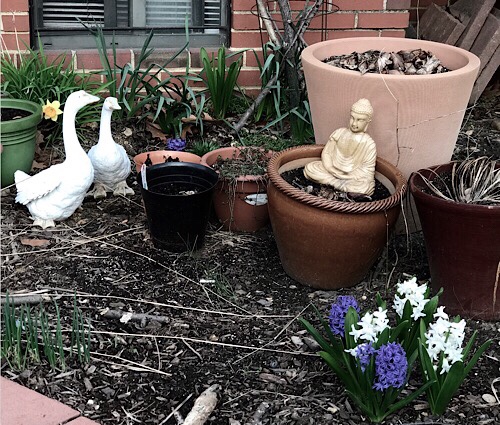
It is when we believe only one way is the way for all that we become subject to the perils of tyranny and divisiveness.

Nonetheless, as the yogic philosophers tend to teach, each individual is most likely to find depth of knowledge, experience, and conviction sticking to a single path.

Which way is this way?

Peace and light, E — Posted with WordPress for BlackBerry.

Similar Posts

  • | |

    Lessons in Non-Attachment (Compliments of RIM)

    After 27 hours, plus or minus a few minutes–but who is counting–service was restored to my Blackberry this morning. The reason I had a Blackberry instead of an IPhone in the first instance was because I preferred CREDO (which donates a percentage of profits to causes I support) instead of giving money to political candidates I oppose as do Verizon and AT&T. CREDO now has Android-based phones, which offer all sorts of exciting features that are really quite mind-boggling, if I stop to think about it. I have never been one, though, to give up something that still works fine, just because I could get something newer and more exciting.

    It is interesting to see the articles and comments on the internet about the worldwide Blackberry outage. Much is being said about how this outage will tip users over the edge and send them out to buy another phone because of outrage because of the loss of service. Others note their attachment to the Blackberry and say they will get over the outage because of their attachment. Still others note that doing without email on one’s phone for a day or two is just not a big deal, and they, on their high horses, post mocking comments at the crackberry addicts.

    I most certainly noticed how accustomed I am to sending and receiving communications with my handheld when I didn’t have it for a day not by my choice. My other computers (plural is not a typo) were readily available, so it was no big deal. If I were to lose service when on the road and expecting to meet other people with whom I had not made prior specific arrangement, as is the case for tomorrow and the coming weekend, I would have had to make some shifts. It would have been annoying, though, and would not have felt like the end of the world or a cause for outrage (there are just too many other things more worthy of outrage).

    The episode did leave me thinking about our dependence on technology and how that dependence has shifted both for the good and bad how we relate to our family and friends and the tens of millions with whom we are connected in the ether; how we are attached to our habits and our expected ways things should work, and whether we get stirred up when things don’t go according to plan, desire, or expectations; and how a steady practice of non-attachment can help us open to make the best of things.

    Yes, I looked at the latest phones offer out of curiosity, but no, I won’t be getting one just yet. My three-year old BB is working just fine for now.

    Peace and light, E — Posted with WordPress for BlackBerry.

  • |

    Sukha (the why of sequencing and the foster cats)

    Last week, I used as a theme sukha — ease, comfort, happiness.  I was inspired by Lorin Roche’s discussion of translating in his “version” of the Vijnana Bhairava, which he entitles “The Radiance Sutras.”  In it he notes that “[e]ven more literally, sukha is (according to some etymologies) composed of su, good + kha, space.  A good space.”  At first blush, teaching about sukha might seem to be off-topic from my session theme of sequencing principles.  The whole purpose, though, of seeking to understand, practice, and optimize our sequencing in time and space on and off the mat is to find just that.  It is to be in a “good space,” to feel at ease, whether we are being challenged or delighted.

    I found myself contemplating sukha yet further this week (it is a recurring practice and contemplation theme for me — I love Patanjali’s sutra “sthiram sukham asanam”), as I have been observing and helping the foster cats make mine their new home.  When we are uprooted or out of alignment, we are not in a good space.  It is a struggle to feel happy or at ease.  When we find our rhythm again, then ease unfolds.

    There is a set of principles that generally works for taking uprooted animals (or people) and helping them feel at home.  Part of making them at home is their new person holding him/herself in a “good space” for the newcomers, which indeed helps them find their own, which is its own yoga.

    The blessing of yoga for us, and why we take ourselves to challenging difficult places on the mat, is so that we can, by use of intelligent sequencing of practices, techniques, and mindsets, discover how to feel connected to our own spirit wherever we are in time and space — the essence of ease in this body and mind.  The more we can do this for ourselves, the more we can do it for others.

  • | |

    Only a little rain (and vimarsha)

    My gardening friends have been commiserating and worrying about the abnormally dry weather.   For the past couple of days, we have all been concerned that this storm has brought so little needed rain, although we are grateful to get whatever rain comes.  Other acquaintances were complaining yesterday that it still wasn’t sunny.  When I mentioned drought conditions, they had not noticed.  If they noticed once it was pointed out, they suggested reasons why for them personally, it would still be a better thing for it to be a sunny day.  Part of the reason I garden is to keep me connected with the rhythms of the seasons and the weather.  If we do not grow our own food and depend on the fruits of our labors, nor are taught the relationship between the weather and our survival, there is no reason to know it.  We become disconnected from nature and from the earth.

    For me, connection to the earth deepens my connection to myself and to spirit.  How can we know ourselves if we do not know how the earth nourishes us and how we relate to the earth?  How can we recognize the light within ourselves, if we are disconnected from nature?  At the same time, the practice of yoga, with its inward questing (antar-vimarsha — the quest to touch or reveal the true Self), by revealing to us the subtle energies and knowledge of the relationship of body and mind, can lead us back to yearning for a deeper understanding of the world around us and for a healthier relationship between the give and take between us and the earth.  We can thus reach spirit both by being more aware of the outside and seeing where we are disconnected in our practice off the mat and by reaching inward using our spiritual practice (the Anusara principles are designed to be a pulsation of reaching outward and inward for an ever growing expansion and understanding of mind and spirit) and then knowing the outside is not aligned and needs to be shifted.  All this is the process of vimarsha, like a little more rain in the drought to nourish and encourage the unfolding of spring.

  • | |

    Every Life a Universe

    This evening I attended a gathering at Meridian Hill Park with several hundred Jewish people and a some allies and a few dozen police (not sure whether the police were there intentionally to be threatening or to be of supposed protection).

    The gathering was to mourn the 1200 killed on October 7, the 250 taken hostage, and the tens of thousands killed and millions displaced since then. Whether the speakers were Jewish or Palestinian or Christian or Hindu, they were unified in their belief (relying on the texts and teachings that informed their faith), that no lives are more precious than others. The rabbis were emphatic that continuing to bomb and displace Palestinians and now, Lebanese, makes no one safer.

    We must stop the relentless funding of war, the destruction of life and communities and the ecosystem if we and our companion species (flora and fauna) are ever to thrive.

    Om shanti, shanti, shanti.

    Shalom.

Leave a Reply

Your email address will not be published. Required fields are marked *

This site uses Akismet to reduce spam. Learn how your comment data is processed.