Shadow and Light
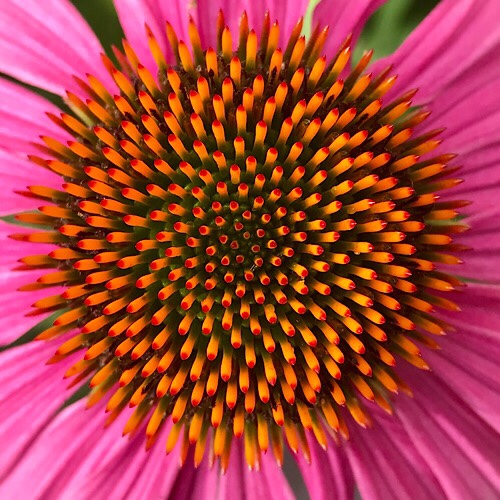
The endless dance and play of sun and shadow, light and dark–the more intense the one the more the other.

Peace and light, E — Posted with WordPress for BlackBerry.
The endless dance and play of sun and shadow, light and dark–the more intense the one the more the other.
Peace and light, E — Posted with WordPress for BlackBerry.
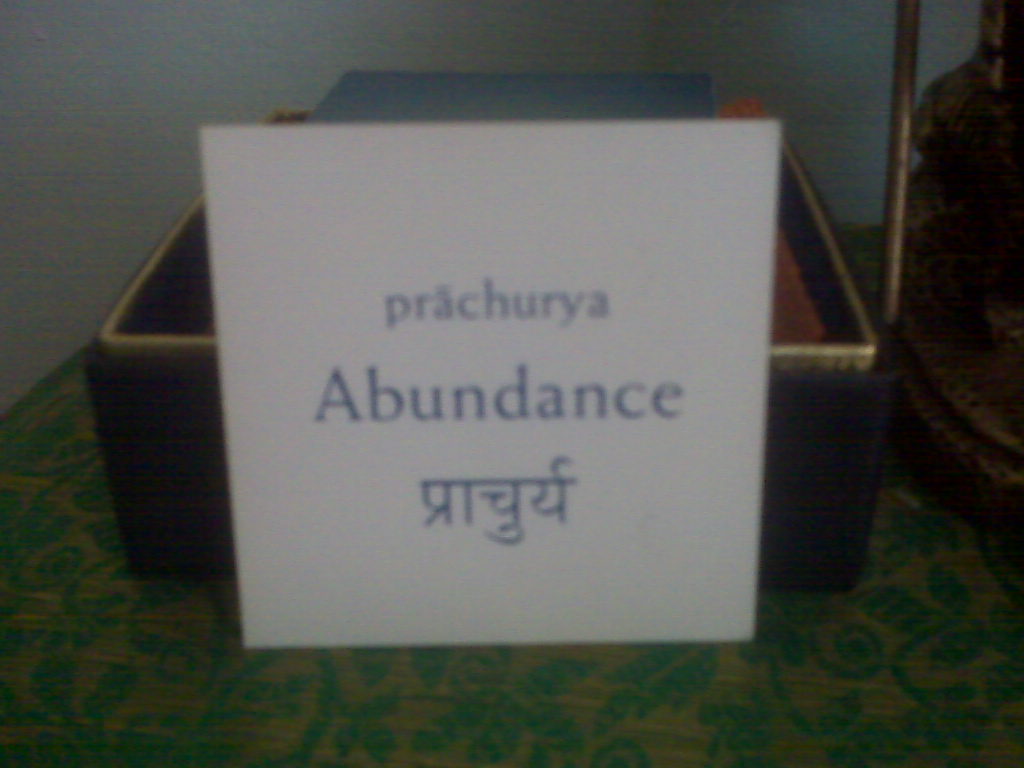
I adore having a library and will rarely say no to a philosophy text or a book about anatomy, therapeutics, or yoga methodology. I am less interested in “self help” types of books or gadgets. Every once and a while though, I come across something that truly supports my practice and my teaching. When I first went to Inner Harmony to study with John Friend in mid-2003, there was an altar in the corner of the practice room, just at the entrance. On the altar was a set of cards (a little smaller than 2″x2″). Each card had a word in English, the devanagari, and the sanskrit of the word transliterated into our alphabet. Following the lead of others who had been to Inner Harmony for previous retreats, at the beginning of the day, I would select a card and think about how the word on the card might inform my practice and intention.
At that time, I was first starting to use Anusara’s “heart-oriented posturing language,” using a theme for class that was designed to lead the students into a deeper place in their hearts through their asana practice, and I found that the cards were an excellent source of inspiration.
Even though I first bought the cards in 2003 to serve as a basic class preparation aid, I have continued to use them regularly for my own practice and contemplation. Often, the word that appears resonates with something that is of immediate concern. The day after Becky (my beloved cat who lived to be 21) left her body last year, I went to the set of cards, which I’d not used in a couple of months. The card that I selected at random (like picking a card from a deck when someone is showing you card tricks) was moksha — liberation, and in classic yoga, literally liberation from the body. I was moved to tears.
This summer, with myself and my students, we have been working on manifesting intention. As I’ve blogged about previously, I invited us to think about an intention. Whether an intention is something basic with the body or mind or something more universal, whenever we seek to manifest an intention, ultimately it is because we want to be more blissful, more open, and more at peace with ourselves and others. The question becomes how do we use our practice both to discover an intention and to seek to make it manifest. To help me with the contemplation of this question, I have gone again to the cards as a source of inspiration. This week, the card that turned itself up was racanatmakata — creativity. “Perfect,” I thought, when I saw the word. Creativity is a human reflection of the wild, pulsing, diverse and ever-extraordinary dance of all being. When we open to our creative impulse to allow things to unfold, we can witness the fullest range of possibilities and the variety of paths to manifestation.
One of the ways I prepare for a restorative workshop is to spend some time looking for new music to play quietly in the background to enhance the fullness of the experience. In the past couple of days, I have enjoyed listening to quite a quantity of new and new to me music appropriate for my upcoming Finding the Warmth Inside: Relax Into Optimal Alignment with Anusara Restoratives on February 25th at Willow Street Yoga Center (click on the link for details and to register). Among the music I downloaded, which I am thoroughly enjoying (though it might be too upbeat for the restorative workshop playlist), is C.C. White’s “This is Soul Kirtan.”
As I was listening at my desk and swaying to the beat, I thought about the non-dual tantric philosophical principle that exhorts us to find the good in everything, to recognize that in all there is still a “divine” spark that is expressed in the creative effulgence of the universe itself. The music is joyous, delightful, offered with love, delivered with a high degree of professionalism–both the musical performance and the recording and presentation. I tried to fathom just how many centuries of human migration, suffering, oppression, bigotry, and then fighting for tolerance, education, equal rights, spirit, and freedom had to occur for this music to be able to exist at all and to be published and embraced, it being an extravagant blend of Indian spiritual/religious practice, American soul and blues (and all its history), and classical Western musical technique.
Wishing all a safe, healthy, and joyous holy-day of thanks giving.
Peace and light, E — Posted with WordPress for BlackBerry.