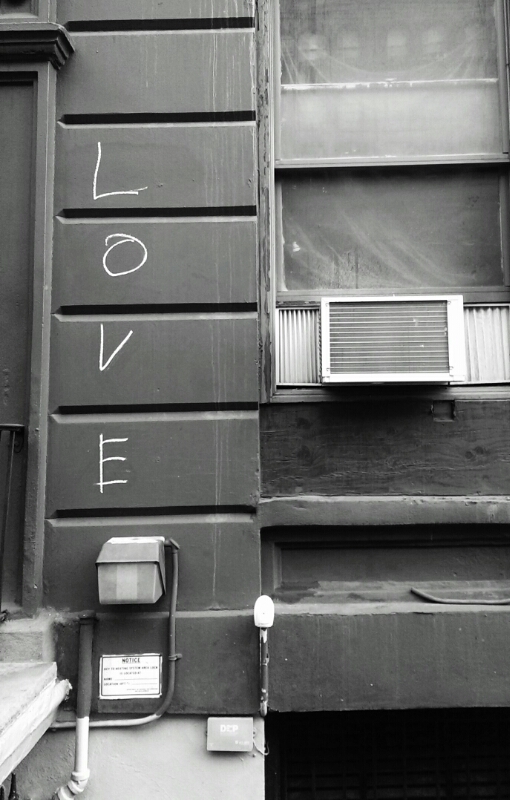
Cast-Off Objects Around Town (2 of 2)

Peace and light, E — Posted with WordPress for BlackBerry.
Peace and light, E — Posted with WordPress for BlackBerry.
To the extent that anything is, so too you . . .
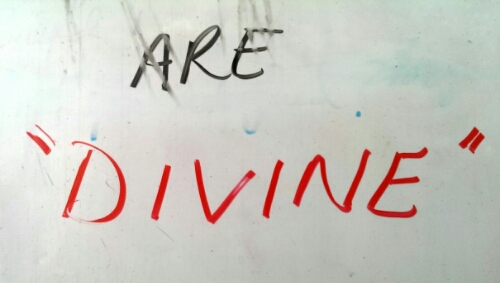
These stickers have been around town for awhile; I first noticed them during one of the big marches. I assume that it is meant to be ironic. The idea of fighting for non-violence, though, certainly highlights the degeneration of much of our political dialogue into an us versus them fighting stance, even for those seeking peace or social justice.
The truth of the matter is that just as we cannot realize inner peace by forcing our mind to be quiet, and we put ourselves at risk in our asana practice if we force ourselves into poses to realize external notions of advancement that mirror our conventional cultural values, so too, we will not open the way to peace if we fight for it using the paradigms of the two-party system that now serves the military-industrial complex instead of expanding recognition of the needs of all to be connected and nurtured.

Peace and light, E — Posted with WordPress for BlackBerry.
I realize that this blog entry was in my drafts page; I never hit the publish button. As I ponder the few intervening weeks of snow (in some ways it feels as if time just stopped, except for the work that piled up and the lengthening of the light of day), I treat this as a reminder to myself to come back to “first principle” to respond with the most light — even in this unusually harsh winter:
On my way to Friends Meeting yesterday, I stopped at the Dupont Circle Fresh Farm Market yesterday to buy whatever was fresh. When I got in line with a daikon radish, a bunch of turnips, and a couple of leeks, I noticed the way the woman in front of me in line was holding her selection: sunchokes. Her hands were held as if she had just received prasad — the offering sometimes made after a puja so that the fruits of worship may actually be tasted and injested, incorporated with our senses and our whole bodies into our being. “Your hands and those sunchokes are so beautiful,” I said, “may I take a picture and use it for my blog?” “Sure,” she replied, “and shifted her hands a little so that it would be easier for me to frame the picture.” We talked while we waited in line about potential ways to cook sunchokes and how happy we were that the farmers (these particular farmers’ must be incredibly good at working with cold frames) were out all year.
Seeing this offering of the earth itself, the farmers who tended the earth and grew the vegetables, the workers who made and repaired the vehicles that enabled the food to be brought into the city, the city and neighborhood for allowing the market to block off a street, the shoppers for supporting it, brought me back to my contemplations this week of what “first principle” means to me. I mentioned in an earlier post that my focus for winter classes would be Anusara sequencing principles. No matter what else we are doing or focusing on, it always starts with “first principle.” The “first principle” is what we call in Anusara “opening to grace.” For me, a large part of “opening to grace” is a recognition that all the nourishment we receive is a gift. When we practice such a recognition, then we practice receptivity, openness, gratitude, courtesy, respect, delicacy, and reciprocal desire to serve and make offering. How could one mindfully receive nourishment such as this fresh, beautiful food on a bitterly cold winter day, and not want to celebrate it by giving thanks, nurturing the earth, supporting the farmers and the market, learning how to prepare it as tasty and healthful as possible, and share it and other things with those around us?

It was raining and that was the smallest of discomforts compared to the suffering being funded by our government.
I do not have the courage to refuse to pay taxes. I am willing, however, to give away enough of that portion of my retirement savings that has undeniably been bloated by a war economy to offset most of my tax liability.