|

108 Sun Salutations and Four Two-Minute Handstands (more or many fewer) and Samskara Revisited

Last night at group practice, after doing a centering focused on using yoga to dissolve samskaras (see yesterday’s blog post on this topic),  I told the group how I had been inspired by a Facebook exchange between Noah Maze and Desiree Rumbaugh — stalwart beacons of inspiration to the Anusara community — about the benefits of doing 108 sun salutations with four two-minute handstands interspersed in the practice.  I then had everyone come to the front of the sticky mat, hands in front of their hearts and began.  For the first five  (surya namaskar A), all I did was call out the poses and the breathing and count, though I almost never teach sun salutations without enough breaths per pose to be able to think about alignment.  For the next few salutations, I started throwing in some variations.  As we continued, I started asking the students to notice their alignment.  Were the places where they are challenged with alignment starting to show up?  (Yes, most definitely so.)

After the 16th salutation, I revealed that we could not possibly fit in 108 salutations into the practice time.  I advised that we will do handstand  at 16 instead of 32.  We then went into handstand, with students having the option of half handstand or full handstand.  I remained quiet for the first 45 seconds and then started calling out the time in 15-second intervals.  For students who needed to come down, I suggested they try to go back up until the two minutes were over, even if it took multiple tries.  The timed handstand generated all sorts of groaning and commentary, but it all had a light-hearted enthusiasm for being invited to a challenge.

After the handstand, we got going again.  “Are your knees hyperextending?” I asked one student for whom that is a tendency.  “Kidneys full?” I asked of another.  “Root your index finger knuckle; shoulders up in chaturanga” was a good reminder for those getting tired.  I threw in more variations to slow things down and to give more time to be careful with the alignment.  There is no point in an elective challenges if it is going to cause injury.

It was becoming progressively more obvious that the more we pushed ourselves, the more the places where our bodies most habitually misaligned were starting to go (just the way our less than optimal emotional tendencies start coming into play when we are faced with upheaval and loss if we do not stay conscious and try to remain in alignment with spirit).  “Are you still opening to grace?” I asked after a few more rounds.  Everyone laughed and found renewed strength to stay in alignment and to keep up the practice.

After several more, with only 15 minutes remaining for the class before allowing time for meditation and savasana (final relaxation), I took the class from adho mukha svanasana (downward facing dog) to balasana (child’s pose).  What a rush of relief and ecstasy!  “Just enjoy,” I suggested.  “We need to be able to take the moments of grace, of respite, of sweetness, of pause, and not fritter them away worrying about what just happened or what is to come.  Knowing how to do that is one of the blessings of yoga and one of the ways we can prevent samskaric build up.

We then moved into a cool down.  With the various challenges of embodiment with which this group was working and the time limitations, a full 108 salutations with the corresponding handstands would not have been appropriate for this particular practice.  But everyone left both exhilarated and more relaxed for having mindfully challenged themselves, seeking to stay aligned while not knowing just how much of that daunting number the teacher would ask of them.
Similar Posts

  • | |

    State of the Garden

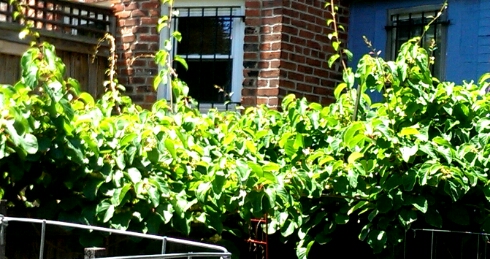
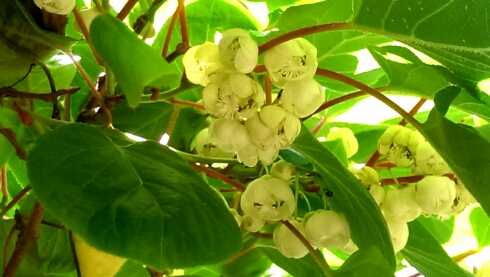
    The polar vortices must have been good for the grape kiwi. After years of being barely productive, it is flourishing wildly. 

    Sometimes it takes, as we can learn from mindfully practiced yoga asana, a stressor to stimulate growth or needed change. It isn’t stress that holds us back, but distress.

    As for the kiwi vine, even if the birds get all the fruit, I still had the delightful scent of the flowers.

    image

    image

  • | | | | |

    Gratitude

    Sometimes at the top of the list of that for which I am grateful are the problems that I have. I fully appreciate my good fortune in only having problems I can handle in one way or another. Not every one is so blessed.

    I was thinking this about “problems” and how to address them in the most graceful way as I read the Supreme Court’s decision. Heavy going reading, but absolutely fascinating from so many perspectives. Awe-inspiring in fact to think of the collective behavior and engagement of so many millions (yes millions by active involvement to greater or lesser degree or by apathy and inaction in this democracy of ours) of people that contributed to this writing. One aspect of it is how much of people tend to think, both individually and collectively, as life endlessly posing problems to be solved (I include myself in this) and not as offering opportunities to engage, shift, nurture, and grow. How we approach the Supreme Court’s decision collectively and individually will most certainly contribute to its impact.

    Peace and light, E — Posted with WordPress for BlackBerry.

  • | |

    Misty Dawn Walk

    I just returned from a trip to the Catskills for a long weekend of yoga, meditation, and a swimming lake in green mountains. I woke each morning before dawn and went out to be with the rising of the light.  One morning dawned with a dense mist and fog.  The doe was about to bound across the path as I was walking.  She stopped short.  I stepped back.  Both of us equally startled.  We looked at each other benignly curious.  Then she ambled off and I did the same. On the way back to the guest house, I saw a porcupine run across the lawn.  I understand that they are great pests, but I truly enjoyed getting to see one.  I think I might like the porcupine as a spirit animal.

    Lake 1a Lake 1bShe was lake 1c

  • | | |

    “Holiday Madness” (and the Yamas and Niyamas of Patanjali)

    When I googled (that should not be a verb) “holiday madness”  this morning, I got one million three hundred thousand hits.  Yikes!  Most relevant websites are about surviving shopping, over-eating, family, and travel.  Madness in such a situation is a choice.  We can choose what to consume, how much, when, and with whom.  It is a choice whether “celebration” requires consumption beyond what our financial, physical, and emotional means permit.

    The yamas and niyamas as revealed by Patanjali provide beautiful structure for thinking about the holidays.

    Yamas:

    Ahimsa–non-harming.  Don’t consume more than is harmful to yourself, those who have created what you are consuming, and the earth.

    Satya — truthfulness.  Be honest with yourself about what is right for you to celebrate and observe and what brings meaning to you as a holiday celebration.

    Asteya — non-stealing.  Consuming beyond your means, especially financially, is a form of stealing (look at what generated the recession).

    Brahmacharya — moderation (aligning with Brahma).  Enjoy the offerings of the earth in a way that uplifts rather than sickens or detracts from spirit and self.

    Aparigraha — non-greediness; non-covetousness.  Enjoy what you have without coveting or trying in a detrimental way to have what others have and you do not.

    Niyamas

    Sauca — cleanliness, purity.  Consume in a way that is healthy for yourself and the planet, that does not create illness, refuse, and waste.

    Samtosha — contentment.  Wherever you are, whatever you have, whatever is going on in your work and family life, think of that for which you are grateful, that which brings you happiness, and focus on what you have.  Contentment is a practice.

    Tapas — fire, ardor.  Be on fire to practice, to shift, to make this a life-fulfilling year of generosity and compassion.

    Svadyaya — study of text, self-study.  Take the holidays as an opportunity to deepen your understanding of yourself, society, and your spiritual beliefs and how they interrelate.

    Ishvara pranadhana — surrender, recognition of the spirit.  Let go a little.  Surrender to a sense of fullness.  Allow the abundance and recognize it as a wondrous gift. Remember the word “holiday” is really two words:  “holy day.” Make this time holy, whether or not you observe a particular religious tradition at this time of year or any other.

Leave a Reply

Your email address will not be published. Required fields are marked *

This site uses Akismet to reduce spam. Learn how your comment data is processed.