Blossoms Around Town
I was cranky at work today. I remembered to open to beauty. The scent of these lilies of the valley reminded me of my maternal grandmother and old-fashioned French perfume.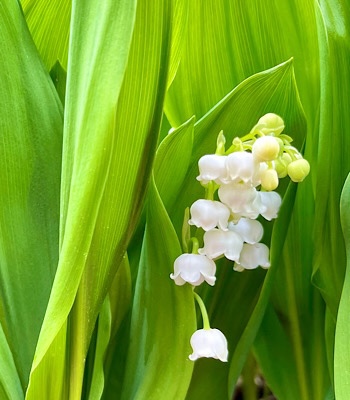
I was cranky at work today. I remembered to open to beauty. The scent of these lilies of the valley reminded me of my maternal grandmother and old-fashioned French perfume.

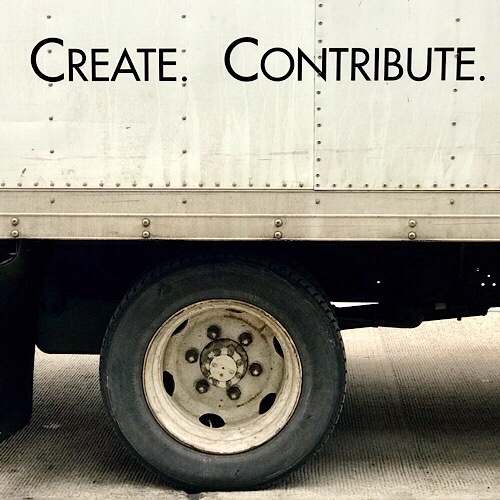
Signs with intelligent, thought-provoking, and action-inspiring quotes are proliferating in my neighborhood. I took this photo last night when I was walking home after getting a Friday evening massage in the neighborhood.
This morning, after practicing, I took care of cat, house, and garden, reading the news, signing petitions (not as helpful as visiting/writing to a Senator/Congressperson–but I don’t have those as a DC resident) and doing targeted giving (today to support a free press) in addition to my expanding monthly giving. This afternoon, I am attending “Active Bystander” training. Then off to share dinner and then watch friends I know from Contact Improv perform works in progress at Dance Exchange. I will get time outside by traveling as much as possible on foot.
How are you spending your Saturday? Did it help you feel more engaged, connected, and grateful or less? If less, what small shift could you decide to make that would be easy enough that you would actually do it?
On Friday night, Professor Douglas Brooks offered a satsang that was hosted by District Kula. One of the attendees, who said that she did no yoga, but taught Argentinian tango, wanted to know about what she had heard of yoga talking about the dance of masculine and feminine because that’s what tango is all about.
Douglas gave a quick overview of the idea of the tattvas as a foundation for an answer to the tango dancer’s question. As part of this background, he discussed the numerological aspect of the tattvas, saying that Shiva and Shakti relate like this: one is two becomes three becomes five. The two must separate, and the space between them makes three and teaches us the one. Because of the spaces between, we do not have one to two to four, but two (one because inseparable) to three to five. We know the one only when we know two, and the one is therefore part of three. (“Lovely dance of numbers; that makes perfect sense,” I thought, having a happy geekfest in my own mind. “I’ll enjoy pondering how that might be an explanation for there being five top tattvas and not six or four and wondering whether I had even begun finding an understanding, even though what Douglas was talking about is something I have been contemplating for years in various ways and contexts.)
Douglas then led into a description of the inseparable, inextricably intertwined nature of Shiva and Shakti. “It is like that in tango,” the dancer interjected at multiple points. “The better the leader, the more he is listening to the follower, thus allowing the follower to be the leader.” Each time Douglas refined his response, the dancer offered something else about her experience with tango. “Right, when they are dancing well, the man takes on some of the characteristics of the feminine, and the woman that of the man. The difference between them starts to dissolve into the dance itself.” Her eyes lit up, and she bubbled up with speech, in her excitement at finding in the tantric philosophy what appeared to be an explanation of what she experiences in the tango.
The tango dancer and the yoga texts assign specific roles and attributes to the masculine and the feminine, and we tend to fall into that tradition when we discuss the tantric philosophy. As much as the traditional tantrika or tango dancer might say that the masculine and feminine (when embodied) take on/have characteristics of each other, they have assigned masculine/feminine roles to play, and they are still stuck in a paradigm that keeps real humans in assigned roles. These assigned roles impact how male and female are permitted to act in society, regardless of any recognition that who is actually, rather than technically, in charge may be in flux on different levels.
The paradigm of tango dancing kept Friday night’s discussion within the context of typical and rigid roles for male and female, but I do not think that is a required way for us to think of how to bring the tantric yoga philosophy into our lives. When we think of the tattvas as abstract principles, we do not have to privilege in our lives or own thinking the traditional divide between male and female roles as the basis for understanding the play of opposites (though to be true to the text in its historical context we do).
I believe that the dance of shiva and shakti is as much about the dance between the universal and multiplicitous individuality as it is about the specific play between masculine and feminine in assigned roles. The one is two. The two (one) separates into three; when the two separate we discover the one (two), and after that the three becomes five. I remember a friend saying in our college days, “There are three of us in it: there is me, there is my loved one, and then there is our relationship.” To be in the world and relate fully, the tattvas (and dances with partners of either sex) teach us that two are inseparable by being in relationship. By recognizing the appearance of separation, the dance of Shiva and Shakti tattvas shows us the relationship — the oneness. Thus, all consciousness is one, but two, and then three, and yet still one.
How this informs me, other than enjoyable thoughts in my head, is that when we try to be spaciously and openly aware in all of our relationships of this elemental play of individual identity, separability, and indivisible unity, we see the other in ourselves and ourselves in the other. This helps much to inspire friendliness, understanding, and compassion. It also helps bring understanding of the leader when we are following, which it makes it easier to follow with discrimination, but without judgment. When it is our turn to lead, it helps us know that for those who might choose to or be required to follow us for some particular project, that to lead well we must listen to the followers. As the the Grateful Dead taught me decades ago, “you who choose to lead must follow.”
I wanted to share this article on “ecotherapy,” a term I had not heard before. I found the article interesting because for years now, I have gradually practiced all the elements listed in the article as treatment for depression, not because I had been told by a therapist to do so, but because, despite my feeling the repercussions of going against the grain, I felt happier and healthier settling in one place, traveling more slowly, connecting with my pets, and tending a small patch of nature.
These shifts in lifestyle simply feel to me more in alignment with my own nature and that of the earth. I found, incidentally, it gave me much more time overall to do things. People ask me how I do so much (usually referring to the day job, the yoga teaching, the gardening and cooking, the volunteer work). Thinking of the way they live, and what they do, they ask when do I rest? I say that my life is in fact rather slow and restful. I rest when I meditate. I rest when I am taking the time to make a home-cooked meal — every day when I am in town, often two or three times a day. I rest when I am tending the garden. I do not think of cooking and gardening as chores, but as ways to nurture myself.
I rest when I am commuting because it is on foot or sitting on the bus or metro (note: instead of getting anxious or angry when metro is slow, think of it as an opportunity to draw into yourself and meditate, contemplate, or read).
Not having moved or changed jobs in years, even though there have been serious challenges with both where I live and my job, I had the time, money, and energy that would have been used up in a major upheaval, to engage in the study and practice to become a certified Anusara yoga instructor, and before that, to study drawing and photography and to exhibit my art. Staying in place, I continue to have time to study and to read (not watching TV helps alot, too, for finding time). The choices are different with children in the house, but it is still possible to make choices that require less racing around for the family.
This, to me, is a larger aspect of vinyasa krama, the art of sequencing. When we sequence how we move in space and time in a holistic, sensitive way that honors the rhythms and cycles of our bodies and the earth’s, then we feel less trapped or overwhelmed. When I was trying to keep up with society, I was often sad and anxious. Now I am much less so. I have often attributed it to these choices. Now, I see, society has given us a word for it — ecotherapy. With a word coined for it and put in the press, will people feel more comfortable practicing it?
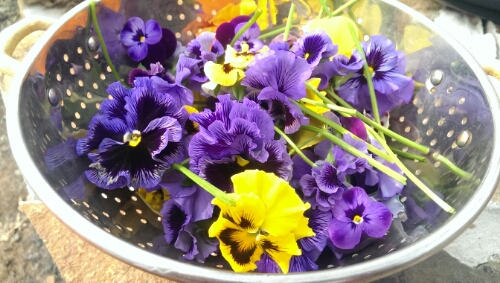
Pansies and Violas (Heart’s Ease)