| |

The Weighty One in Company

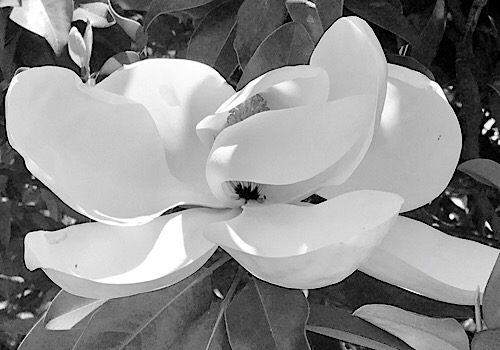
Jupiter and Saturn glowing together so brightly that even the light pollution cannot obscure them. Jupiter is sometimes referred to as the guru planet, the weighty one. Take a look at the sky and use that to listen to your own inner guru, the space where you are fully grounded, engaged, and free in spirit all at the same time. For me, it’s still a work in progress.

Similar Posts

  • | |

    Serenity Saturday, Oxfam Fundraiser, and Thanksgiving Week Classes (web version of newsletter)

    Dear Friends,

    I hope you weathered Ida and are enjoying the glorious days that are following her cleansing rains as we move into the first of the holidays.  Although I may have some thought-provoking questions about the historical basis for our Thanksgiving Day, I love taking the time as a society to get together to remember, to heal, and to share the abundance and give thanks for all that we have.  For me, one of my greatest sources of gratitude is the practice of yoga and our wonderful community.  Please join me for a gratitude-filled week of inner abundance:

    Serenity Saturday:  November 21st, 3pm-5pm at Capitol Hill Yoga

    Oxfam Yoga Fundraiser:  Thanksgiving morning, 10am-11:30am, at Willow Street Yoga, Takoma Park

    Class Schedule:  All open classes will be held as usual Tuesday, November 24th at Wm. Penn House (6:30pm) and Saturday, November 28th (Level 2 at 8:30am, Gentle/Therapeutic at noon) at Willow Street, Takoma Park.

    Regrets:  No house group practice, Wednesday, November 25th.

    More details on the website at www.rosegardenyoga.com.  To register in advance for Serenity Saturday, please visit www.capitolhillyoga.com.

    I look forward to seeing you soon and sharing the joy of the holiday season.

    Peace and light,

    Elizabeth

  • | |

    It’s a Fine Line Between a Grimace and a Smile (and satcitananda murtaye)

    The New York Times just published a blog entry on the perils of faking happiness.   The first problem with the article was that I could not get to the study to see if I agreed that the actual premise was that “faking a smile” was what led to a deterioration in mood or feeling unduly pressured by a need to do so regardless of what was going on inside was the problem.  The second is the definitional problem of what it means to “fake” a smile.  I think it not unlikely that contorting the face into a fake smile (i.e., grimacing) because one feels one has to do so does not improve mood when one is in physical or emotional pain.  According to the little cover blog, though, those that made an attempt to smile from the inside by thinking a positive though–even though it was a conscious effort– did experience an improvement in their mood.

    Any good method actor will tell you that to make an outer expression believable, one has to cultivate inner thoughts to go with it (though that is still “acting”).  Having been taught by my mother by age six in preparation for my first school play performance, that to act I should try to “be an apple” a la Stanislovski, I disagree that intentionally putting a smile on your face cannot help improve your mood. It’s all in how you fake it ’til you make it.  I have long advocated to my yoga students, based on my personal experience with the practice of smiling whether I think I mean it or not, to try smiling on the outside improve mood.  Even leaving aside the inner experience, just walk down the street with an open posture and a smile on your face and see how people respond, though I caution to do this at your peril in New York.  When you smile at people and be polite, they generally respond in kind.  You are then much more likely to feel good than if you are scowling and rude and people respond back in kind.

    What on earth (or in heaven’s name) does faking a smile until you feel one have to do with satcitananda, you may find yourself asking yourself at this point.  The second line of the Anusara invocation is “satcitananda murtaye.” Murtaye, from the same verbal root as murti or statue, here is usually translated as saying that Siva (from the first line) embodies the characteristics of satcitananda, being (what I like to call is-ness), absolute consciousness, and bliss.

    Another way of looking at this phrase, though, is that when we open to the possibility of discovering our siva nature, which is the reason we practice yoga, and when we use the principles of alignment to help do so, then we discover how to be, if even for a moment, simply present, fully conscious, and blissful with the consciousness of the ultimacy of being.  In a word, when we soften and look within, using the knowledge and experience of our teachers and our practices, a smile of recognition lights us up.  If we start out having a bad day, feeling stressed or anxious or in pain, or just plain grumpy from reading the news, we just have to practice with more depth and sincerity to find the smile and not beat ourselves up if we are struggling to find the smile despite our desire and the intensity of our practice.

    Is that faking a smile or being the smile?  Does trying to smile when we are feeling blue really make us more unhappy?  I think it is all in how we do it.

  • | |

    Worrying (and the kanchukas)

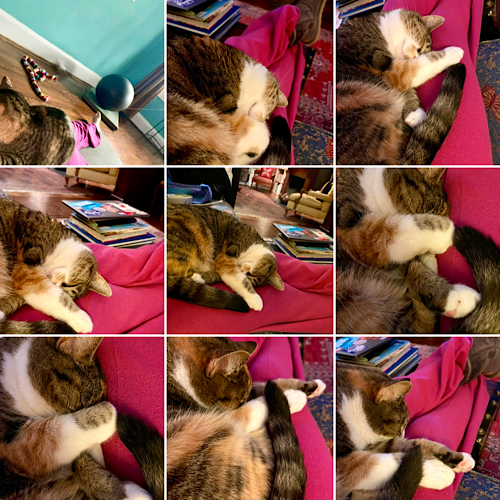
    This morning, woken by the purring cat from an anxious dream in which I was not doing enough to make things better (I am not making this up), my first thoughts were of escalating war in Afghanistan and deepening economic crisis at home.  It felt almost strange and abstract to be worrying about these things from my warm comfortable bed.

    I think worrying can have a positive place in our lives.  If we just get worried or anxious about things and get trapped in not doing or growing or reaching (both inward and outward) for a sense of connection and spirit, then worrying will cloak or limit us.  If we recognize worries as showing us limitations, then we can use them to grow and change and spur us to action.

    After the 25 tattvas describing the physical world and our being and understanding of the world that correspond in both the classical and Kashmir Shaivist systems, are Kashmir Shaivism’s six kanchukas — cloakings or coverings.  The kanchukas are niyati (limitation of place), kaala (limitation of time), raaga ( attachment), vidya (limitation of knowledge), kalaa (limitation of action), maya (illusion of individuality/manifestation).

    From a tantric perspective, experiencing ourselves as thinking, individual beings in the manifest world, constrained by time and space, only binds us if we think that is all we are.  If we get completely entangled in these constraints, then our sense of spirit is cloaked, just as if we get stuck in worrying, instead of using worries as a spur to work for change, we become miserable.

    I meditate and practice asana, as taught by my teachers, to reveal the restraints of physical being as only part of my being.  Spiritual practice can serve to enable us to experience freedom of heart and mind, to bathe in the bliss of the essence of ourselves that is universal and unconstrained by the limitations of individual manifestation.  The point of these practices not to escape our individual selves or to gratify them (that would still be “cloaked”), but to find the strength and stability to serve better and to work for a world in which all beings have an equal chance to seek the spirit and experience the bliss of connection.

Leave a Reply

Your email address will not be published. Required fields are marked *

This site uses Akismet to reduce spam. Learn how your comment data is processed.