Signs Around Town
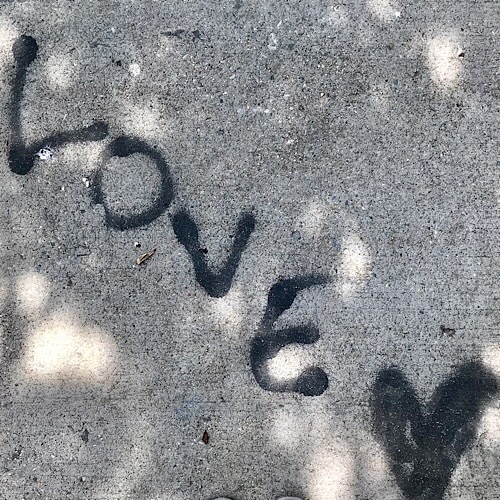
Please wear a mask. Make it a pranayama.
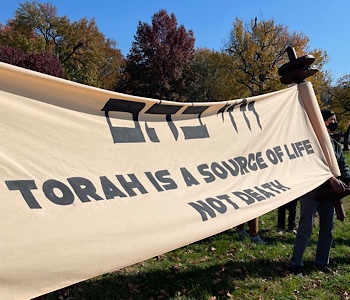
On Monday morning, I joined in the first two hours of the day of prayer (Shacharit are morning prayers) and action led by #RabbisForCeasefire on the National Mall. They gathered and prayed and then spoke to all their members of Congress know that their’s is a religion that privileges peace and freedom for all beings over retribution. I would have stayed longer—I felt right at home—and taking care of my biological needs took precedence.
They brought their own temple and articles of worship. Centuries of practice.
What do you see in your philosophies? Your holy works?
It was already hot when I went out into the garden after I sat for meditation. I try only to water every third day it does not rain and have used soil supplements such as “soil moist” to make that possible, but it was critical that I water so that the plants survive today’s blazing heat.
Before I went out, while listening to the weather forecast, I drank my second glass of filtered tap water. I thought how lucky I am to have fresh drinking water from the tap, shelter from the heat, ice if I want it, and water for the garden. All those warnings to stay inside, keep cool, and drink plenty of liquids are meaningless unless one has access to those things.
I am grateful, too, for my practice. I know that a slow, quiet practice helps keep me cool and rested, and that I can get extra enjoyment from the way the heat warms my muscles without any effort at all on my part. In the heat, stillness is so welcome that sitting is as sweet an activity as I could know.
Why did it make me feel better to think it could have been worse? Hurricane Irene revealed a place that probably would not have leaked (into the living room) if mortar had not been shaken loose by the earthquake earlier this week. As I was doing another check early this morning of the house and perimeter to see if I needed to do anything to prevent worse damage from late discovery, I thought that it probably would have been a lot worse for the earthquake to have revealed stresses from the hurricane than having had them do the reverse. I guess it would depend on how the two impacted something to know which sequence would have been easier to weather.
I am appreciating my good fortune in having seen the wind and the rain and come out having no tangible material impact other than memories and relatively minor repairs that need to be done in a hurry. Holding all in the path in the light.