330 Million (Var.)
I spent both Saturday and Sunday morning in a meditation training with Cyndi Lee. I also attended Reggie Hubbard’s afternoon yoga practice today (celebrating Prince’s birthday).
Now, more than ever, is the time to engage and to perform the focused and consistent self-inquiry and self-nurture to support lifelong action.

John Kane’s “The Gettysburg Address”
Outlier Art at the National Gallery
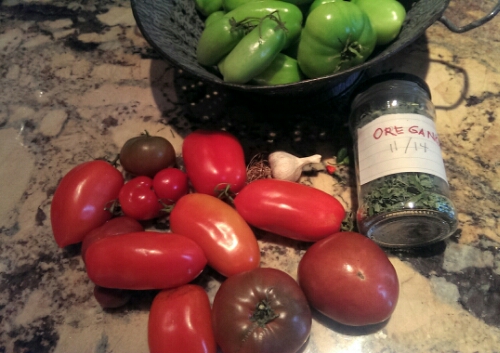
All the tomatoes were picked green. Those that are red changed color, but did not otherwise ripen. Still, cooked for a long time in the slow cooker with lots of red wine, they will make a fine sauce.
I am reminded by the tomatoes, I was reminded at a yoga workshop with Elena Brower that I attended this weekend, a really good question is what are you going to do with the resources you have?
We all worked from home today.
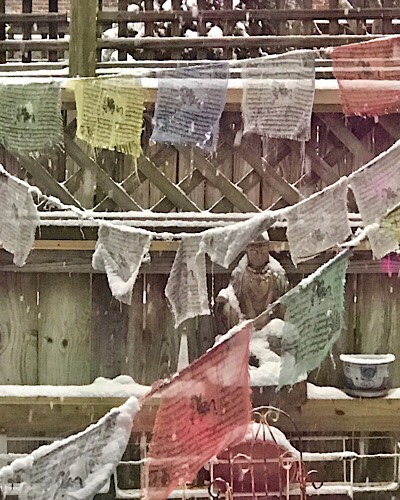
Every time I walk past this sculpture, I wonder whose idea it was to repaint it. For a long time it the gilding was chipped and faded. For me it had much more charm showing its age.
So too, I think, with humans. It is great to feel and look youthful naturally because of proper care of health, and quite another to disfigure ourselves and our looks with surgery and treatment seeking always to look like we have not fully lived out some life.
By all means, seek to remain vibrant and supple, but do please also honor the signs of experience.

Peace and light, E — Posted with WordPress for BlackBerry.
The other day a friend commented that it seemed that a major contributor to global climate change is how we have set out to control our environment instead of aligning with it (my paraphrase). So much, he said, of what contributes to global climate change is how we heat and cool and light our homes and work places. For example, instead of honoring the change of seasons, we overcool in summer and overheat in winter, so that we can wear the same clothes and eat the same foods year round in apparent comfort.
This comment resonated with me deeply. It brought to mind what I have been taught about possible approaches to pranayama — the yoga practice of conscious breathing. Pranayama usually as translated as breath control or restraint. This assumes that the conjunction in sanskrit is of the two words “prana” and “yama.” Prana here refers to the subtle energy of the life force in general, which we can understand best through the breath. Yama means restraint. If, however, we think of pranayama as the conjunction of “prana” and “ayama,” which is a reasonable way of looking at the way the word is formed, we can understood pranayama to be the practice of expansion or alignment with prana.
When we seek with our yoga breathing practices on the mat or with our technology and lifestyles off the mat to restrain and control nature at the expense of listening and understanding, we will be at war with ourselves and the earth. If, however, we seek to align better with nature on and off the mat, to expand and enhance our relationship with the life force, rather than to restrain and control nature, we will expand our awareness of the subtle forces of the earth and live in a more life-affirming way.