Asana, Pranayama, and Yoga Practice | Food for the Mind (Yoga Philosophy, etc) | Meditation | Poetry
Impermanence
Sometimes I find myself like a butterfly folding its wings. Like any other state, it is impermanent.
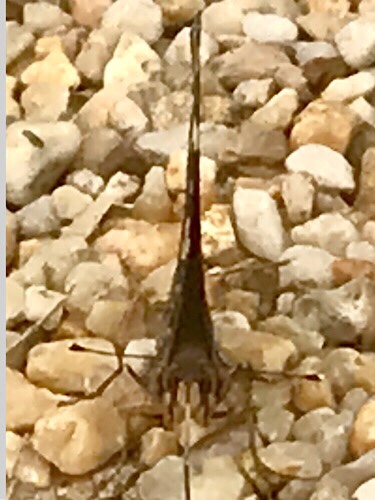
Sometimes I find myself like a butterfly folding its wings. Like any other state, it is impermanent.
I started out tonight’s group yoga practice saying that I’d been listening again to the recorded conference calls in Claudia Welch and Cate Stillman’s “Healthier Hormones” course, which while presenting very simple aspects of much more complex systems of thought and practice, I think gives valuable perspective on living with awareness and self care. In the first call, Dr. Claudia tells a story of teacher who told her that she should meditate lovingly. Dr. Claudia suggested that practicing just out of a sense of obligation wouldn’t have the same benefits as if you went to it and did it lovingly; and, as a physical matter, you wouldn’t get the same positive hormonal benefits.
During my intense workday trying to meet a major deadline, I thought both of the intention to make everything one does a meditation and this exhortation to meditate lovingly and decided to have combining the two be my practice for the day. I’d draft an email or get on the phone or edit documents and say to myself, “lovingly, lovingly.” I thought, as I contemplated what needed to be said and done, “lovingly” doesn’t mean never tough love. Doesn’t mean passive acceptance or false praise. Doesn’t mean anything crossing appropriate work place boundaries. But the action always done lovingly. With spacious awareness. Illuminated consciousness. However you might describe that lovingly place. Saying the word periodically during the day as if it were japa or mantra made this day better. More loving for me; probably better for all the people with whom I had to engage on a fairly unpleasant and monstrously complicated task.
I sent the big email to my boss at 6:30 and got off the phone with him at 6:58, when the yogis arrived. As I ended the call with my boss, I said I’d be done with yoga at 8:30 and would leave my computer on, and I would be available then. Practice was sweet–standing poses and hip openers to get ready for more snow. We’d were shifting into our first restorative and the phone rang.
8:04pm. The answering machine picked up and my boss began leaving a message. I’m leading yoga practice. Boss calling while leading yoga practice not good.
Lovingly.
I decided that it would be better overall not to wait until practice was over to return the call. I asked one of my fellow yogis to lead the others in the next pose (the delicious and simple restorative of lying with a rolled up blanket cross-wise under the back right under the shoulder blades to give the heart a lift and to provide a counter balance to the shape of sitting at a computer).
I reminded myself what we’d been talking about as the focus of practice; “lovingly,” I said to myself, the lovingly being about how to complete the task at hand, not specific to the individual. I called back my boss. He just couldn’t wait to call until 8:30; he was anxious about the impending snow storm and its impact on our being able to get things done and he wanted to be done and home, too. I’d left my glasses in the studio and couldn’t see the computer well enough to work, so I went looking for them. When I went in, expressing my chagrin, the yogis said they were enjoying listening to the conversation (while they were happily in their poses). I decided to believe them. When my boss apologized, I replied, “it’s ok; my students assured me that they enjoyed listening.” I am grateful and delighted to practice with such gracious friends, that I could say it truly.
Then we wound up the practice with supported half shoulder stand, followed by a twist and savasana.
Lovingly.
Hard work that lovingly thing sometimes, but I think it might be an efficacious conscious practice for a while for me.
Feel free to remind me if it seems like I’m forgetting. But lovingly.
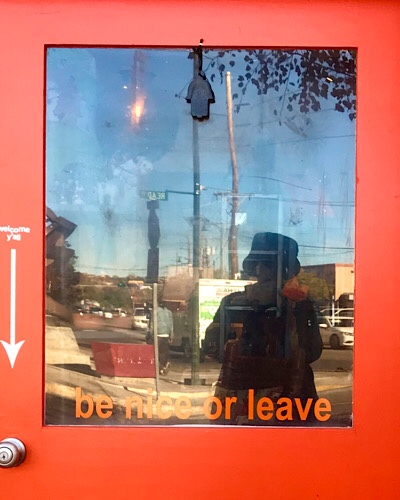
Santa Fe, NM, 10/25/19
Walking to work.
During the work day.
Walking home.


Saying such, of course, does not make it so. I just read a review of a movie about a self-proclaimed guru. According to the review, central to the movie was the question whether or not it mattered if the guru was a charlatan if she was truly helping people. Good question, but not good enough to get me to see the movie, as it otherwise is getting rather mixed reviews.

Peace and light, E — Posted with WordPress for BlackBerry.
When I was eight or nine, a teacher asked everyone in my class to say what they wanted to be when they grew up. The other children named the various jobs or professions that appealed to them at the time. I responded that I wanted to be independently wealthy. At that age, I was expressing something I already knew from family issues. Though I did not have the words for it or a clear understanding, what I was saying was not just false precocity. I knew at a basic level what is taught in yoga: I would need enough material support (ardha) to follow my heart in love (kama) and work (dharma); then my life could be free (moksha).
When I was 22 and visiting my friend Dan, he asked me what I really wanted to do with my life. We had just graduated from college. Dan was working for a sculptor who was a professor in the art department; I had just moved back to New York, had just gotten over a failed attempt to serve as an office manager for an off-off Broadway theater, was in a place of deep emotional and financial struggle, and was trying to determine what work and corresponding further education I wanted. “I want to be content,” I said. “That’s too passive,” he replied. “No, that’s not what I mean,” I tried to explain. “For me being content being satisfied and engaged with my work and life, but still working hard and having goals. It’s not just hanging out.” I had all sorts of things that I found interesting and possibilities for a life path, but I didn’t have one specific career or life plan that I was certain would be more fulfilling than any of the others. They just would have satisfied me in different ways. Because of the dilemma of too many choices, I wanted to be able happy with whatever choice I made, even if it seemed like a compromise. I was conscious that once I picked, because of the inherent limitations of time and space, that I would either have to be content with my choice or be unhappy. I have since learned to think of contentment (samtosha), which is one of the niyamas of the path of yoga expounded by Patanjali, as a practice rather than a goal (and it is a very important and continuing practice for me). Contentment is not an end, as I had thought when I was 22; it is just one part of the path to a goal of living liberated (jivanmukti), experiencing self as spirit in all that one does.
On a recent telephone seminar, Paul Muller-Ortega, my meditation and philosophy teacher, in the midst of a broad dialogue regarding various studies and practices, spoke a little of ecstatic serenity. Memories of the discussions I had had long ago about what I wanted welled up in the forefront of my thoughts. In thinking about what is my intention now, especially with regard to my practice (sadhana), I witnessed my previously stated intentions as just stages on the path to this discovery. As soon as I heard Paul say the phrase, I thought, “that’s what I want; I want to be ecstatically serene.” I seek to be always in some part of my conscious being still and peaceful, while simultaneously being passionately engaged in what life brings to me and I bring to life.