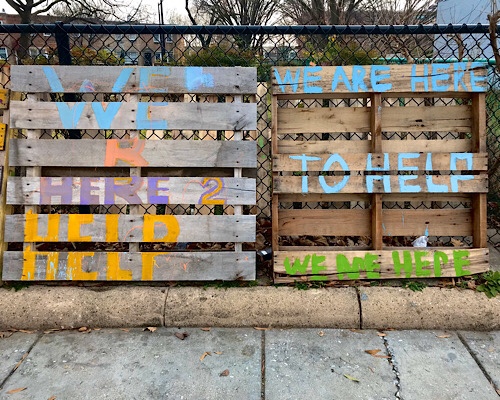
On the Way Home from William Penn House for Tuesday Night Yoga Practice
Every time I walk past this sculpture, I wonder whose idea it was to repaint it. For a long time it the gilding was chipped and faded. For me it had much more charm showing its age.
So too, I think, with humans. It is great to feel and look youthful naturally because of proper care of health, and quite another to disfigure ourselves and our looks with surgery and treatment seeking always to look like we have not fully lived out some life.
By all means, seek to remain vibrant and supple, but do please also honor the signs of experience.

Peace and light, E — Posted with WordPress for BlackBerry.
It was not really a pleasant day to go for a walk, but I found enjoyment in seeing everything as art.
The shiva-shakti tattvas, the two highest tattvas, are completely subjective. The shiva tattva is, according to the philosophy, the ultimate reality, the pure “I,” undiminished and undifferentiated consciousness. As something purely subjective, it is both everywhere and nowhere, in every being and simultaneously beyond them. It is not dissimilar to Hegel’s Absolute (though I believe Douglas Brooks, who knows far more than I in this area, might disagree with me on this one), which “is and is not,” or Kant’s “unmoved mover.”
Shakti tattva is power — the power to tranform, create, manifest, diversify, cloak. Shakti is the power to become embodied in objective form. Shiva and shakti tattvas are thus inseparable. Ultimate unbounded consciousness and freedom (shiva) only has meaning to the extent the power to move, create, and diversify (shakti) pulses and transforms the subjective into the objective, the unimaginable to the observable.
In our yoga practice and meditation, we seek to use the practices to reveal to ourselves the ultimate pulsation (spanda) between the objective and subjective, the observable and the unknowable, the individual and the completely universal. One way I experience the first principle of Anusara yoga (open to grace), is taking the mat or my seat with an openness to sense and experience this ultimate pulsation (spanda) and play (lila), so that by using my body, mind, and will, I can better recognize the spirit that shines in all of us and use that recognition to inform how I relate to myself, society, and all beings.
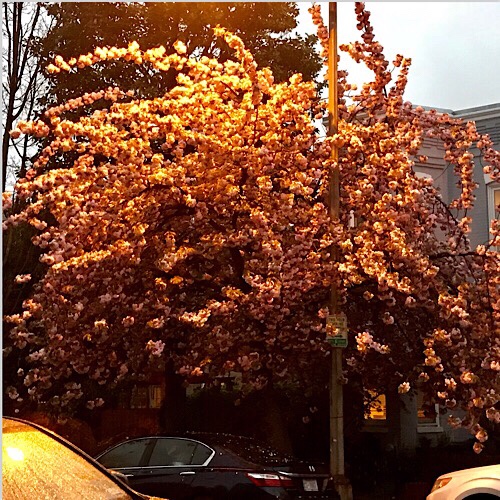
Whatever might
have happened
or didn’t happen,
whomever I might
have encountered
or didn’t encounter,
whatever might
have worked
or did not work,
whatever I might
have completed
or left unfinished,
whatever I might
have stirred up
or might have
begun to heal,
whatever might
have been, or was–
still there were
the blossoms,
still the moon.

Peace and light, E — Posted with WordPress for BlackBerry.
I was not able to attend the mid-week intensive in New Jersey with John Friend. It was hard enough to make room in my schedule for the weekend workshop.
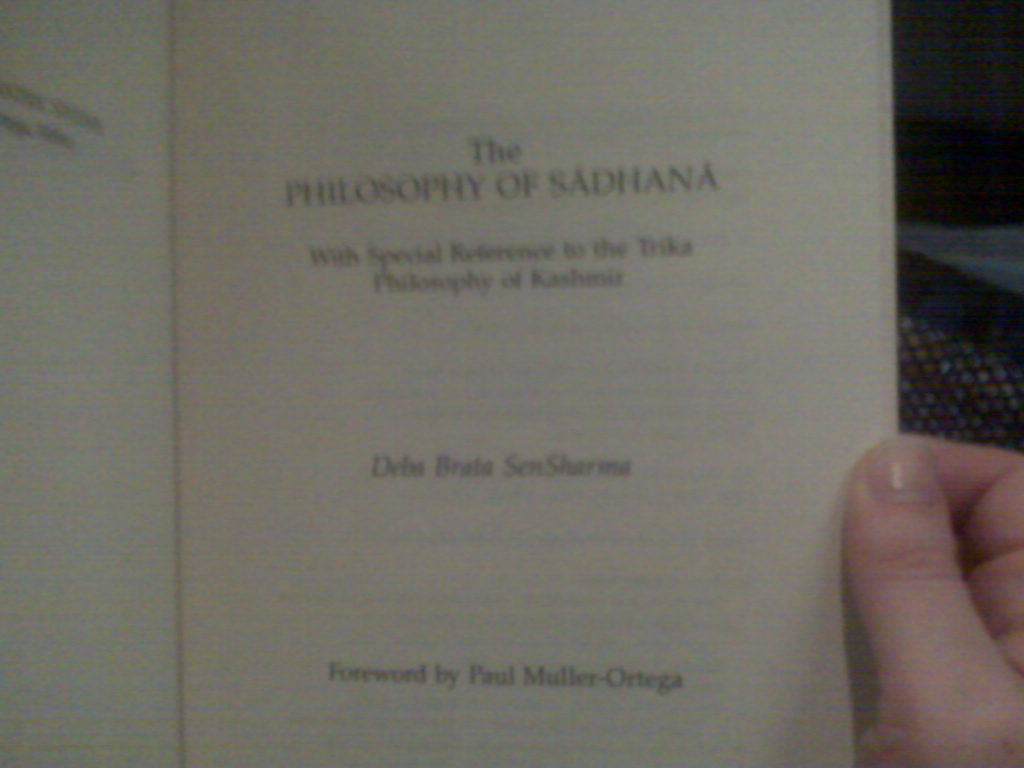
I can, though, be with my teacher and friends not just in spirit, but in intention. Knowing that the focus of the intensive was sadhana (practice), I selected The Philosophy of Sadhana to read on my way to the weekend, so that when I arrive I can be more in alignment mentally with those who already have been immersed this week in deep study of what sadhana means for ourselves and in community. Choosing to study in a way that connects us with our friends on the path, even when we cannot physically be present with them is, of course, one of the ways we support relationship in sadhana.
Peace and light, E — Posted with WordPress for BlackBerry.