|

Roasted Vegetables (and getting ready for vacation)

Yesterday morning, when I was starting to pack to leave for Oregon today, the most critical elements for getting ready (after making sure I had my wallet, camera, and some yoga clothes in a suitcase) were to water the garden well, pull some weeds, pick ripe vegetables, and cook.

I’d given away some produce a couple of days ago, but still had eggplants, peppers, tomatoes from the garden and half an onion from something I had cooked earlier in the week.

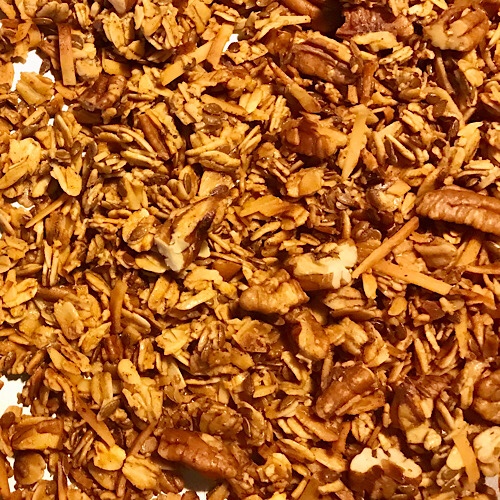
I cut everything in half, slathered it in olive oil, sprinkled the vegetables with coarsely ground pepper Himalayan pink salt and put it into the toaster/convection oven (my favorite kitchen appliance).  The vegetables roasted while I was doing other chores.  Now, on my return, I will be able pull from the freezer ingredients for a wonderful pasta sauce.

As much as I am looking forward to a week of yoga and exploration, I’ll be delighted to come back to garden and my own kitchen.  It is almost time to start planting greens, beets, and turnips for fall.

Similar Posts

  • | | |

    An Excellent Sufficiency, Homegrown Tomatoes (and the Isha Upanishad)

    The Isha Upanishad starts, “That is fullness (purna).  This is fullness.  Fullness comes from fullness.  Take fullness from fullness, and the remainder is fullness.”

    My maternal grandfather died when I was just a toddler, so I never got to know him.  My mother used to tell us that when he had eaten enough at a bounteous meal, he would say “that was an excellent sufficiency and any more would be a superabundency.”

    On Sunday I went over to Lovejoy Gardens to my little plot (approximately 3′ X 7′ raised bed on concrete, half shaded by a fence) and harvested tomatoes.  There were about 15 ripe tomatoes.  The first thought was that it was too many tomatoes.  Then I thought of all the neighbors I had who didn’t have their own tomato plants.  I knocked on one neighbor’s door.  He gave me tea while I played with the cat.  I gave him tomatoes.  I went for a massage in the afternoon.  I brought tomatoes.  I was sent home with freshly made spanakopita.  I invited another neighbor over for dinner.  We at pesto with basil from the garden and cucumber and tomato salad (cucumber, tomato, and shallots all from the garden drizzled with a little of the best balsamic vinegar and seasoned with just ground sea salt and pepper).  We had a lovely visit, and I sent him home with tomatoes.  In the next day or two, I will make a batch of tomato sauce and put it in the freezer and have someone over for dinner another night.

    There is only “too much of a good thing” or a “superabundency” if we hoard it or try to ingest it all ourselves out of fear, greed, or desire for power or control.  When we have enough ourselves and then share the abundance, we simply create more abundance.  Once again, I am given again from my garden another sweet insight into the yoga teachings.  I am also reminded by this small example that I could share even more broadly from my blessed lot of fullness in global society.

  • |

    When to Bring in the Tropical Plants (and stress v. distress)

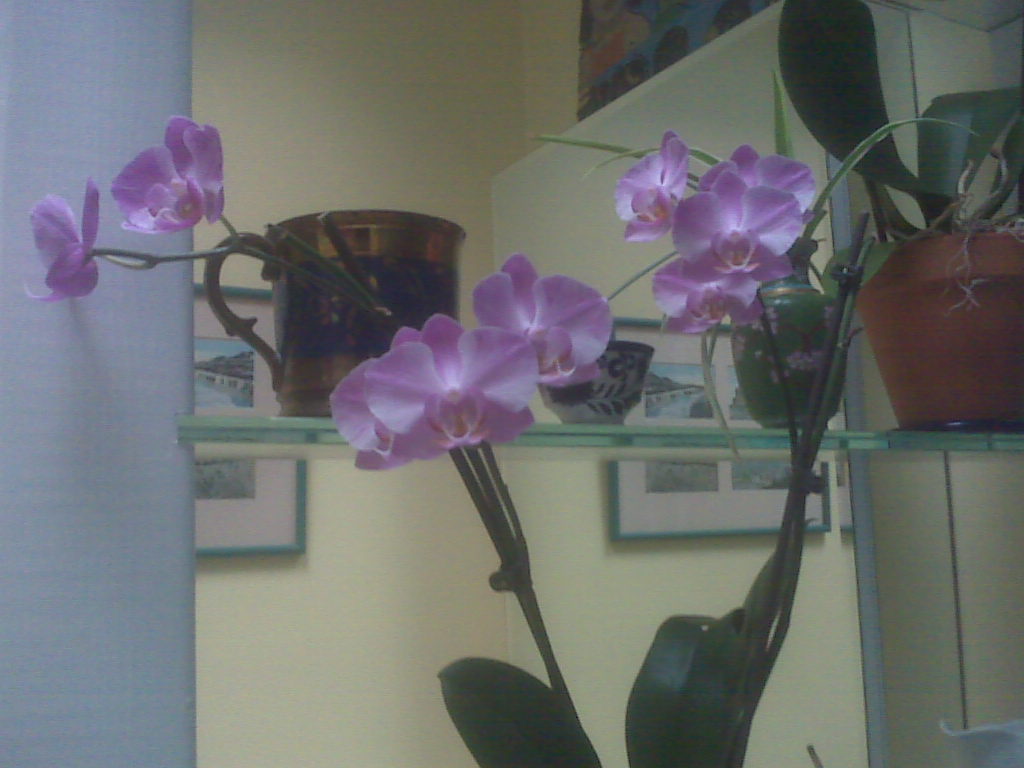
    From late September through the first week when there either are two or more nights forecast to below 38F or one night below 35F, I assiduously watch the 15-day weather forecast to determine when to bring in my tropical plants (orchids, bromiliads, a night-blooming jasmine plant (now 8 years old), a bay tree in a 24 inch pot (now 12 years old)).  I also bring in the lemon grass and lemon balm I have in containers so that they can be the perennials they would be in a warm climate; here, left outside, they are annuals.

    When I first had a few orchids — over 10 years ago now — as soon as there was a hint of cold weather (below 45F) I rushed the plants inside, believing that if they were tropical, they needed to be inside.  In one of the early years, the first night below 40F was in late September.  The plants really suffered from a full seven months inside.  I have since learned (by studying and personal observation) two things about my tropical plants.  The first is that they are a lot happier outside than inside (when inside is not a properly humid, sunny greenhouse).  The second is that they like cold weather as long as it is not near or below freezing.  They especially like cold rains like we had the other weekend.  The stress of a few weeks of nights in the 40sF, in fact, seem to help the orchids bloom.  Now, by waiting until the last possible minute, and bringing them out as soon as it seems like the danger of last frost (for my backyard, which is very early) has passed, the orchids are outside at least seven months of the year.

    Thinking about how the orchids flourish with the stress of some chill, but not too much, reminds me of what my teacher John Friend talks about in yoga practice of the difference between stress and distress.  Some stress actually strengthens us.  This is why one of the best ways to avoid or at least slow the process of osteoporous (according to the general medical literature to I’ve read) advocates weight-bearing exercise.  Putting weight, i.e., stress, on our bones and muscles strengthens them.  Too much, too fast, however, will injure our muscles and bones.

    So, especially for those of us with injuries (prior or current) or physical challenges such as arthritis, it is optimal to exercise, to seek our edge, to put ourselves under stress, mindfully and intentionally.  We need to be aware, though, of the subtlety of the edge between stress and distress so that we are strengthened not injured, just as exposing the orchids to some fall weather invites them to bloom, but actual freezing or near-freezing temperatures will harm or kill them.
Leave a Reply

Your email address will not be published. Required fields are marked *

This site uses Akismet to reduce spam. Learn how your comment data is processed.