Statuary Around Town

Or perhaps episodic. In either case, this is why yoga teaches us practices to free us from the twinned suffering from attachment (longing) and aversion.

Peace and light, E — Posted with WordPress for BlackBerry.
My aim, with the awareness cultivated through meditation and yoga practice, is to delight in a way that does not impinge on the delight and health of those with whom and that with which I am in relationship.
What would delight you today and how would you share your delight?

Peace and light, E — Posted with WordPress for BlackBerry.
This is the second round of fruit ripening on the small tree I brought into the garden this spring. Will these figs ripen enough to be picked before the first frost?
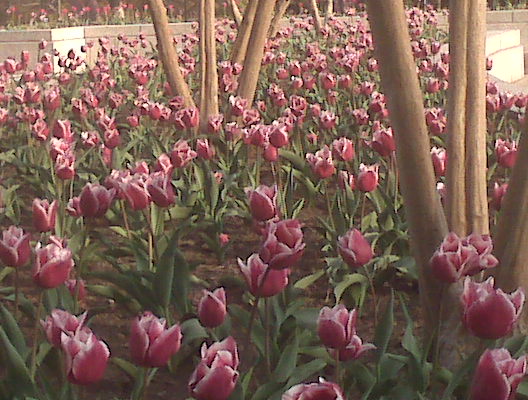
Whenever I see extensive plantings of tulips, it brings to mind the tulip mania of the 17th century Dutch. At the height of the mania, single bulbs could sell for several times the annual income of a skilled worker.
Now, the tulip is just another beautiful flower. How could it ever have been the focus of such outrageous extremes of lust, gambing, greed, and social mania?
It is a great contemplation to examine what leads us to desire and seek and value particular things–either individually or collectively. Do the desires bring us to a place of greater good and true fulfillment or is the desire just fueling the unhappy dance of craving and loss?
The tantric philosophers point out that desire itself is not bad. After all, it is what gets us out of bed in the morning and can turn us to the good. But if it is driven by external opinion and emptiness of self, then it yields suffering–the suffering from which yoga seeks to free us.
Peace and light, E — Posted with WordPress for BlackBerry.