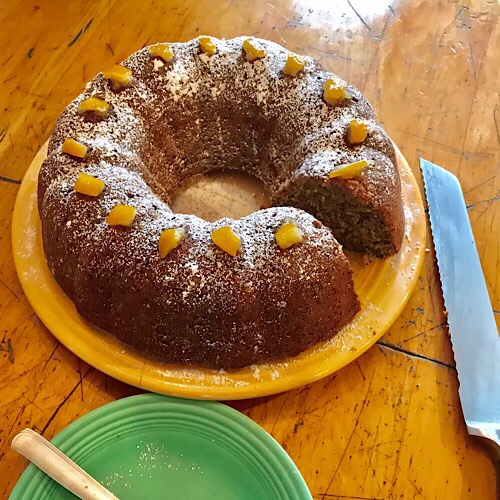
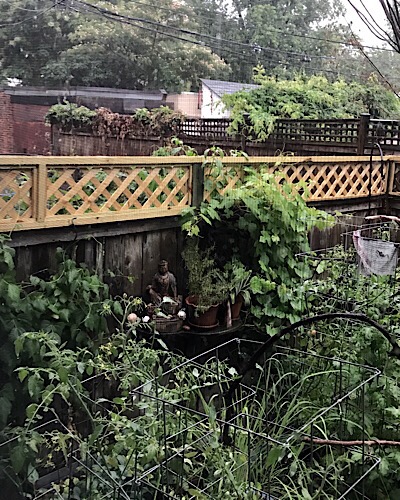
State of the Garden (not shown-a superabundance of cucumbers)
I admit it. A couple of years ago, when a friend was waxing poetic about the virtues of pressure cooking, I was skeptical. Shortly after the second or third conversation on the topic in a short space of time, I came across Lorna Sass’s “Vegetarian Cooking Under Pressure” at the Lantern (used bookshop). Seeing it as a sign, I bought the book and a pressure cooker (an Aeternum — pricey, but sturdy and easy to use).
What I like best about the pressure cooker is that it cuts the cooking time of beans or soup from 1-3 hours to 20-35 minutes. Kitcheree (indian rice and lentils) cooks in 15 minutes. I’d estimate that in the two and half years I’ve had my cooker, I have saved over 200 hours of cooking with gas time. Not sure how much cooking gas I’ll have to save before I’ve made up for the energy to manufacture and ship the pot to me, but I should cross that at some point in the life of the pot. Even better is that I can come home after a full day at work and cook dishes with dried beans or slow to cook grains without staying up all night.
Once you put the cooking ingredients in the pot, get it up to pressure, turn down the flame, and set the timer, there is no need to watch the pot. So today, for lunch, with only about five or ten minutes of prep time, I have rice (with saffron and amaranth made in the rice cooker) and pot beans (coco rubico from the Dupont Farm market, seasoned with celery, onion, garlic, sun-dried tomatoes, dried chiles brought back from Tucson, and dried bay leaf, epazote, and mexican oregano from my own garden). Start to finish about a half hour (I did presoak the beans). Able to continue working except for the minor prep time. Wonderfully content to have nourishing, delicious food to warm and inspire my day. I do better work (I do work better) when I eat well.
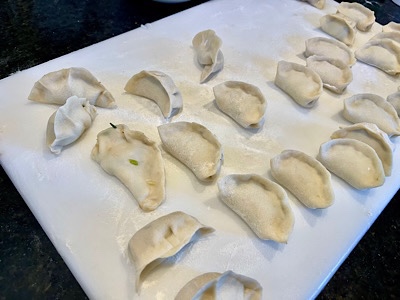
Last Monday I had the honor and delight to be invited to a multigenerational dinner of homemade dumplings at a neighbor’s house.
I was told it was customary for guests to shape a share of the dumplings; the hosts do everything else. As I have not grown up making dumplings as part of group family activity, that meant I needed first to be shown what to do with the already made dough and filling.
Skills used to make homemade noodles, tortillas, and pizza helped make dumpling shaping an accessible activity. It was tricky at first. Two people were showing me two different ways, which was somewhat confusing in an enjoyable way, and helped emphasize that for friendly dumpling making, ultimately, everyone needs to find their own method that works for them. Also, as with many hand skills, because it was the first first time I was being shown, I was simultaneously transposing it from right to left-handed.
It only took two tries to get a dumpling that wouldn’t explode in the pot and lose its filling. It took several more to make one that had nice pleats and blended in with the rest.
We had an interesting discussion about the difference between learning by eating several variations and then reading several recipes and then trying to replicate a version that resembled what I had eaten prepared by someone who learned from childhood as part of a multigenerational group process.
I have long contemplated, and continue to do so, how my comfort in learning anything from a book and then seeing if I can do it or something like it, has shaped my meditation and movement practices.
It’s pretty easy to see which dumplings I made. No difference in taste. I was also happy to contribute garlic chives from the garden.

Peace and light, E — Posted with WordPress for BlackBerry.
On Wednesday, reluctant to turn on the heat despite the cold, I turned on the oven instead. I already had muffins and bread from the previous weekend in the freezer, so I decided to make granola. I first made granola at Quaker youth camp in the 1970s in upstate New York. It was tasty, but loaded with honey and fat, and we made it in such vast quantities that it was years before it occurred to me I could just make the same amount that would be in a cereal box for myself. If you have never done it, or suffer from the same inhibitions I’d suffered from, give yourself a treat and make your own.
Take a few cups of multigrain flakes (or just oat flakes). Throw in any or all of the following: shredded coconut, chopped nuts, flax seeds, sunflower seeds, hemp seed nuts. If you have them in the house, add a handful of wheat germ and/or flax seed meal, a little salt (makes it taste sweeter) and spices if you like (e.g. cinnamon, allspice, nutmeg). Stir in enough of any of the following liquid sweeteners (my favorit is brown rice syrup because it gives the best clumping with the smallest amount), honey, maple syrup, agave, fruit juice concentrate (thaw first) and a little vegetable or nut oil (my favorite is walnut), that the mixture is a pleasing combination of coated flakes and small clusters. (The more sweetener you use and the stickier the sweetener, the bigger the clumps).
Spread mixture on an oiled cookie sheet. Bake for 20-30 minutes at 325-350F. Let the mixture get golden, but not brown (or to taste). Turn and respread mixture once at about the 12-15 minute mark.
When you take the mixture out of the oven, stir in dried fruit of your choice (raisins, currents, dried blueberries or cranberries; dice larger fruits such as dried apricots or apples).
Use combinations of nuts, spices, sweeteners, and fruits that make sense: apple, walnut, maple syrup; brazil nut, coconut, pineapple juice concentrate, nutmeg; cranberry, raisin, walnut. You get the idea. If you like peanuts, blend some peanut butter in with the sweetener and oil before mixing it with the grains.
Why is this recipe not exact? Because it does not need to be exact to come out delicious. Because breakfast cereal is best if it is the way you like it and not the way someone else likes it. (Just like doing your own asana practice at home).
If you have never done it before and are afraid of picking your own proportions and oven temperature, find a couple of recipes on the internet or in a cookbook and then use the recipes as a basis for experimenting.
For muesli, leave out the sweetener and the oil, omit the baking, add the fruit to the flake and nut mixture and then prepare as you like your muesli (soaked or not soaked, with yoghurt or with milk, etc).