Signs Around Town (Excerpt)

Peace and light, E — Posted with WordPress for BlackBerry.
I dreamed last night that I won 30 million dollars in the lottery. I had no recollection of having bought a ticket (in waking life the only time I ever bought a ticket was 17 or 18 years ago as part of a 15-person group of co-workers who collectively bought two tickets when the prize was 75 million; we were going to quit en masse if we won).
In the dream, an acquaintance also won the same amount. She immediately quit her job and started engaging in activities about which she had previously only imagined doing.
On learning of my windfall, I stopped and paused and found that I didn’t want too much change right away. I deliberated about whether to take a lump sum or an annuity and to whom I would give the money. I wondered whether I could take a couple of months leave and then go back to my job part-time. I thought about whether I would like to move or set up a charitable foundation or teach yoga full-time. I found that after having been given financial freedom, I was still content to work and to live comfortably, but relatively modestly. I wanted to take time to deliberate where I could make the best offering with this outrageous stroke of luck.
The dream reminded me of the Zen proverb that was popularized in the 1970s: “Before enlightenment; chop wood, carry water; after enlightenment; chop wood, carry water.” What was beautiful about my dream was a sense of a deep acceptance, a sense that even with my desire to grow and change for the better, that in my middle age, I am essentially comfortable with how I am living. I will keep seeking a deeper and more loving and compassionate way of being, even as I recognize that there is no prize that will transform me from the challenges of being human.

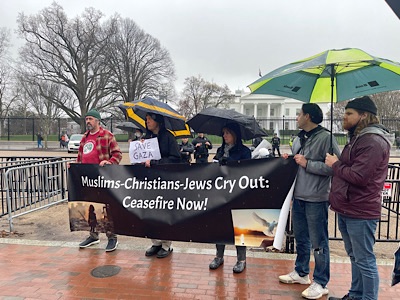
It was raining and that was the smallest of discomforts compared to the suffering being funded by our government.
I do not have the courage to refuse to pay taxes. I am willing, however, to give away enough of that portion of my retirement savings that has undeniably been bloated by a war economy to offset most of my tax liability.