Atha Yoga Anusasanam
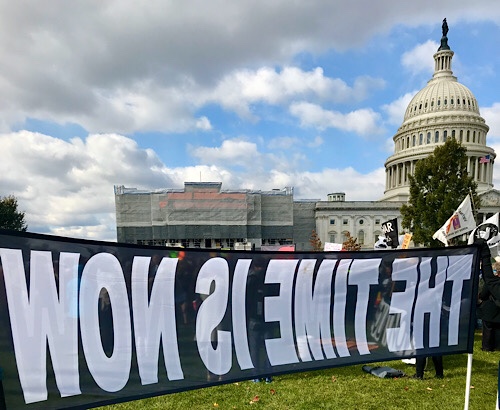

Though nothing was broken, some things danced a jig and some fell in the earthquake. The quake must have shaken open the door to the basement. The cats, of course, immediately headed for that usually forbidden territory. Uma came up to be with me as soon as I went downstairs to make sure all was well with the cats and garden and main floor. I gave Uma a treat, and she went back to sunning her self on the catio. Almost an hour later, Sully is still hiding behind the washer-dryer.
What a great reminder that we cannot change much of what happens, but we have a choice in how we behave in response (even if our immediate reactions vary by our innate nature).
Peace and light, E — Posted with WordPress for BlackBerry.
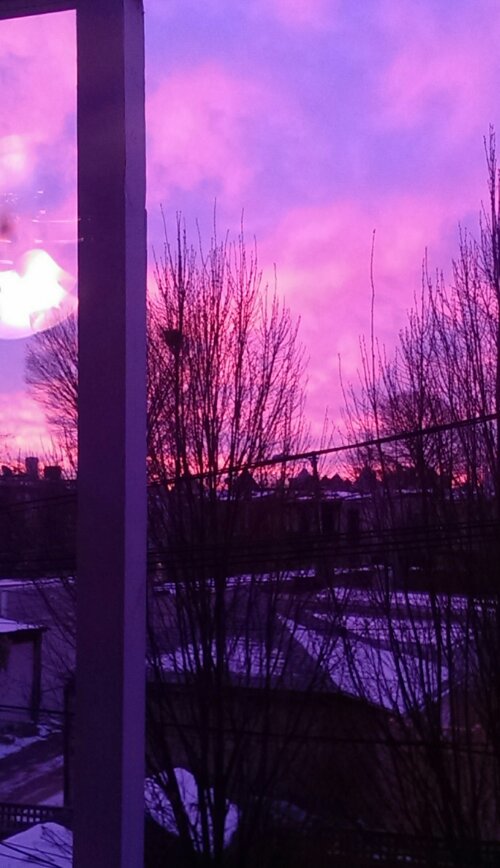
About a month ago, I strained the top of my hand near my wrist as I was moving from uttanasana–standing forward fold to adho mukha svanasana–downward facing dog. I was certain that I had placed my hand properly. I always place fingerpads down first and then ground my metacarpals, with the emphasis on the index finger metacarpal. My fingers were evenly spaced. It felt like perhaps I had jammed the bones or slightly dislocated them–the wrist/hand version of a sacrum “going out.”
My initial reaction was to work harder, but it was not feeling any better. I resorted to resting for a few days and then concentrating on forearm balance instead of handstand.
When I was at the weekend workshop in New Jersey last month, one of my friends suggested that I was working too hard. That was definitely on the right track. Once my hand was in place, though, what felt best was to work very strongly. During the first intermediate/advanced workshop, I was fortunate enough to be able to spend a few minutes with John Friend, who gave me an adjustment that rearranged the bones. This cleared most of the pain, but my hand was still extra sensitive.
I found myself placing leaving my hands soft and placing them with great delicacy. Before going into weight-bearing I added the actions of clawing the fingerpads and drawing the thumb and index finger together, while making sure my metacarpals were firmly rooted. No pain.
I went through this sequence of events with my Wednesday night group practice students yesterday. I showed them the difference between engaging strongly as the starting point of the hand alignment and sweetly touching, immediately followed by full engagement.
“What principle of alignment had I been leaving out?” I asked. Without hesitation, they chorused in unison, “opening to grace.” Exactly right. Sometimes practicing the Anusara principle of “opening to grace” is subtle, but it always comes first and, in my experience over the past decade of study and practice, is always essential to have the most life-expanding and holistic of practices.
Peace and light, E — Posted with WordPress for BlackBerry.
To deny or ignore the future is not the same as living in the present. To live perfectly in the present as a responsible and engaged part of the collective being, one must still plan for the future that will become a present. It is the perilous attachment to a particular outcome that can make bitter the present, not the engaged expectation of the future that is an inevitable part of living in the present.
As I worked in the garden this morning, I thought how much presence I find in the enjoyable anticipation of what will ripen in the future. And while anticipating cucumbers and tomatoes (and taking note of the damage caused by the birds), I set myself to enjoying fully the greens and herbs–the current abundance.
Blueberries, purple Cherokee tomato, grape tomato, echinacea, burpless cucumber, Italian eggplant, red Concord grapes, snow pea, green bean (Kentucky wonder)–June 10
With trees reflecting back.

Svadharma, from sva (self) and dharma (duty) means our personal path, duty, calling, or place. The principle of svadharma is a significant teaching in various yoga texts, such as the Bhagavad Gita, especially emphasizing the importance in acting in accordance with one’s caste (for example, Arjuna needing to act in accordance with his dharma as a warrior) or one’s sex (consider Sita’s role in the Ramayana).
Extrapolating this teaching and taking it onto the mat, during one of the practice sessions the previous week at the Certified Teachers’ Gathering, John Friend said that “every part of the the body has its own svadharma to increase the pranic flow.” He then said that if you just took a photo of the feet of an Anusara yoga practitioner in any pose, you should be able to see that the whole body was fully engaged and active. John Friend’s teaching here was not just using the yoga philosophy as a catalyst to better understand the body. By using the principle to illuminate the practice, the practice reflectively illuminated the principle itself, without denying or denigrating its original context or getting bogged down in its historical baggage of perpetuating the caste system and demarcated, subservient roles for women.
Thinking about the svadharma of the pinky toe has no such baggage. The pinky toes are homely looking things, they do not fit well into most women’s shoes, they rather painfully bump into things, and they are hard to move independently. They are not essential for living and do not have the emotional charge of the heart and brain, the exquisite connection to the world of the sense organs, or the connection to life itself of the lungs. Despite this, the call to lift and spread the toes, to draw the pinky toe toward the heel, or the hip happens just about every time I go to the mat in my practice or teach a class. Activating the pinky toe by opening it and spreading it apart from the other toes is a conscious act of opening that helps hug the shins to the midline. In hugging the shins in by means of activating the pinky toe, the yogi on the mat can then safely move the thighs back and apart, creating an expansion of the pelvic floor that provides room for more strongly tucking under the tailbone to access core power. The pinky toe thus is an important part of our practice, even if we could manage to get by without it.
But the svadharma of the pinky toe on the mat is not just to be able to help us access the movement of “shins in” so that we can better do “thighs out,” although that is an important physical part of its essence. The toe does not move on its own. We have to start by bringing our awareness and consciousness to the toe. Part of the pinky toe’s svadharma, then, is to invite the infusion of consciousness to show how full participation of even an apparently insignificant part of the body can lead us to a better understanding and personal experience of the pulsation between reaching out and hugging in and affirming ourselves. By intentionally bringing our awareness to the power we can unleash in the pose by the movement of the pinky toe, we bring the opportunity for greater strength, expansion, and flow of energies. This is why, I think, John Friend suggested that by just seeing the toes we should be able to know the engagement of the whole body and mind in a particular pose.
As a practical and therapeutic matter, recognizing and bringing into play the svadharma of each and every part of the body serves to help us increase the flow of energy and expand our range of movement. In addition, activating the parts of the body that are inclined to slack (for example, the pinky toe or the adductor and abdominal muscles) will bring ease to the muscles that tend to overwork to compensate, such as the neck and low back muscles. We are not just stronger and more flexible when every part of the body does fulfills its svadharma, but we eliminate much pain and suffering. (More to come on this particular concept in other posts.)
Off the mat, when all parts of the whole are fully conscious of and know their svadharma, the whole will itself have more consciousness, more light, and better experience the bliss of being. It is easy to see, without judgment or question, that the pinky toe cannot do the work of the heart, although when the pinky toe is working it can help contribute to an integration of mind and body that will further the opening of the heart and thus the whole person. Finding our svadharma as a whole person within society does not have to be about conforming to preconceived social norms that no longer serve. The better we are able to understand where we are in time, space, and the interconnected web of being, though, the more fully we can participate in leading society itself to a more conscious and light-filled place, just as bringing our conscious awareness to the actions of the pinky toe can do the same for us as individual yogis on the mat. When we recognize and live out our true svadharma as such, we radically affirm ourselves, the community, and the very essence of all being.