| |

The Virtues of Romaine Lettuce (and embracing our place in the web of being)

This year, along with a mesclun mix, arugula, mache, and the tender green and red leaf lettuces, I planted several heads of romaine.  It is not my favorite lettuce for salad; I have become spoiled by having baby arugula, spinach, and assorted greens and lettuces.  As a replacement for bread, though, it is far and away the best lettuce.  It’s flavor is green enough, but unobtrusive.  It’s shape and sturdiness make it easy to use as an alternative for tortillas, pancakes (think mushu tofu), or pita or other flat bread.  Tonight, I picked several leaves of romaine, which I rolled around sprouts, avocado, and sweet and spicy tofu (saute onions until golden; crumble and saute firm, silken tofu; stir in until just hot and thickened, a bar-b-que-like sauce of tomato paste, molasses, apple cider vinegar, garlic, Bragg’s amino liquid or soy sauce, chili sauce–proportioned to taste).

Which lettuce works when depends on all the other elements of the meal.  One is not better than the other in the abstract, though you might have a taste for one more than another.  One type might be better for a particular meal.  So too, we each have our place in the web, and will be better aligned when we offer certain aspects of ourselves at particular places and times.  Part of the discrimination (viveka) we learn in yoga to serve us in this life is developing an understanding of how best we can serve and where and when.

Similar Posts

  • | | | |

    “The mind and spirit become ripe…”

    I have been indulging in reading the thriller Angelology (complete with stories of angels and the war between good and evil), which  I picked up at the Books for America shop in Dupont Circle a couple of weeks ago for the kind of night of reading that is the equivalent of a night of watching television if I had a television.  Relatively early in the book, a professor says to one of the brilliant students who is a central character to the plot:  “I have found that our texts will speak deeply to someone or they will say nothing whatsoever.  It depends upon your sensitivity toward the subject.  The mind and spirit become ripe in their own fashion and at their own pace.  Beautiful music plays, but not everyone with ears can hear it.”

    This statement encapsulated the ongoing thinking I do about my attraction to yoga and the tantric philosophy.  I was contemplating especially deeply this week on my return from California, with no particular insight arising, what has drawn me in to this world of meditation and yoga.  What am I doing, having been born in New York City and working as a civil servant in DC, coming from atheist Jewish grandparents and converted to Quakerism parents, finding such joy in learning Sankrit chants and working with energetic principles described in these ancient and medieval Indian texts?  I do not doubt that the practices resonate and the texts speak to me and that the attraction is energetic, just as we are drawn to certain tastes and colors and entertainment and people and no interest arises from others.  I just wonder why these practices and texts and not something else and why they hold me to such a degree that I am moved to teach them.

  • | |

    Visiting Friends at the Freer and the Sackler Before They Close for Renovation

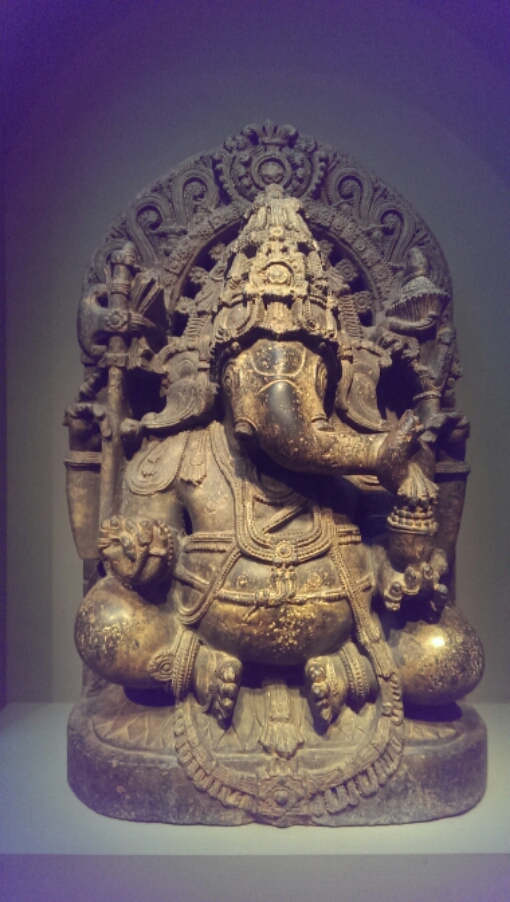
    On the first day of my staycation, I slept late, joined a good friend for a big bowl of spicy noodle soup for lunch, went to the Freer and the Sackler, and then to see the Star Wars movie. I did read a work email or two. Now some restorative asana practice before bed.  I will miss these murtis when the galleries are closed for renovations.

    image

    image

    image

    image

  • | |

    The Nyaya of Watering the Mango Tree (and tantric yoga multi-tasking)

    “Practical Sanskrit” just did a post on its Facebook page that discusses the nyaya (maxim) of watering the mango tree.  When we water a tree with the intention to honor our ancestors and the earth for its gracious offering, we are simultaneously taking care of the tree and honoring our ancestors, the earth, and the tree.  The post continues by inviting us to be more conscious of trees, especially in the city, and to be more engaged in caring for them.

    Practical Sanskrit’s post reminded me of a comment on this blog a couple of weeks ago.   A commenter on stated that most of the things that I write about doing to live more lightly on the planet require substantial financial means and education.  That is true in certain cases–obviously, if I wasn’t blogging, I would not have any need to try and go “carbon neutral” with the blog (although it is no more expensive to have a carbon-neutral web host than one that is not).  And as I explained yesterday when chatting with a cabinet-maker who was at the Amicus Green stand at the Green Festival yesterday, with the grant programs, tax credits, and loans available, we can now put solar on our houses with virtually no cash outlay in Maryland and the District (other states may not make it so easy).  In that case, one still needs to be a homeowner, but can still do it without significant money to burn.

    But most of the things I do to try and live more lightly, while still being comfortable, I learned in the years when I was truly poor (and I didn’t much like having always to worry about how I was going to pay the bills):  not having a car; not having cable tv; turning off the water while I soap the dishes and brush my teeth; taking short showers and turning the water off while lathering; keeping the thermostat between 59-63 in the winter and dressing warmly; keeping the thermostat between 78-82 in the summer and dressing and eating lightly; shopping for clothes at the consignment shop; furnishing my house from flea markets, auctions, and neighborhood sales; doing my own sprouts on the kitchen counter; having much of my diet be dried grains and pulses bought in bulk; turning off all the lights in the house except for the one I am using at the moment; bringing my own lunch to work as a regular activity and saving eating out for special occasions; avoiding buying and wearing clothes that require regular dry cleaning.

    What is nice about being financially comfortable is I now can do all those things with loving intention, rather than feeling constrained by my lack of material well-being.  I am not forced to do them.  Tantric yoga, with its emphasis on being in the world, invites us always to act with intention, to make all of living an offering and a recognition of spirit.  It is easier to do when we are educated, aware, and yearning for spirit, than when we are forced to do something out of material poverty.  It is also easier to do when we do it for love rather than a sense of guilt or obligation.  Being able to live with intention, picking and choosing how we live and what we consume, can truly enhance grace in our lives.  I am sure there are those who grumble about having to go out and water the mango tree to make sure it fruits when they would rather be watching tv.  How much more life-enhancing to water with love for the tree.

Leave a Reply

Your email address will not be published. Required fields are marked *

This site uses Akismet to reduce spam. Learn how your comment data is processed.