| |

Limits and Creativity

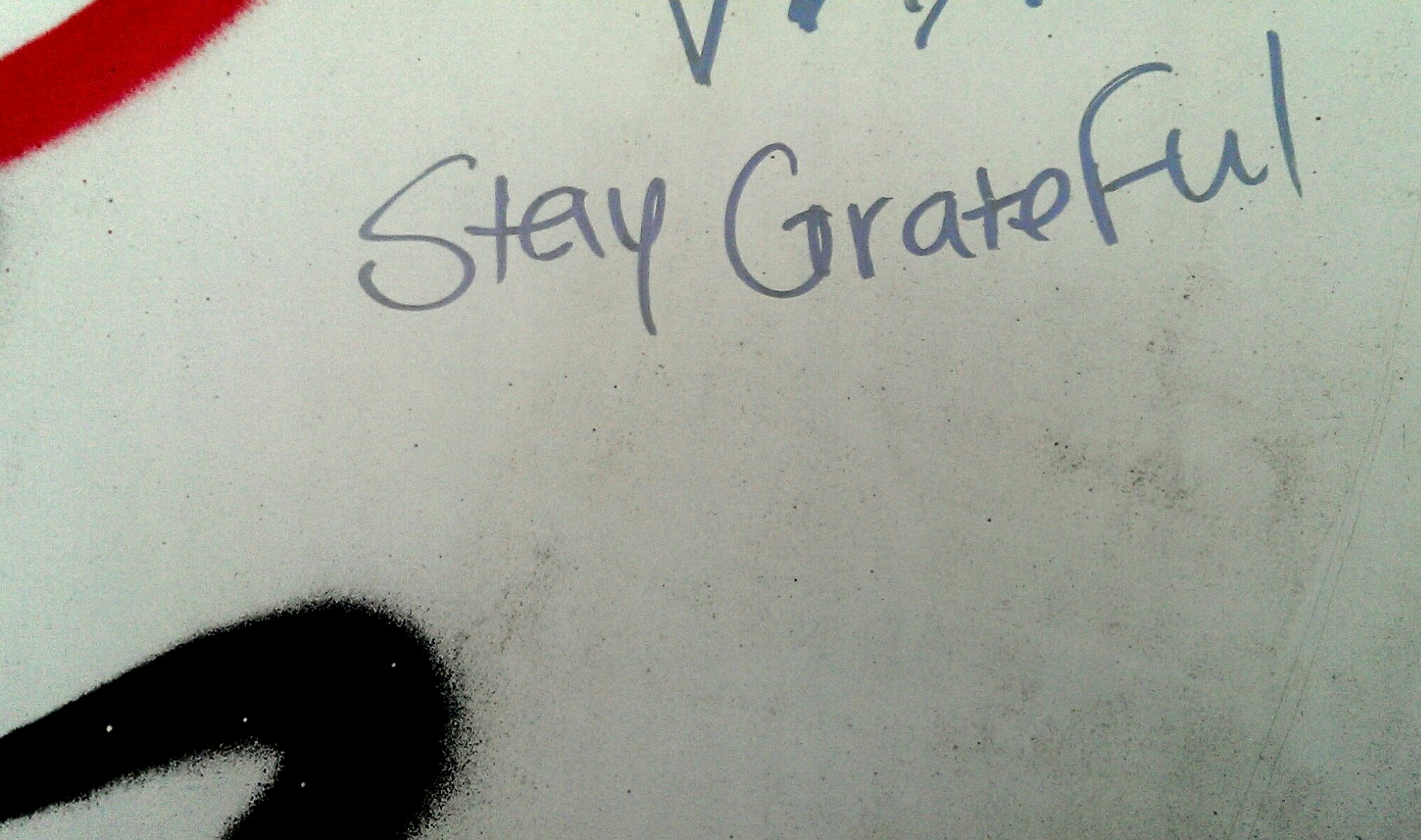
For over a week, the WordPress app on my phone has not worked. First it would not let me upload photos. After trying uninstall/reinstall, it would no longer recognize my username/password combination. I know I have that right because I can sign in through the browser.  It’s a bit awkward to use the browser on the phone as opposed to the phone format friendly app, but sometimes we need to explore alternative methods and be grateful for skills and creativity, and managing to function in a computer world reminds me of this regularly.  For example, every time I sign in at work computer, I first have to engage in a counterintuitive activity before I can get to the password screen.  But I think about it in terms of yoga: control, i.e., disciplined and educated practice; alternatives, i.e., if something doesn’t work, try something else; and delete, i.e., let go of what does not serve. Only then can I get started.

1471352717117


Similar Posts

  • | | | |

    Signs Around Town (and the Yoga Siddhi of Bi-Location)

    The “shelter in place” signs in my building demarcate suites where designated groups of employees are supposed to gather in the event of a threat to human safety where it would be safer to hunker down in the building than to go out.

    While I was sitting through a seemingly interminable, pointless, but only somewhat acrimonious meeting this morning, I was thinking how important it is to have a space within our own consciousness where it feels safe and peaceful even when we are in a situation where staying physically put is the most realistic alternative. This got me thinking about one of the powers (siddhis) that allegedly may arise from a steady, devoted, and long-term practice. That power is the ability to bi-locate–the power to be in two or more places at once.

    I’ve long practiced with part of my goal being to cultivate the space of meditation as a way of making bearable the unavoidably painful, such as when confined to bed because of severe illness. In such a situation, though my experience is thankfully limited, going into meditation is a going to another space of consciousness, but does not require staying mentally engaged and present.

    When in an unpleasant meeting or stuck in traffic or similar situations, the problem is that one needs to stay mentally and physically alert and present and cannot just go off into bliss.

    Then, I think the power of bi-locating is what would serve best. It would enable being simultaneously present and functioning while also being in the blissful and peaceful state of meditation. The space we go to in meditation would indeed then be a “shelter in place.”

    Peace and light, E — Posted with WordPress for BlackBerry.

  • | | |

    Found Exhortation

    One of the most profound and essential teachings of the great yogis is to “watch the gap.” We are given the practice of watching the gap, the space, the pause, the turning point between the in breath and the out breath, the out breath and the in breath. In the gap, we are able to witness perfect fullness (purna) and perfect emptiness (sunyata). In minding the gap, we can experience perfect stillness and serenity. It is an extraordinary practice in its simplicity and in its gift of peace and repose.

    Whether you have never heard of this practice, learned it at some point but have mostly forgotten about it, or just did it with your own practice, I invite you to take a few minutes on reading this: make your seat steady and as comfortable as possible, close your eyes, invite an intention of finding a still spaciousness in your heart. Draw your attention to the breath and start to notice the space (maybe almost instantaneous and unobservable, maybe a real pause) between the in and out breaths.

    If you are moved, comment on your experience to share with each other. There is no one right reaction nor a wrong one. If it was challenging to sit still and focus, just be gentle and soften to how enjoyable it can be to do nothing other than watch the breath, like the sweet and easy restfulness of watching the movement of waves at the beach.

    Peace and light, E — Posted with WordPress for BlackBerry.

  • | | | |

    Shiva — By Almost Any Name (Summer Session Theme)

    This summer, we will be exploring a very few of the names of Shiva and how they can draw us to a better understanding of ourselves on and off the mat.

    According to the sources, Shiva has either 108 names or 1,000.  Each name has a different meaning.  All of the meanings point to aspects of our own being that are worthy of contemplation.  Some aspects will resonate more deeply for us.  Some less so.

    For me, besides my almost childlike delight in of lists, words, and myths, contemplating the various aspects is of deep usefulness in exploring my understanding of myself on and off the mat.  The various names describe different aspects  human nature and how we relate to others and the earth.

    The multiplicity of the names also highlights that each of us names and experiences spirituality in a unique way and should have the freedom to do so.  (As an aside, I think this multiplicity of forms of worship could be seen as a kind of rebellion within a rigid system of religious laws, but that is a whole other set of thoughts).

    In using these forms of meditation as part of our yoga practice or otherwise, whether we meditate on highly abstract notion of “Shiva” representing the auspicious nature of all beings or on one of the names that points to individual aspects of personality, contemplation on any aspect or name can be used to deepen our relation to our best self so that we can be more aligned with our world inside and out.

    For class this summer, we obviously cannot get to more than a very few.  Feel free to send to me your suggestions about names to highlight.

Leave a Reply

Your email address will not be published. Required fields are marked *

This site uses Akismet to reduce spam. Learn how your comment data is processed.