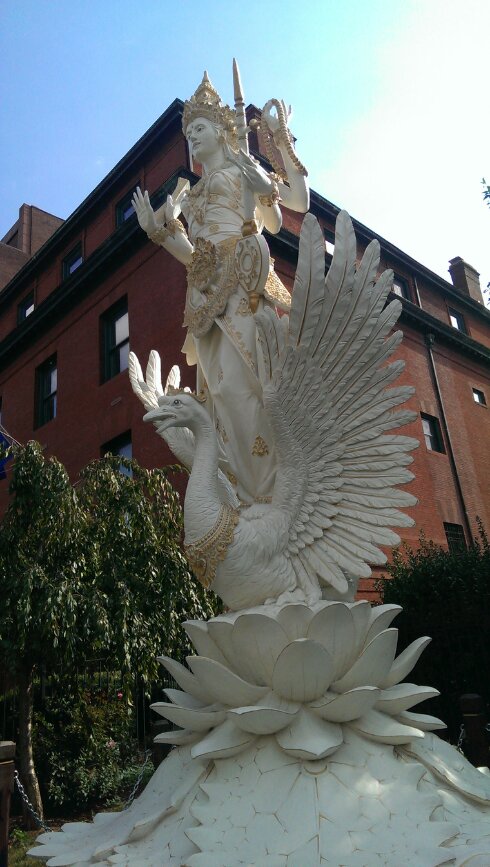
On the Way Home From Tuesday Night Yoga Practice at William Penn House

This spring I decided to for the second time growing a fig in a container. It has about five figs, all of which I intend to eat before the squirrels can get them (I’ve beaten them and the birds to the three blue berries that have ripened so far; I have high hopes for the figs). I don’t think my fig in its container is suitable for sharing as “Neighborhood Fruit.” Do you have a fruit tree that has too much fruit for you? Let people know.
Dear Friends,
Hope you all enjoyed the big snow. I missed seeing Saturday regulars and drop-ins with the snow canceling the last day of Willow Street classes and December’s Serenity Saturday.
If you are in need of a little last minute, holiday yoga, come join us tonight at William Penn House, 6:30 pm, all levels class.
For a great way to begin the year, on New Year’s Day itself, come to Capitol Hill Yoga for “Flow Into Grace” a heart-opening, body-shifting (gently), and intention-setting workshop with a combination of all-levels flow and yoga nidra. To register, please visit, www.capitolhillyoga.com. Late night revelers welcome; it doesn’t start til mid afternoon!
I’ll be taking my own holiday break so no Wm Penn or house classes next week, while I am in NY visiting friends, family, and enjoying the delights of the city.
Wm. Penn and house classes resume the first week of January. That week is also free class week at Willow Street Yoga Center (www.willowstreetyoga.com). I’ll be offering 8:30 am level 2 and 12 noon Gentle/Therapeutics on Saturday, January 9th.
If you were registered for Serenity Saturday in December, call Capitol Hill Yoga to switch your registration to New Year’s “Flow into Grace” or January’s Serenity Saturday (January 16th).
May you all have healthy and delightful holidays whether traveling or staying at home.
Peace and light,
Elizabeth
Dear Friends,
The end of March is all sunshine and flowers after a turbulent month. I’m hoping for some April showers along with the sunshine, so that my garden greens will flourish. The pulsation between rainy and sunny, cool and warm, is a great reminder of the essential vibration of being!
There will be lots of great yoga opportunities to pulse with the shiva-shakti vibration in the next several weeks:
As always, William Penn House Tuesday classes are on a drop in basis with special pricing to make yoga affordable for public interest workers, students, seniors, and those in between employment. Invite your friends. Special for April, bring a friend new to the class and when your friend comes back for a second class, you or your friend get a class for free.
There are two more Saturdays of the winter session at Willow Street. Registration has already started for Willow Street’s Spring Session. My Spring session classes start on Saturday May 1st — Level 2 @ 8:30; Gentle/Therapeutics @ noon. We love it if you register for the whole session, but drop ins are always made welcome. While you’re visiting the Willow Street web site, check out the article I’ve written for the Spring Newsletter’s “Teacher Feature.”
This Sunday, April 4th, from 3-4:30, come celebrate the uprising of flowering energy at a special $10 community class at Capitol Hill Yoga. 100% of the proceeds benefit City Blossoms.
April’s Serenity Saturday — on April 17th — is certain to be a great way to foster growth of mind, body, and spirit, whether we are getting April showers or summery sunshine. Visit Capitol Hill Yoga to register.
Mark your calendars for May: on Saturday May 8th, when I’ll be leading an all-levels workshop on standing balances — Stand Steady in Your Light — as Willow Street’s Takoma Park’s studio.
Finally, a great thanks to all who come to classes regularly and support the monthly giving. Yoga for Gardeners attendees had a great time and enabled contributions of over $200 for the Youth Garden at the National Arboretum. The March and April classes will also support the Youth Garden.
Wishing a great blossoming to all. I look forward to seeing you soon.
Peace and light,
Elizabeth

I’ve always wondered what’s really meant by saying that you’ve got the whole world inside of you.