Sri-cakra

During one of the sessions at the workshop last weekend in New Jersey, John Friend made a passing reference to the difference between receiving and taking. He did not go into any detail because it was not central to the theme of the class, but it led me to contemplate on my own about the difference between taking and giving in the context of yoga practice. In so doing, I thought about the concept of prasad — which is food that has been blessed and is offered to those who have participated in worship (puja).
When offered prasad, one does not take it. Instead, the cupped palm is turned up to receive the prasad. The recipient does not get to pick through the basket and choose which sweet looks the biggest or the tastiest, but simply receives with gratitude the sweet or fruit that is infused with the intention of spirit. The active part is the showing up with openness and receptivity to the offering, the blessing, the nourishment being offered.
Coming to yoga class or doing our own practice (asana or meditation) should be, I think, like preparing to receive prasad. What is primary in the practice of Anusara yoga is being open to grace, but we can no more force openings or enlightenment (grace and insight always elude grasping), than forcing any particular physical posture or goal really yoga practice. The point of effort in yoga to improve and expand alignment and knowledge is to enable the practitioner to receive more fully all the potential gifts and grace of practice, and then in turn make fuller and more complete offerings to others.
Below: offerings at the Chelsea Farmers’ Market

There are thousands of little temples — some hardly more than altars — scattered throughout both the countryside and cities here. I marvel at the artistry of some and the garishness of others.
I think, on witnessing this effulgence of creativity, of what helps me remember the everyday sacred. Mostly, I am inclined to look inward.
Needing a brightly decorated space that tells a story is so different from my Quaker upbringing.
Soon the leaves will be out and the nest will be completely obscured from view.
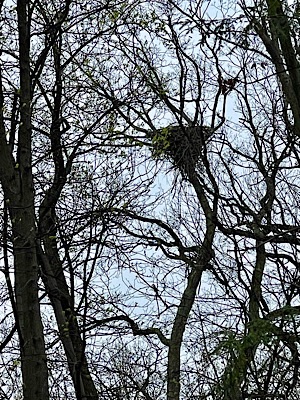

Looking for the good.
The key concept of yoga–satcitananda can be elusive, like all abstract concepts in the yoga philosophy and in other philosophies or areas of study. We are given metaphors and analogies in the texts to help us recognize when, through our practice, we experience in our self the manifestation of what had just been theory (book knowledge).
It is hard to describe, for example, what it truly means to be fully present and aware in the moment and thus suffused with bliss
(satcitananda).
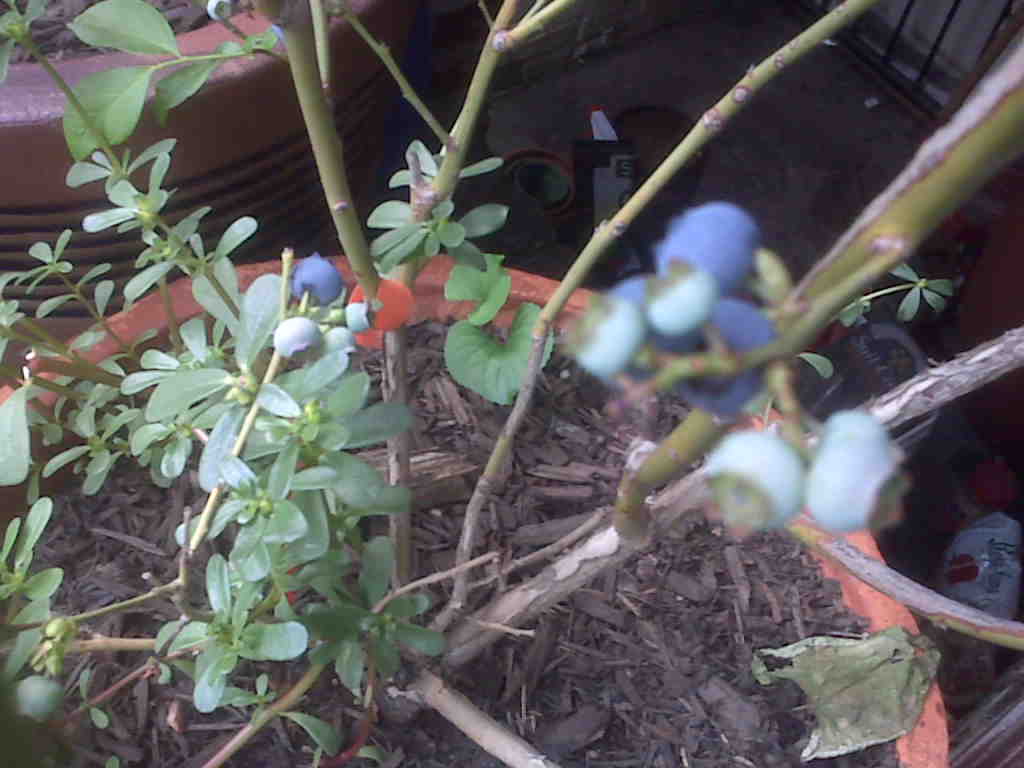
There was a moment, standing in the hot sun, when I tasted a sun-warmed, perfectly ripe blueberry that I thought, this is a moment many of my students might imagine to be able to extrapolate the abstract concept of satcitananda.
Notice also the volunteer purslane at the base of the blueberry bush. Weeding and harvesting greens for salad and stir fry can be coextensive. Don’t poison or discard your purslane (or your dandelions). Pick it and eat it; purslane is a great plant source of omega fatty acids.
Peace and light, E — Posted with WordPress for BlackBerry.