Signs Around Town
This was left behind in an assembly room that is used by many unrelated groups.
Who wrote it is unknown.
A possible answer, besides “what do you mean by spirit and soul?” would be “maybe not at all.”
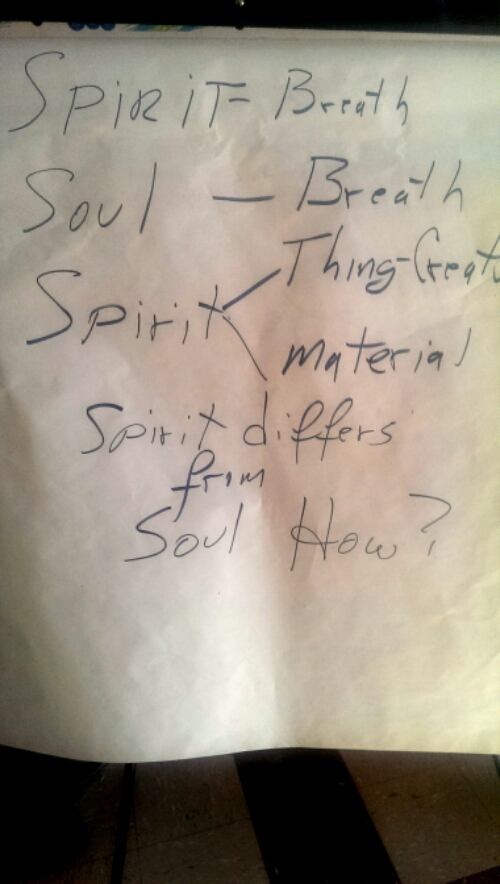
This was left behind in an assembly room that is used by many unrelated groups.
Who wrote it is unknown.
A possible answer, besides “what do you mean by spirit and soul?” would be “maybe not at all.”
This article about manners and eating with ones hands gave me a big smile. One of my friends who went on the second India pilgrimage wrote on Facebook right after she returned home that she missed wearing a sari and eating thali meals already. How wonderful the variety of experience on these journeys. Personally, I found the sari cumbersome and binding and not worth the prettiness of the fabric and the compliments (more thoughts on sari-wearing perhaps to come). I was thrilled to get back into my regular clothes (though I was happy enough in salwar kameez). Dal , kitcheree (spiced lentils and rice porridge), and vegetarian/vegan curries have long been a staple part of my diet, so I am already getting the rice and lentils, and the south Indian thali meal is almost completely devoid of vegetables. I was happy enough to get back to my own diet, including Indian-style food of my own preparation.
I am missing, though, being able to be in company and eat with my hands (or hand singular would be more accurate as it is horribly rude in India to eat with your left hand) and getting the chance to walk barefoot outside every day. Though you might not be able to do it everywhere, I highly recommend eating some of your food with your hands and walking without your shoes for some time every day to enhance your sense of touch and your motility.
Several years ago, when I still had a working art studio in my house, the favorite thing to do of a friend’s child when the family came over was to go into the studio to see what I was painting. I had just finished a piece on which I had painted the words, “Sometimes I have nothing to say.” D was five or six at the time — just learning to read full sentences. He chortled delightedly, pointed to the painting, and exclaimed, “I get it! I get it!”
As I have been studying and contemplating yoga philosophy in a group setting recently, I have been thinking about the tension between saying and not saying, the conundrum of yearning to communicate the indescribable, and the countervailing desire just to experience and not to try and describe or communicate.
I have in my library books in which just one phrase or just the very beginning is most resonant. It is this time of summer, when the light seems endless, and the heat just setting in as if on a permanent basis, that my thoughts turn to watermelon in food, and again in literature. I think of watermelon differently each summer from the perspective of having lived another year, and the same in having experienced the taste and the thoughts of the taste so many times before. When it comes the time of year when thoughts of watermelon spontaneously arise, I revisit these words:
“In watermelon sugar the deeds were done and done again as my life is done in watermelon sugar. I’ll tell you about it because I am here and you are distant. Wherever you are, we must do the best we can. It is so far to travel, and we have nothing here to travel, except watermelon sugar.” (R. Brautigan, In Watermelon Sugar).
Refreshed, I put the book back on the shelf, look forward to eating watermelon from the fresh farm market, and set the intention to start each day with open, receptive, and unjaundiced eyes, ready to learn and experience the same old things as glorious new ones, and to do the best I can.

What does it mean to excel, to do well? I think there is no excelling in yoga, at least not the way we conventionally think of excelling in school or career or sports. But to practice in a way that is more than casual, there must be ardor–tapas.
Tapas is often translated as fire, and the texts are full of stories of outrageous physical exertions done to prove the tapas of the practitioners looking for boons from the gods.
There is a fiery aspect to tapas, but I question whether it must necessarily be burning from physical exertion, though that is a path that calls out to many.
The fire of tapas could be thought of as doing what it takes to manifest the will to know something deeply enough to be able to experience the fluency and grace and delight of expertise. It could be the ardor to show up in a disciplined and committed way for hours and days and years of practice, always still wanting deeper, fuller knowing.