| | | | |

A Practice

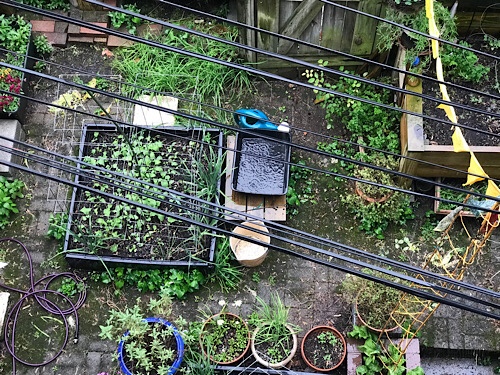
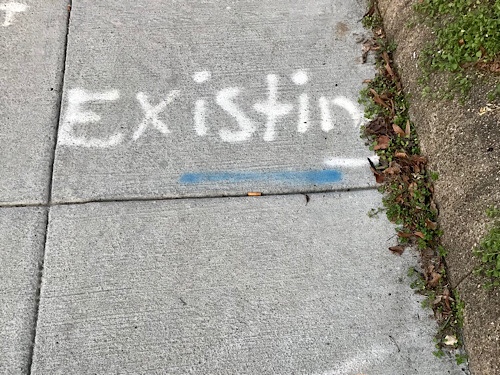
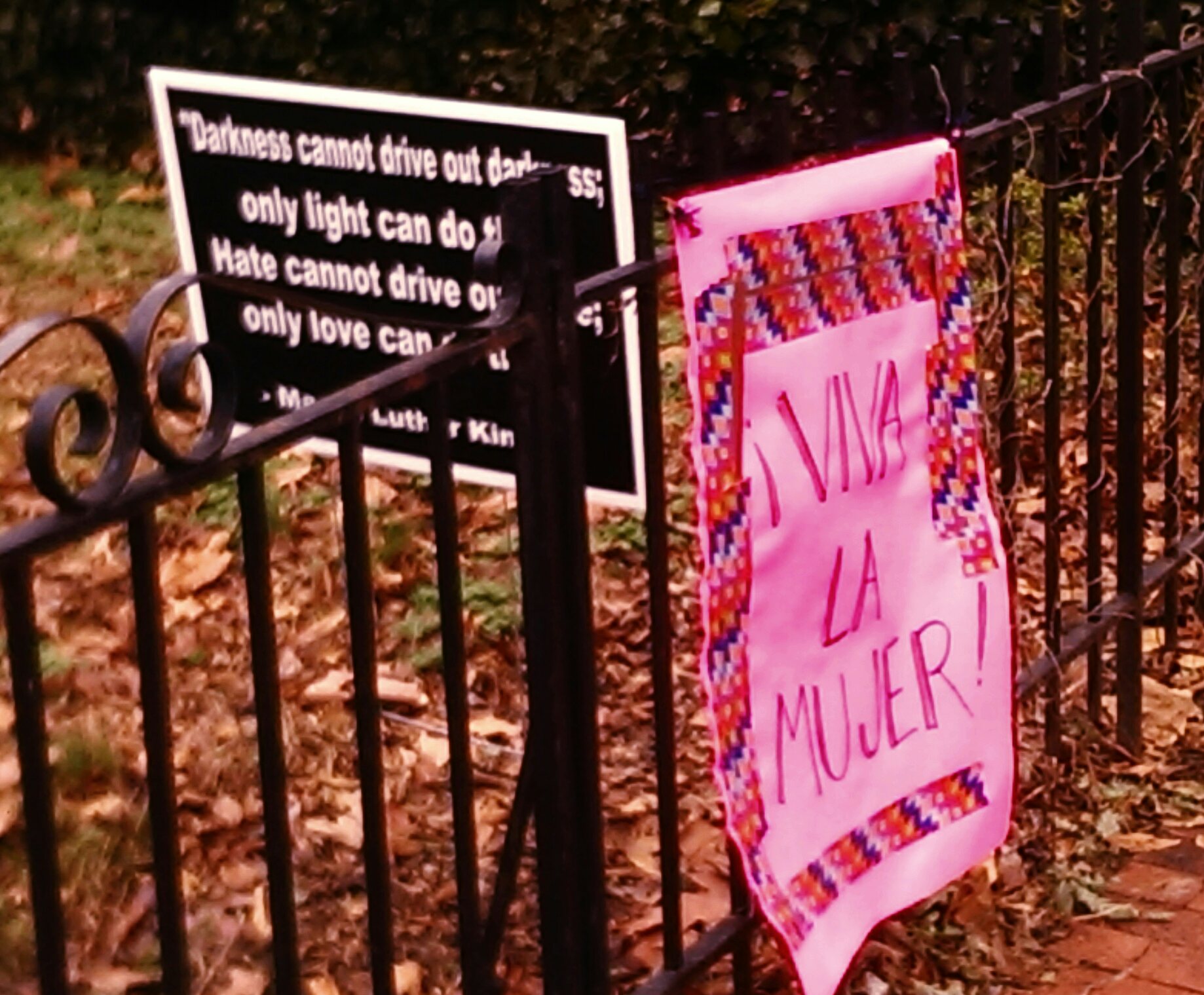
With each new horror — another I have been blessed to avoid proximity and immediate impact—I ask myself (and make some follow through) on how I can contribute more both to speaking out against injustice, inequality, and warmongering, and also to making collective life more joyous.

On a day I grieve and speak my outrage , I share work, and food, and moments of beauty.
Similar Posts

  • | | | | | |

    The “Highest First” and Knowing What Is a Weed

    Webster’s On-Line Dictionary defines a “weed” as”any plant growing in cultivated ground to the injury of the crop or desired vegetation, or to the disfigurement of the place; an unsightly, useless, or injurious plant.”  At first blush, this might seem like an easy concept, but if we start breaking down the definition, we can see how much our education, assumptions, and prejudices come into play in deciding what is a weed and what is not.  We need to recognize individual plants (when they first come out of the earth and when they are in full leaf or flower) and what they offer.  We need to know how to foster growth of what we choose to plant, including knowing what will thrive in our location and bring more health and beauty to ourselves and the planet, and we need to have a sense of aesthetics that will cultivate not only our connection to spirit, but optimize the shining through of spirit in all that surrounds us.

    Several years ago, I bought a sprig of epazote in a two inch grower’s pot.  It went to seed and came back all over my little garden.  It grows wild beside highways where it is a native plant.  I really like the taste, and it is hard to find here, so I give seedlings away to friends who want it for their own gardens (locals just ask, and I’ll give you some).  It is one plant I know I do not have to replace; it will come back every year if I let it go to seed.  If I had not controlled it by taking it out of prime planting spaces and either using it right away or replanting it someplace nothing else will grow, though, it would be crowding out other plants in a way that is less than optimal.  It is thus both a desired plant and a potentially invasive weed depending on how it fits in with the whole.

    I have seen neighbors using Roundup to kill purslane and dandelions that have grown up between the bricks on the sidewalk in front of their houses.  Although I think both purslane and dandelions are pretty plants and perfect for spots where nothing else will grow, I can appreciate wanting the front of the house to look tidy.  Why not pick the free edible plants instead of spraying toxic chemicals?  I let edible wild plants come up between the crevices and then either relocate them or treat weeding as harvesting, getting incredible flavor and nutrition from something that most are taught to try and eradicate.

    There are other plants that are sufficiently invasive or poisonous, though, that I do my best to eliminate them from my space (though I do not use pesticides).  The other day, I was walking down East Capitol Street after teaching the William Penn House class and saw some English Ivy climbing up a beautiful tree in one of the sidewalk tree boxes.  I stopped to pull it all off because English Ivy left unchecked will kill a tree.  While engaged in this activity an older couple who lived in the house next to the tree walked up to me and my fellow yogi who was helping me with the ivy removal.  The woman thanked me, saying that she had been meaning to pull the ivy.  Ivy is an example of a plant people think is pretty and appropriate to plant, but it does not belong in our climate and is incredibly destructive.  By my lights, it is a weed, even though I can buy it in most nurseries in the area.  I am blessed not to have poison ivy where I live, but it should be removed.  It is too hard to live with it.

    What does determining whether a plant is truly a weed, whether it causes injury or interferes with what is desired or is unsightly, useless or injurious have to do with the “first principle” in Anusara yoga of “opening to grace?”  The first principle invites us to be ready in the first instance to recognize the auspiciousness of both what we seek out and what we encounter.  In teaching meditation and related practices of Blue Throat Yoga, Paul Muller-Ortega speaks of this as “the highest first.”  As we study and practice (jnana/vijnana), we approach the same and new things with ever more refined technique, knowledge and understanding.  The progressive refinement from our efforts helps us then to open up to a deeper perception of the best of our nature.  We keep repeating the cycle of studying and practicing, always remembering the first principle, and we, despite and because of ourselves, shift our relationship with the world around and inside us.  To be open is a softness, a spaciousness, a willingness to see that is without effort.  We temper what gets in the way of effortless opening with the fire to study and to practice with the intention learn how to be more effortless in understanding how things are part of the whole.

    How do we apply first principle in knowing what to weed from our garden (or, for that matter, how to address in ourselves a physical, mental or emotional characteristic or pattern of behavior that may or may not serve us or both–our individual “weeds”)?

    Is the “desired” vegetation a desire that would help align the gardener and the garden with nature or is it something that was taught that comes from an unsustainable aesthetic and social paradigm (for example, a perfectly green lawn with no plants other than grass)?  If the crop is one that truly nourishes (so worth preserving from injury or interference), does it just mean that the “weed” needs to be relocated so that both the crop and the “weed” can flourish simultaneously?  In other words, is the “weed” beneficial in its own way, but just needs to be shifted so that its inherent good can truly be appreciated and honored?

    Is a determination of injuriousness, uselessness, or unsightliness based on ignorance or true discriminative wisdom?  We cannnot know unless we both sweetly open to recognize the potential for discovering the good in what seems most harmful (perhaps one day scientists will find an extraordinary benefit from poison ivy, just as the deadly poisonous plant digitalis is also a powerful heart medicine) and continue to study and practice with an intention to open ever more deeply.


    From left to right: volunteer epazote, lemon balm, purslane and dill.  Dinner:  black beans flavored with epazote; greens, including purslane.  Lemon balm (aka melissa) makes a delicious and quieting evening tea.

  • | |

    Shiva, Brahma, Vishnu (and the health care act)

    In Hindu philosophy, the powers of creation (Brahma), sustaining or preserving (Vishnu), and destruction (Shiva) are all given equal weight in the balance of the universe.  Without destruction, there is no place for new creation.  Each aspect of this triad is an essential part of the elemental unity of being.

    I think that a repeal of the health care act, if it only were to open the path to a single payor system that actually provided health care for most, would be a good human level demonstration of the need for destruction to allow for creative flowering.  Alas, I don’t think that is what the would-be destroyers have in mind.

    I remember at these times that I am not in charge, and I cannot see the biggest of the big pictures, but somehow, that is not always of much comfort.

  • Why Take a Yoga Workshop

    The other day I mentioned to my students the workshop I will be leading at Willow Street’s Takoma Park Studio on standing balance poses on May 8th.  I received some responses that sounded basically like: “standing poses?  But I am so bad at them.”  “A great reason to go.  You aren’t bad at them if you are present to your fullest whatever you are doing; you just find them more challenging than other poses.  It can be great to work in those areas to try and reveal ease in being challenged,” was my basic reply.

    In keeping with John Friend’s teaching that we come to the mat either to celebrate the fullness of our spirit or to remember its delight when we have forgotten, I think there are two basic reasons to come to a workshop.  The first is going to one where we know it will concentrate on our favorite poses and practices.  We know we will go a little deeper, discovery something new, and have an opportunity to relish our favorites for a solid period of time.  Delightful!

    The second reason is to challenge ourselves intentionally with poses that are difficult for us either physically or emotionally or both.  For me, the mini-arm balances have always been the least accessible.  They push my buttons in all sorts of ways.  I found, though, that when I finally faced my fears and weaknesses and agreed to go to them and discover why for so many of my friends they are naturally joy-inspiring, bliss-exuding postures, my appreciation for the practice as a whole grew immensely.  They still aren’t the “strongest” area of my practice, but because of that in some ways I know them better and can offer more when teaching when than when teaching the poses that I do with less concentrated effort.

    I think we need to rest where it is delightful sometimes.  Always going for the challenge can just give a sense that life is too hard and practice is not worth the effort.  But intentionally studying and practicing from both perspectives is what gives us more ease and light in the full spectrum of being.  Going to a full range of workshops, gives you both in a great way.  I try to take workshops whenever I can. (Reminder for those in town:  April’s Serenity Saturday at Capitol Hill Yoga is next Saturday, April 17th from 3-5–it’s a great way to get some yoga during Willow Street’s break week.)

  • |

    Roasted Vegetables (and getting ready for vacation)

    Yesterday morning, when I was starting to pack to leave for Oregon today, the most critical elements for getting ready (after making sure I had my wallet, camera, and some yoga clothes in a suitcase) were to water the garden well, pull some weeds, pick ripe vegetables, and cook.

    I’d given away some produce a couple of days ago, but still had eggplants, peppers, tomatoes from the garden and half an onion from something I had cooked earlier in the week.

    I cut everything in half, slathered it in olive oil, sprinkled the vegetables with coarsely ground pepper Himalayan pink salt and put it into the toaster/convection oven (my favorite kitchen appliance).  The vegetables roasted while I was doing other chores.  Now, on my return, I will be able pull from the freezer ingredients for a wonderful pasta sauce.

    As much as I am looking forward to a week of yoga and exploration, I’ll be delighted to come back to garden and my own kitchen.  It is almost time to start planting greens, beets, and turnips for fall.

Leave a Reply

Your email address will not be published. Required fields are marked *

This site uses Akismet to reduce spam. Learn how your comment data is processed.