Samsara
The seasons change no matter how humans are behaving. Grieving for all the nameless suffering and for a couple of friends who have died very recently. Please be kind with your tender hearts.
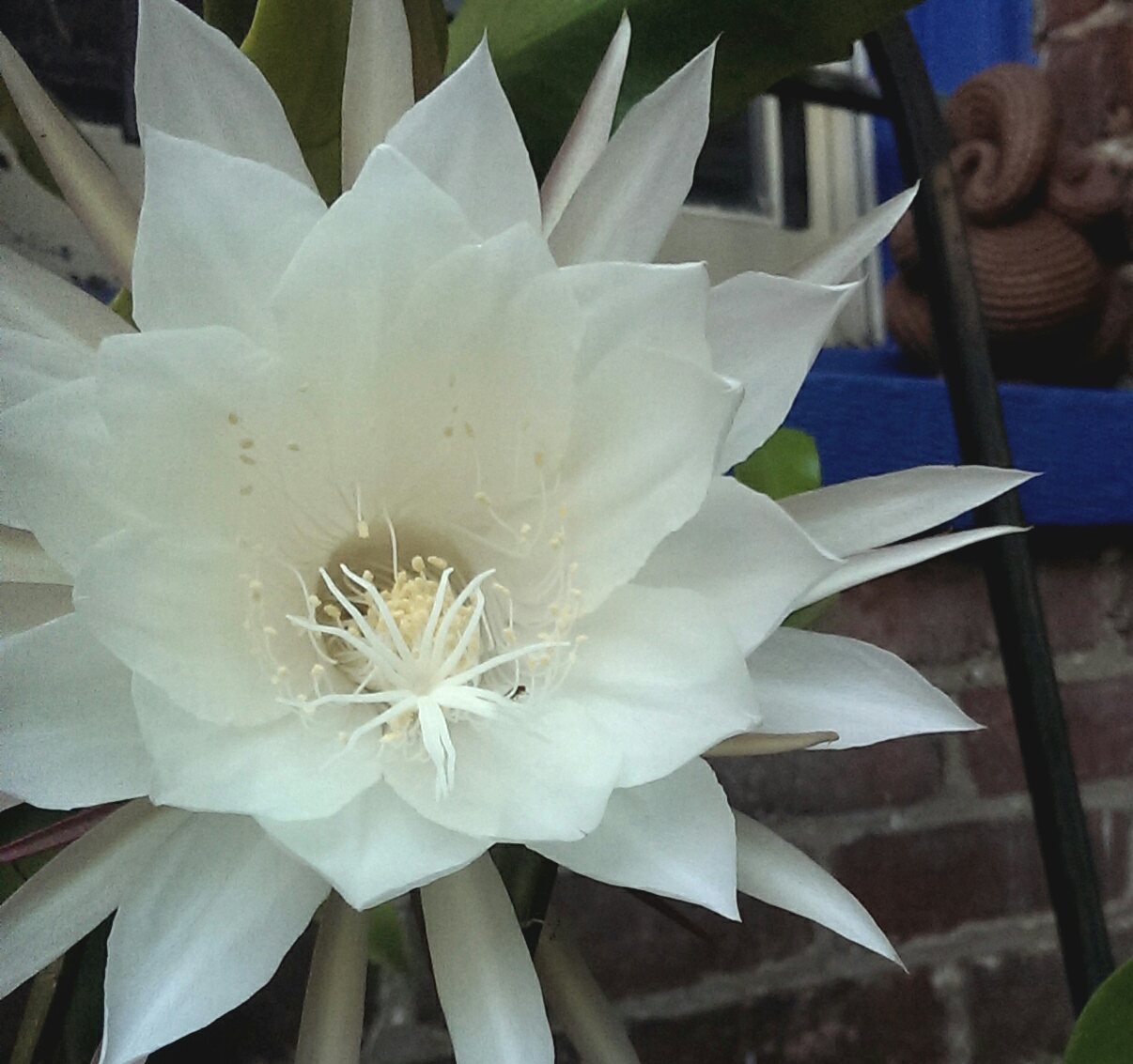
Here’s a bit of beauty.

The seasons change no matter how humans are behaving. Grieving for all the nameless suffering and for a couple of friends who have died very recently. Please be kind with your tender hearts.
Here’s a bit of beauty.

In classical yoga, the term maya, one of the meanings of which is “illusion,” refers to all of our embodied being — the physical, mental, and emotional. The perceptible world is not real; only spirit is real. In the tantric philosophy of Kashmir Shaivism, maya tattva means something different. Kashmir Shaivism does not hold that the perceptible world is unreal, but rather that it is a more concrete form of spirit and that its very manifestness gives rise to the illusion that it is other than spirit. Maya, as such, is the beginning of the measurable world of intellect and perception. In this sense, it does not mean that any aspect of being of either ourselves or the very whole of being is more real than any other. As maya tattva, it denotes the conceptual bridge between the unknowable idea of spirit and the manifest world of our day to day. As we think and perceive the world in progressively more concrete terms, we tend to see difference, division, and diversity. When we see only difference and not the pervading unity of spirit, it is maya, illusion.
Yesterday, following the election in Massachusetts, the headlines screamed that the Democrats had lost control of the Senate and that health care reform was in jeopardy. Perhaps the simple arithmetic and vocabulary I learned in elementary school has changed, but last time I checked, 41 out of 100 is not a majority. It is as though we are hunting for division, for us v. them. We are looking for ways to create difference and divisiveness. Would we be more likely to fund health care for all instead of two wars, if we could stop being so bound in the maya that we are not all equally of spirit? I think so. In this, I am divided from millions of my fellow voters, who prefer waterboarding to health care, war to building an environmentally sustainable infrastructure, etc. or at least vote that way In thinking this way, I too am caught up in the web of difference. How then do I see spirit in all people (regardless of how they vote and what they believe) when I feel so passionately about this divisiveness and all the conflict, destruction, and misery it engenders? How do I personally (as my own yoga) create less conflict, even while working for what I believe?
In yoga practice the concept of diksha — initiation or threshold — carries with it a sense of right timing and conscious understanding of readiness for the next level. For example, knowing I was not yet strong enough, this past weekend I chose not to try to jump from adho mukha svanasana (downward facing dog) to svanasana (headstand), but instead concentrated on doing the poses one at a time, even though I was surrounded by people who could do the transition with ease and my ego was challenged. Until I am stronger and better able to hold the alignment in poses at that level, I would be too much at risk of hurting my neck and shoulders.
In the garden, it is easy to be fooled by a beautiful weekend to move right to activities that are still 3-4 weeks premature. Even though it will hit 70F this weekend, it is not time to plant (other than perhaps an experimental row or pot of kale, chard, or beets, which like the cold). The best gardening you can do in the beginning of March when the weather is swinging wildly from below freezing to unseasonably warm is to read and plan and start seedlings indoors, just like it is best to warm up and work on strength, alignment, and flexibility before going for harder asana in your yoga practice. It will be tempting to get out this weekend, but do the prep stuff and the clean up.
Here are some favorite books of mine to get ready for planning. It is mostly more practical stuff (rather than the super glossy, beautiful garden as splendid art and architecture picture book reading) with some food and yoga overlap and a bias for small urban gardens.
The Yoga of Herbs — An Ayurvedic Guide to Herbal Medicine, D. Frawley and V. Lad (Lotus Press, 2d Ed. 1988)
Gardener Cook, C. Lloyd (Willow Creek Press 1997) (OK — this one is kind of cooking, gardening porn)
The Edible Container Garden — Growing Fresh Food in Small Spaces, M. Guerra (Fireside, 2000)
The Bountiful Container, McGee and Stuckey (Workman Publishing Co., 2002)
Small-Space Gardening — How to Successfully Grow Flowers and Fruits in Containers and Pots, P. Loewer (The Lyons Press, 2003)
Kitchen Herbs — The Art and Enjoyment of Growing Herbs and Cooking with Them, S. Gilbertie (Bantam, 1988)
The New Kitchen Garden, A. Pavord (Dorling Kindersly Ltd., 1996) (Also pretty and glossy, but still practical)
Unless you have to wear a uniform, there is probably a little flexibility in what you can wear to work (aren’t we lucky to live such a bountiful lifestyle that this is a dilemma). A tie might be required, etc, etc. You can always choose, at a minimum, to have clothes that fit properly and allow some freedom of movement.
My choice to be comfortable rather than “lawyerly” in my office attire except for special occasions possibly has impacted my career, but it is salutory for me on a day-to-day basis to wear clothing that is appropriate for the weather (when we dress inside for the weather outdoors, we need to use less energy for heating and cooling; wouldn’t it be great if we could get everyone to do this) and allows for freedom of movement (this includes shoes).
When I pick out my clothing, I want to be able comfortably take a full breath (think waistline), easily raise my arms overhead or interlace my hands behind my back (how do the shoulders, chest, and back fit), do uttanasana (coverage, waist line, tightness around the legs, back, and shoulders), and run for the bus (tightness of clothes and shape of shoes; forget heels). If you need to wear a jacket, there still is nothing stopping you from wearing a shirt underneath that allows for free movement nor having the jacket properly fit.
There are a lot of ways our choices can enhance freedom rather than constrain it. Choosing to wear comfortable clothing (which usually is better able to be cleaned at home than at the dry cleaners — helps the environment) and comfortable shoes (which helps avoid bone deformation and possible surgery — good for you; good for the environment), is just one of many.