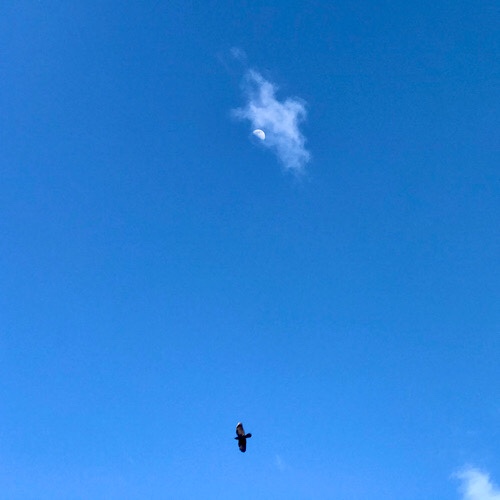
Bearing Witness

I am not prepared to go on hunger strike—it would not be right for my health. I can bear witness, speak out, and donate. What might you be able to do?

I am not prepared to go on hunger strike—it would not be right for my health. I can bear witness, speak out, and donate. What might you be able to do?
Last night I was feeling deeply sad not having Becky with me any more. The first week, I was telling myself how lucky I was to have had her for so long, that she lived a long, happy, well-loved life, and that it was truly time. Then I threw myself into work, errands, the garden, etc. This week, I have been filled with a deep sense of grief and loss.
Classical yoga would have us try to transcend the pair of opposites — pleasure and pain. Tantra would have us experience the full range deeply, knowing it is all part of the play of being manifest in human form. I have been thinking about my teacher, John Friend, who often talks of the intensity of grieving for loved ones who have died, because of having loved truly and fully.
Thinking about Becky, this chant started repeating itself in my head (I have it recorded by Dave Stringer): “sukha hara, dukha hara, hara, hara Shankara.” “Hara” is an epithet of Shiva, from the root word to bear away or destroy. “Sukha” means ease; “dukha” pain. “Shankara” is another epithet of Shiva in benevolent form. I think of this chant not so much a call to have Shiva energy destroy or remove both pleasure and pain, but rather a reminder that both pleasure and pain are integral parts of our experience of being. Recognizing that grief and loss are as much part of our own humanity as love and pleasure, helps remind me of my own connection to spirit. It ultimately inspires me to try and live in a way that is more benevolent and generous, and to respond with the most light, whatever I face. (This of course is a life work).
I would not give up the full and wonderful years of companionship I had with Becky and her sister Henrietta (and others who I have loved) just to avoid the grief of loss.
It was wonderful to get some rain yesterday, but our area really has been way too dry, suffering from storms going to the north and west or to the south and east of us. Here are a few ways for those of us staying on the grid to reduce water consumption:
1. Short showers (under three minutes)
2. Longer showers or baths only an occasional treat.
3. If you have space (I don’t; though I keep thinking about how to work it) get a rain barrel or two for your garden.
4. Re-use water when you can. For example, when changing a pet’s water dish, water plants instead of pouring out dish. Soak pots without soap (needs longer soaking) and use soaking water for house plants. Same for water from your hot water bottle (to stay warm while keeping the heat down).
5. Practice the old drought adage all the time (“if it’s yellow, let it mellow”).
6. When it is time to replace a toilet or faucet, use a water efficient model.
7. Turn off the water while brushing teeth, shaving, or lathering.
8. For container plants in the garden, use “Soil Moist” or a similar product.
9. Drink tap water (it takes about 60 ounces of water to bring you a 20 ounce bottle of water). If you don’t like the taste, filter it.
10. Forget about washing your car (if you have one) except for keeping the windows clean enough so you can see out.
11. Replace lawns and annual flowers with hardy, native perennials.
Please share your tips. I’m always looking to learn.
I spent most of the day working in the garden. As the darkness of the eclipse encroached, I thought what it would be like if I had not known in advance that it was coming.
Would I have known enough to heed the crows?
I sat with Ganesha, in the aspect of the one who can reveal to practitioners a skillful path amidst the obstacles that necessarily arise from the churning of space and time by the 12 Kalis and which are intrinsic to the fabric of the tandava generated by Siva Nataraja.