| | |

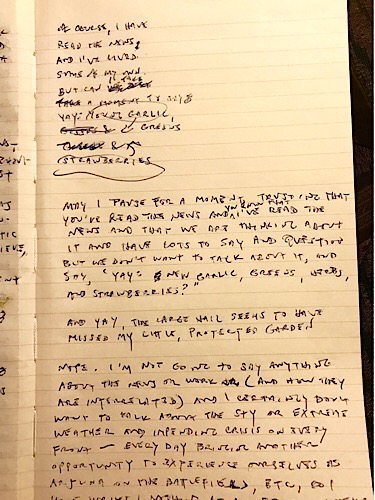
State of the Garden

I was staying at a retreat center in Peru on 9/11. I was not with anyone else from the United States. I remember at the first meal after the planes hit, another guest suggesting that the United States deserved it. I also remember the brief moment of gathering sympathy that, as a country, we threw away with the aggressive response.

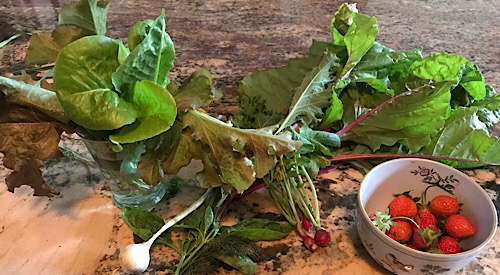
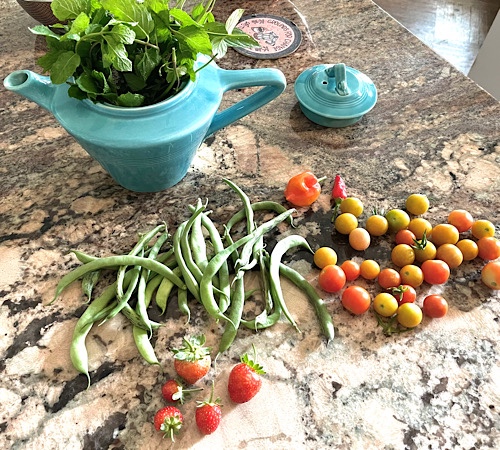
The best thing about the retreat center was that instead of tea bags, every morning there were fresh herbs from the garden for tea. I continue to make my tea that way as much of the year as the garden is able.
Similar Posts

  • |

    Putting the Garden to Bed Sun Salute

    Yesterday (latest in the season ever — see interesting articles in the New York Times last month about Thoreau as a climatologist) I spent the morning bringing all my tropical plants inside.  Part of the reason it was later is that I have learned that the orchids and night-blooming cyrius like nights in the low 40s and can tolerate the occasional single night in the high 30s, but most of it is that it is a warmer season than any in the decade I’ve had a significant number of tropical plants.  I also bring inside the lemongrass and lemon verbena (annuals here; perennials where they are native).  I also like to bring in rosemary in a container.  Also, what were once small plants in growers pots are now a huge jasmine and a bay tree.  When I bring all of this inside in the winter, I transform the house into a retreat.  When I bring it all outside in the early spring, my tiny yard is full and lush before the annuals start flourishing.

    Once the tropicals were all inside, I cleaned up, tended the beds and containers, and strew some more winter kale and baby spinach seeds (no frost in the forecast for the next 15 days — so I could have new kale and spinach through December; also, some of the seeds will wait and be the early ones that come up during that warm week we always have in February).

    Putting the garden to bed has a sweetness to it.  I prepare for next year, but also engage in tending what will flourish best when the days are coldest and shortest.  It is a going inside, knowing that there is a need to go inside and let some things be dormant in order to flourish fully when the sun is bright and hot and calls me outside.

    This type of gardening is stressful for the lower back, hips, and shoulders.  Throughout the hours I am gardening,  I like to engage my alignment by intermittently doing some poses, strongly integrating my shoulders, hips, and core:  working strong “shins in/thighs out” I practice uttanasana (standing forward fold), utkatasana (chair pose), and adho mukha svanasana (downward facing dog), and maybe even handstand.  It is critical to make sure not just to bend from the knees, but also to make sure you have a good lumbar curve and your tailbone is tucked, when picking up containers or other heavy objects.

    At the end of several hours of gardening (bringing the tropicals inside also entails vaccuuming), I need to realign, stretch, and reintegrate, but I’m tired.  I also want to practice in a way that honors and celebrates the sweet inward nature of the work I have just done.  This is what works well for me:

    1.  Seated foot massage.

    2. Balasana (child’s posture) with arms stretched out, palms, forearms, and armpits lifted.  Inhaling lift underside of arms to strenthen, exhaling soften between shoulder blades to integrate.

    2. Chakra vakrasana (cat/cow breathing).

    3. (putting the garden to bed sun salute):  Table pose (if you make sure you have good lumbar curve, table is one of the best postures for making sure hips, back, and shoulders are aligned well); Downward facing dog (play in the pose to integrate and stretch the legs and arms and strengthen your core); Palakasana (plank);Table pose; Balasana;Table.

    Repeat the series several times.  Add in lunges (coming into the lunges from table).  Add in twists from table, threading one arm through and coming down onto that shoulder).  Add in pigeon pose (with a forward bend).

    4. End with legs up the wall, a supported or seated forward bend or two, and savasana.

    Enjoy how this practice nourishes and realigns, but generally draws the attention inside, getting you ready to enjoy the inside while waiting for the next growing season.

    E

    ps While I was practicing, I had a big vat of tomato sauce cooking from the last (perhaps second to last) harvest of cooking tomatoes.

  • |

    Signs Around Town (Traveling)

    I think a lot about what leads people to get injured on and off the mat. Often it is that desire for a certain goal or distraction keep us from the sensitivity and mindfulness that enables us to appreciate and act on the principles of cause and effect before the injury or accident occurs. One of the great benefits of a steady practice of yoga and meditation is that it can help us be more sensitive and aware of where and how we and all the things around us relate in space and time, the critical awareness for preventing injuries in the first instance.

    Peace and light, E — Posted with WordPress for BlackBerry.

  • | | | |

    Found Exhortation

    Deferring gratification may make sense for all sorts of reasons–pursuing a goal, keeping on a budget, sticking to a healthful diet or lifestyle. But even if you are with discrimination (in yoga terms viveka) choosing to defer gratification…

    Peace and light, E — Posted with WordPress for BlackBerry.

Leave a Reply

Your email address will not be published. Required fields are marked *

This site uses Akismet to reduce spam. Learn how your comment data is processed.