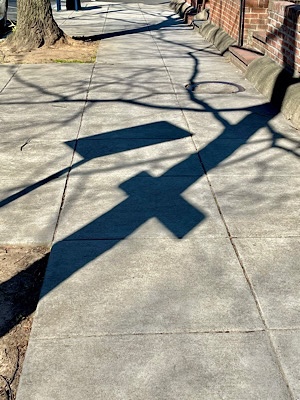
Shadow and Light
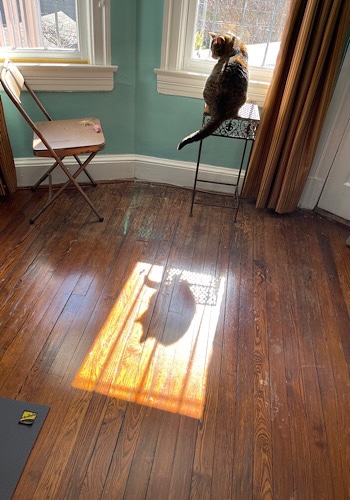
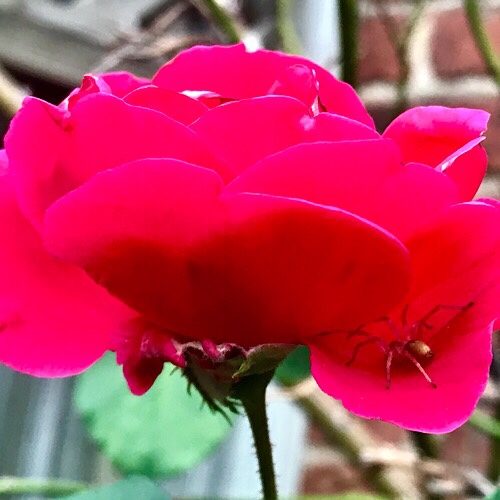
Excellent example of why it is good to look and pause before taking action–such as picking a blossom.
Peace and light, E — Posted with WordPress for BlackBerry.
Last weekend I devoted most of my time to live-streaming the “Accessible Yoga Conference.” This conference, consistent with other workshops on this and related topics involved listening to many personal stories and careful examination of language—what language perpetuates harm and which fosters inclusion, recognition, nonjudgment, etc.
The fact that “accessible yoga” is a thing was observed to be evidence that for all that the yoga philosophy invites recognition and honor of the spirit in all, what is considered “yoga” in the “West”is another microcosm of cis, het, racist, patriarchal, colonialist capitalism.
My friend J.E. forwarded this email from her friend Kathy O., inviting me to share this with every woman I know. This remembrance felt in kindred spirit with my honoring the Day of the Dead.
This is the story of our Mothers and Grandmothers who lived only 90 years ago.
Remember, it was not until 1920 that women were granted the right to go to the polls and vote.
The women were innocent and defenseless, but they were jailed nonetheless for picketing the White House, carrying signs asking for the vote.And by the end of the night, they were barely alive. Forty prison guards wielding clubs and their warden’s blessing went on a rampage against the 33 women wrongly convicted of ‘obstructing
sidewalk traffic.’
(Lucy Burns)
They beat Lucy Burns, chained her hands to the cell bars above her head and left her hanging for the night, bleeding and gasping for air.
(Dora Lewis)
They hurled Dora Lewis into a dark cell, smashed her head against an iron bed and knocked her out cold. Her cellmate, Alice Cosu, thought Lewis was dead and suffered a heart attack. Additional affidavits describe the guards grabbing, dragging, beating, choking, slamming, pinching, twisting and kicking the women.Thus unfolded the ‘Night of Terror’ on Nov. 15, 1917, when the warden at the Occoquan Workhouse in Virginia ordered his guards to teach a lesson to the suffragists imprisoned there because they dared to picket Woodrow Wilson’s White House for the right to vote. For weeks, the women’s only water came from an open pail. Their food–all of it colorless slop–was infested with worms.
(Alice Paul)
When one of the leaders, Alice Paul, embarked on a hunger strike, they tied her to a chair, forced a tube down her throat and poured liquid into her until she vomited. She was tortured like this for weeks until word was smuggled out to the press.
http://memory.loc.gov/ammem/collections/suffrage/nwp/prisoners.pdf<http://memory.loc.gov/ammem/collections/suffrage/nwp/prisoners.pdf>So, refresh my memory. Some women won’t vote this year because — -why, exactly? We have carpool duties? We have to get to work? Our vote doesn’t matter? It’s raining?
(Mrs. Pauline Adams in the prison garb she wore while serving a sixty-day sentence.)
Last week, I went to a sparsely attended screening of HBO’s new movie ‘Iron Jawed Angels.’ It is a graphic depiction of the battle these women waged so that I could pull the curtain at the polling booth and have my say. I am ashamed to say I needed the reminder.
(Miss Edith Ainge, of Jamestown , New York )
All these years later, voter registration is still my passion. But the actual act of voting had become less personal for me, more rote. Frankly, voting often felt more like an obligation than a privilege. Sometimes it was inconvenient.
(Berthe Arnold, CSU graduate)
My friend Wendy, who is my age and studied women’s history, saw the HBO movie, too. When she stopped by my desk to talk about it, she looked angry. She was–with herself. ‘One thought kept coming back to me as I watched that movie,’ she said. ‘What would those women think of the way I use, or don’t use, my right to vote? All of us take it for granted now, not just younger women, but those of us who did seek to learn.’ The right to vote, she said, had become valuable to her ‘all over again.’HBO released the movie on video and DVD . I wish all history, social studies and government teachers would include the movie in their curriculum. I want it shown on Bunco night, too, and anywhere else women gather. I realize this isn’t our usual idea of
socializing, but we are not voting in the numbers that we should be, and I think a little shock therapy is in order.
(Conferring over ratification [of the 19th Amendment to the U.S. Constitution] at [National Woman’s Party]
headquarters, Jackson Pl [ace] [ Washington , D.C. ]. L-R Mrs. Lawrence Lewis, Mrs. Abby Scott Baker, Anita Pollitzer, Alice Paul, Florence Boeckel, Mabel Vernon (standing, right))
It is jarring to watch Woodrow Wilson and his cronies try to persuade a psychiatrist to declare Alice Paul insane so that she could be permanently institutionalized. And it is inspiring to watch the doctor refuse. Alice Paul was strong, he said, and brave. That didn’t make her crazy. The doctor admonished the men: ‘Courage in women is often mistaken for insanity.’
Please, if you are so inclined, pass this on to all the women you know. We need to get out and vote and use this right that was fought so hard for by these very courageous women. Whether you vote democratic, republican or independent party – remember to vote.
(Helena Hill Weed, Norwalk , Conn. Serving 3 day sentence in D.C. prison for carrying banner, ‘Governments derive their just powers from the consent of the governed.’)
History is being made.
So, refresh my memory again. Some women won’t vote this year because – why, exactly?