Similar Posts

  • | |

    Walking and Shopping in the Neighborhood (and brahmacharya)

    Yesterday afternoon when I came home from teaching I wanted to be out for a walk in the neighborhood more than I wanted to be alone in the garden, but I also wanted to be serving the garden.  I combined the two by walking the ten blocks to Gingko Gardens — our wonderful Capitol Hill nursery.  It is a little more expensive than some of the nurseries out in the burbs, but I know the owner and have friends in common, I always bump into neighbors when I am shopping there, and they are experts in what grows and works in our little urban gardens.  I was thrilled when they opened a number of years ago and want them to continue to thrive, so I make a point of shopping there.  I bought some seeds and some planting medium for starting seeds indoors and ordered a few containers and organic potting soil for delivery.

    In addition, after having done a bunch of research on rain barrels over the week, I also asked whether Gingko would deliver and install rain barrels from Aqua Barrel, which is located in Gaithersburg.  Answer, “yes.”  (For those of you in the suburbs, Amicus Green also carries and installs them).  It took me a long time to assess what style barrel would work for me and where it should be placed.  I was hoping to support a local manufacturer to cut down on wasteful transportation.  I also know that given my circumstances it is critical that it be installed correctly with a good diverter system.  It is good for me to do the research but then bring in a professional to make sure it is right.  I made an appointment and am looking forward to being able to align a little better with nature (by using rain water run-off instead of scarce, potable water for the garden) and to support the neighborhood (by buying locally and hiring resident professionals).  And I bumped into a fellow yogi and gardener while I was shopping; inspired by the chat, she, too, made an appointment to discuss rain barrel installation.

    To me, this is one way of bringing yoga off the mat.  One of the key principles in Patanjali’s yoga sutras is the practice of brahmacharya, which literally means aligning with Brahma.  The classical translation is celibacy.  Many modern translators substitute “moderation.”  This way of living, is of course, moderate.  It is living a western lifestyle on the grid, but choosing to consume in a way that supports friends, neighbors, and manufacturers who use recycled materials to create products that will help us all to be a little kinder to the environment, while nurturing my home and self.

  • | | |

    Found Exhortation (and Tapas)

    image

    What does it mean to excel, to do well?  I think there is no excelling in yoga, at least not the way we conventionally think of excelling in school or career or sports.  But to practice in a way that is more than casual, there must be ardor–tapas. 

    Tapas is often translated as fire, and the texts are full of stories of outrageous physical exertions done to prove the tapas of the practitioners looking for boons from the gods.

    There is a fiery aspect to tapas, but I question whether it must necessarily be burning from physical exertion, though that is a path that calls out to many. 

    The fire of tapas could be thought of as doing what it takes to manifest the will to know something deeply enough to be able to experience the fluency and grace and delight of expertise.   It could be the ardor to show up in a disciplined and committed way for hours and days and years of practice, always still wanting deeper, fuller knowing.

  • | |

    Kleshas (and the absence of helicopters)

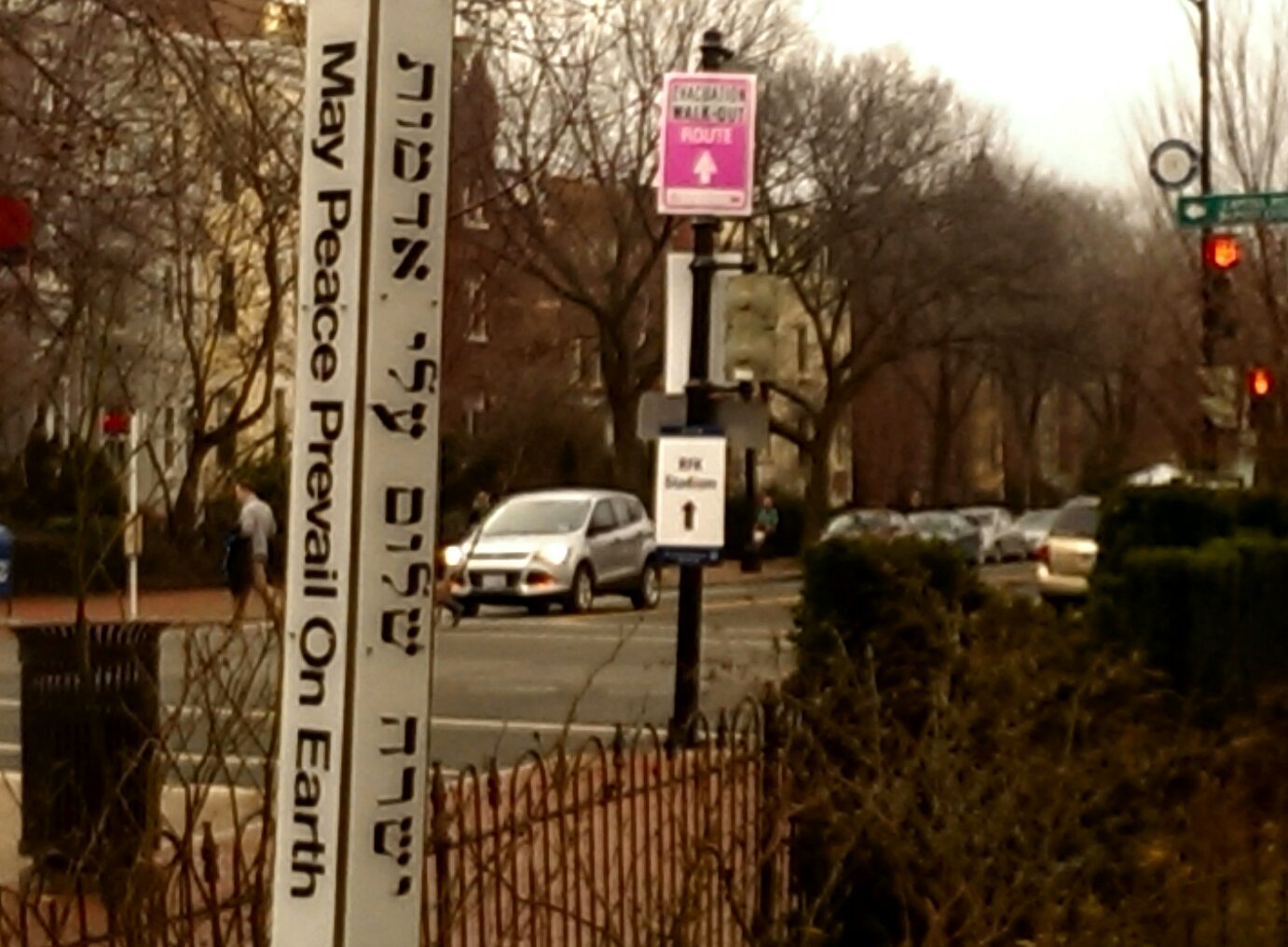
    Last night when we walked out of William Penn House from the Tuesday night yoga class onto East Capitol Street, we could see a convocation of police cars in front of the Capitol — presumably in preparation for the President’s speech.  Karen asked, “where are the helicopters?”  “Maybe, Obama doesn’t need them,” I replied, “maybe he is choosing not to live in fear.”  There weren’t any army or police helicopters all night.  This was the first Presidential speech in eight years where helicopters did not relentlessly drone overhead, calling people to be afraid and to act from a place of fear.

    Patanjali’s yoga sutra II.3, says:  avidyha asmita raga dvesa abhinivesah klesah.  BKS Iyengar translates this sutra as follows:  “The five afflictions which disturb the equilibrium of consciousness are:  ignorance or lack of wisdom, ego, pride of the ego or the sense of ‘I’, attachment to pleasure, aversion to pain, fear of death and clinging to life.”

    The world is far scarier now than it has been for most of the past eight years.  In some ways, though, at least in my neighborhood, it feels less frightening because the signs of being afraid are not being emblazoned everywhere to call all to share in the fear.

    We can practice choosing to turn to a place of strength rather than fear on our yoga mats.  When we choose to do the difficult poses that are at our edge that bring up fear and aversion, we can notice the fear and aversion, but not become fully engaged in it.  By using the Anusara principle of opening to grace, we can accept fear and aversion as part of human being, but then soften and open to the full range of being, and not just cling to the fear.  Instead of avoiding the poses or beating ourselves up for being afraid, we can choose to use the yoga principles we know to invite a full experience of the moment and the possible poses.  Remaining open to witnessing the full range of our being through the pose, we next engage muscular energy (strengthening by embracing the muscles to the bone, hugging into our center [midline], and drawing from the periphery into our core).  Having found our strength, we expand more fully (expanding/inner spiral).  We then have space to draw more deeply into our core power (contracting/outer spiral).  With this balance of embrace and expansion of ourselves, we then can fully embody strength by reaching outward (organic energy) and making offering.  This pulsation of principles in poses has led me to discover physical and energetic abilities in my middle age I had not dreamed possible.

    Off the mat, the same principles can lead us to move from love and strength instead of fear and clinging.  As I got into bed with the peace of the night uninterrupted, I pondered how these principles can manifest and gave a profound thanks to whomever decided the harbingers of fear — the helicopters — were unnecessary.
Leave a Reply

Your email address will not be published. Required fields are marked *

This site uses Akismet to reduce spam. Learn how your comment data is processed.