In Memoriam Rep. John Lewis
May his spirit continue to inspire action.
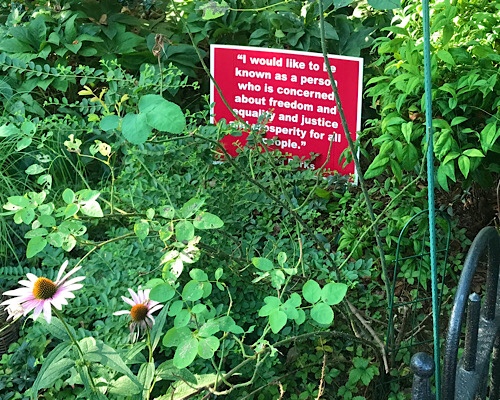
May his spirit continue to inspire action.
As I was hefting my heavy day pack over my shoulder to get ready to leave for the airport, I said to my roommate for the week, “now is the time I wish I could just take a magic carpet ride.”
“It would be pretty windy,” he replied.
What I wanted from the magic carpet ride was not to have to sit in traffic to get to the airport or deal with the security check in and boarding and potential delays, etc. The fact that the plane can get me from one climate to another in two hours is pretty magical.
I decided to play “Magic Carpet Ride” on my ipod while I was waiting for my flight to send it magic carpet ride energy–on time boarding, no problems with the plane, a smooth and comfortable ride, which it turned out to be. Usually I listen to quiet music or recorded teleseminars for my studies with Paul Muller-Ortega when I am traveling. Yesterday, I decided to see what ipod’s “genius” function would come up with following “Magic Carpet Ride.” First came something by the Clash, not a bad segue. I wasn’t sure that fit my mood, but decided I would go with it until the plane took off.
To my shock, because one would expect a series of rock and roll songs, the next track was an invocation to Lakshmi–kind of rocked out, but still, not what I would have expected. That was followed by a series of chants to Siva intermixed with three different versions of the maha mrityunjaya mantra. “Ah,” I thought, “genius knows I have been practicing yoga all week and then celebrating mahasivaratri. How very extraordinary sometimes the interplay of the subtle energies and technology!”



Bhagavan — another name for Shiva — literally means “possessing fortune, blessed, prosperous.”
What does it mean in this context to be possessed of fortune, to be blessed, to be prosperous?
What does it mean in the context of balancing individual and societal needs, hungers, and wants? What could it mean the current conversation about taxes, government spending, and healthcare? In the discussion of budget, war, etc?
We live at one level in a paradigm in which communal wealth is finite and is fought over to obtain individual wealth. How do we live within that paradigm and still find a sense of inner prosperity with what we have been given?
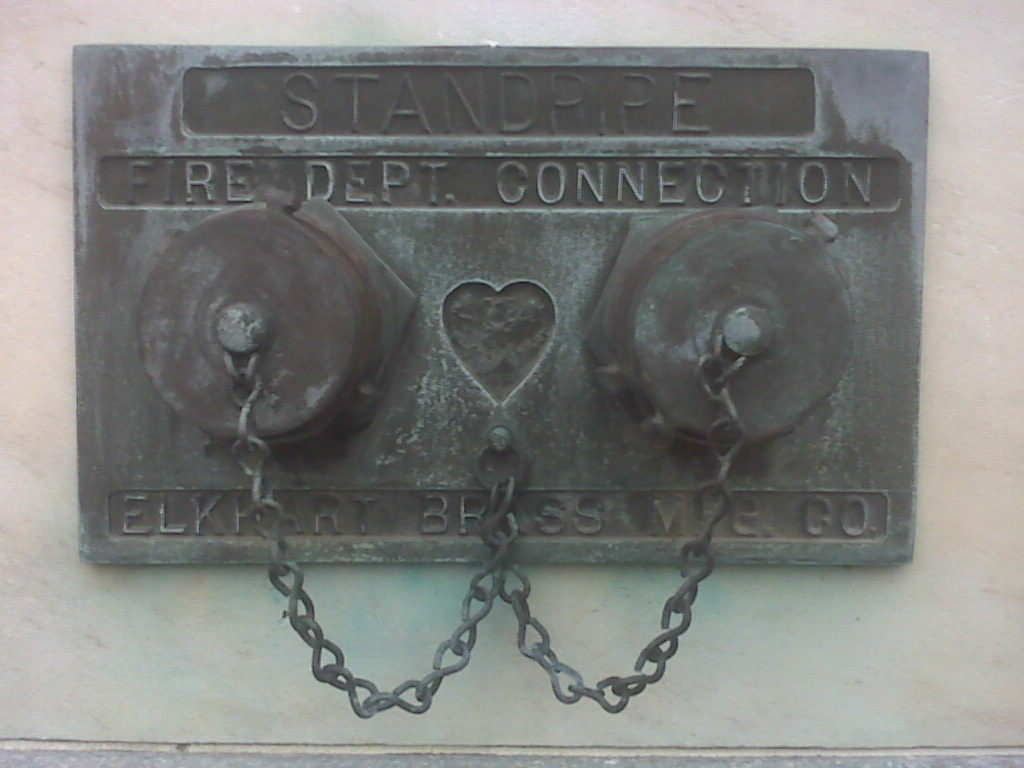
Because the Senate, like any group sharing an office building, would need a little love if the fire department is wanted.
Come to think of it, the Senate needs a little love all the time; I like this heart being here to call in loving energy. Those who are working to care for those most challenged in our society, to protect the environment, and to seek fairness and justice for all need support to keep serving. And with an influx of love, perhaps those digging their heels in for greed, power, corruption, and violence, might be influenced to make a shift.
Peace and light, E — Posted with WordPress for BlackBerry.
Can you imagine looking at this photograph without ascribing to the image what you know of red and white stripes coupled with stars on a blue background and of a circle divided by lines in this particular pattern?
How much differently would an Indian Hindu look at a painting of an elephant than would an American voter in the weeks leading up to a Presidential election?
If you don’t know all the meanings carried by an icon, what message do you get from a picture of such icon? If you think it is anything other than a pretty picture, but think a meaning that is not its iconography are you just suffering from deluded ignorance?
Is knowledge binding (jnanam bandaha) or does it liberate?

Peace and light, E — Posted with WordPress for BlackBerry.
I saw this water main break while I was walking to work this morning. Several people walked past it without a glance–could they really not have noticed? It looked relatively recent because the puddle was still modest and had not started freezing. I paused, took out my mobile device and telephoned the mayor’s city-wide call center (in DC “311”–whoever answers will transfer you to the right place; in this instance, “water emergencies”). A couple of people who saw me calling looked at me as if it must have been my fault or else why would I be calling,
I thought about what it was that moved me to call. I saw harm to the environment (colossal waste of water while we are in a drought if the leak was allowed to continue without the earliest possible intervention) and potential danger to people from spreading icy water that will turn into ice late this afternoon. What is it, though, that leads one to take action to change or fix something that is technically not one’s business. What makes it part of one’s duty or responsibility when it is not directly related to one’s individual property or person? At some levels, it is just social contract. By choosing to live together in closely proximate society, it is in all of our self-interest to take care of shared areas, though the ubiquitously unshoveled sidewalks leads me to believe that most people haven’t been taught or grasped the principle that if we all contribute “our share” the whole place and our own lives would be far more enjoyable.
These thoughts led me to think of the application of the yamas and niyams in Patajali’s Yoga Sutras and in particular, the principle of brahmacharya, which is one of the five yamas on the first level of the eight-fold path of yoga in Patanjali’s Yoga Sutras.
Brahmacharya literally means being like Brahma, but it is often translated as celibacy. Brahmacharya, from a less socio-morally result-driven interpretation, could also be thought of as aligning with the divine. Before we are enlightened, though, how do we know what will help us align with the divine? I once heard Professor Douglas Brooks say, in a lecture I attended a number of years ago, that the yamas and niyamas, the ethical precepts that lay a foundation for the practice of yoga are for the goal of the individual reaching enlightenment. I was a bit taken aback by the statement at the time. It sounded as though the yoga precept was that the purpose of ethical behavior was self-interest, and was not because ethics was summum bonum. I am less troubled by the idea after much contemplation. What is the harm of the goal enlightenment serving to motivate and shape our behavior? The methodology that includes the yamas and niyamas would have us engage in certain ways of living and practices in order that we can change our karma by shifting the patterns (samskaras) that take us away from spirit rather than lead us toward spirit.
To me, this means acting in away that not only does not harm (ahimsa–the first of the yamas), but seeks to expand the possibility of fostering the collective good, including the good of the earth. In this sense, to the extent that brahmacharya is a precursor to enlightenment–the merging of the individual self with the greater “Self” or spirit, acting from a placed of enlightened self-interest can be seen as helping us to find the true Self (as long as we are not attached to a particular good or outcome, but that is a whole other topic).