| |

Ways to Ask Permission

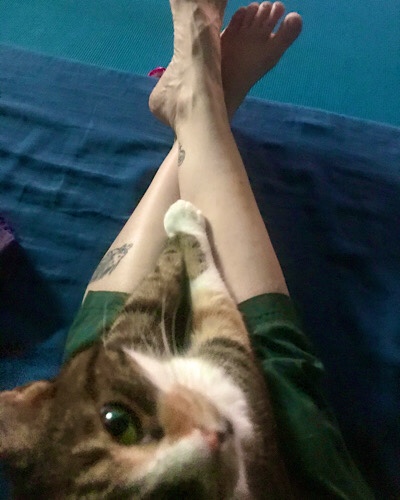
I’ve been on staycation for the holidays. I’ve taken a few asana classes around town in studio spaces I haven’t been in before.

In two of the classes, the teachers stated at the beginning that they give physical adjustments. Both teachers asked while students were in child’s pose, so that the response was only for the teacher.

One teacher asked students to make a sign if they did NOT WANT to have adjustments. The other said to make a thumbs up if they WANTED adjustments.

I noticed a palpable difference in the degree of consent because of the emotional difference for me between having to actively say no to avoid unwanted touch as opposed to being told I would be left untouched unless I specifically gave permission. There is also a difference between simply allowing touch rather than specifically having to say I want to receive it.

Similar Posts

  • | | |

    An Environmental Perspective on Yoga

    Every once and a while, I poll my students and ask them whether they find that they need less medication and medical intervention (testing and other procedures) than before they were regularly practicing yoga.  Students uniformly advise that they take painkillers less frequently.  Some students say they need lesser amounts or have been taken off other medications by their doctors.  Others note better sleep, less frequent colds, flu, or other common contagious illnesses.  Others have stated they have avoided recommended surgery by working hard to shift their alignment.  I personally have experienced great improvements in physical and emotional health from my steady practice, which has led to my doctor of 15 years agreeing that I need less medicine (note:  I am not advocating none) and testing. I think my making the commitment to practice to minimize health care consumption as one of the ways I personally take care of the environment.

    No matter what it is we are making, consuming, and disposing, and how we are doing those things, the four R’s of consumption to benefit the environment (refuse [i.e., don’t use], reuse, repurpose, recycle), start with not using things in the first place so that we do not have the environmental degradation of manufacturing and ultimate disposal.   We do not usually think about this in the context of medical treatment because we want to be out of pain and illness and for the most part, think of medical treatment as a fundamental right.

    At an individual level, lots of people would rather just take a pill (or even have surgery) than have to make a consistent change in behavior, physical activity, and diet.  There are also times when western medical treatment is the only effective treatment, and we are very fortunate to have it available.  Some people are not in a position in society to make a shift easily in this regard or to understand what it means.  But for those of us in the know, prevention not just of illness, but of medical consumption, by exercising, meditating, practicing therapeutic yoga, and shifting our diet, is a wonderful way we can personally seek to limit our reliance on fossil fuels and reduce our personal waste output.  In addition to eliminating the need to have the supplies manufactured, it will also keep medications that have passed through your body from reentering the water and food supply (which in turn has its own detrimental health impacts to society and to the environment).

    Has the practice of yoga changed you as a consumer of health care?  Have you ever considered the relationship between being a consumer of health care and your environmental impact?

  • |

    An Example of How Budget Problems Can Help the Environment (and It’s An Ill-Wind That Blows No Good)

    Here’s the text of an email we received earlier in the week from building management:

    As a result of sequestration, effective Friday, March 8th the Frances Perkins Building (FPB) Facilities Management Office will be modifying the hours of operation for the FPB heating and cooling systems to achieve required savings detailed in OASAM’s sequestration plan.   Normally, the FPB heating and cooling systems are operational for 14 hours, from 5:00 a.m. to 7:00 p.m. daily.  In order to achieve the reductions required by the sequestration, the FPB hours of operation for the heating and cooling will be adjusted to the General Services Administration standard 10-hour operating day, from 7:00 a.m. to 5:00 p.m., Monday through Friday. 

    We encourage you to prepare for the building being cooler/hotter in the morning and evening hours by:

    –making sure that window blinds are opened or closed appropriately to maximize the sun’s effect,

    –leaving private office doors open to maximize air circulation, and

    –dressing appropriately, layered clothing that can be added or removed during the day.

    We appreciate your cooperation as we implement these sequestration-driven cost reductions.

    We apologize for any inconvenience.

    Here’s what I wrote back (restraining myself from noting that when President Obama called upon federal workers to make suggestions for how to save money two years ago, I suggested that we change the dress code and the building temperature to reflect the season, not some outdated notion of what is “professional” dress and was resoundingly ignored):

    This is fantastic news.  I have long advocated making the inside temperature more consistent with the outside weather for our health and for the environment.  I hope that you will keep a policy of spending less money and precious fossil fuels on heating and cooling even if the budget picture improves.

    I’m thinking that building management doesn’t usually get positive feedback.  😉
Leave a Reply

Your email address will not be published. Required fields are marked *

This site uses Akismet to reduce spam. Learn how your comment data is processed.